
Pacific halibut
A large flatfish found in the North Pacific Ocean and Bering Sea.
The Pacific halibut is a massive righteye flounder native to the cold waters of the North Pacific. It supports major commercial and sport fisheries managed by an international commission to ensure sustainable yields.
- Females can grow over 2.4 metres long and weigh up to 230 kg.
- Spawns in deep water from December to February on continental shelves.
- Larvae float for six months before settling on the ocean bottom.
- Homer, Alaska, is called the Halibut Capital of the World.
- Managed by the International Pacific Halibut Commission for sustainability.
What it is
This species belongs to the righteye flounder family and possesses a distinctive diamond-shaped body that is more elongated than most flatfishes. Its width measures roughly one-third of its total length. Both eyes sit on the dark upper side, which varies in colour to match the ocean floor, while the underside remains light to blend with the sky when viewed from below. Small scales are embedded directly in the skin. They feature a high arch in the lateral line over the pectoral fin and a crescent-shaped tail. Females can reach lengths exceeding 2.4 metres and weigh up to 230 kilograms, making them among the largest flatfish.
Where it lives
These fish inhabit the continental shelf of the North Pacific Ocean and the Bering Sea. Fishing activity concentrates heavily in the Gulf of Alaska and off the west coast of Canada. Smaller catches occur along the coastal regions of Washington, Oregon, and California. The population is divided into ten management areas. They prefer cold water temperatures between 3 and 8 degrees Celsius. During winter months, mature individuals gather on spawning grounds along the continental shelf edge at depths ranging from 183 to 457 metres.
How it lives
Pacific halibut are powerful swimmers capable of long-distance migrations. They generally move in a clockwise direction from northwest to southeast across their settlement areas. Seasonal movements involve shifting from shallow feeding grounds in summer to deeper waters in winter. Their diet includes various fish like cod, pollock, and salmon, as well as invertebrates such as octopus, crab, and shrimp. Occasionally, they feed on pelagic species or even seal remains. Older fish tend to be less migratory but continue moving predominantly in a clockwise pattern.
Breeding and life cycle
Spawning occurs during winter, peaking from December through February. Eggs are laid in deep waters off the continental shelf edge. Males reach sexual maturity at seven to eight years, while females mature at eight to twelve years. A female produces between half a million and four million eggs annually depending on her size. Fertilized eggs hatch after approximately fifteen days. Larvae float freely for up to six months, drifting counter-clockwise before rising to shallower waters where they develop into bottom-dwelling juveniles.
Fish and people
Commercial fishing likely began in 1888 near Washington. The industry historically used steamers and schooners, now replaced by versatile vessels. Gear consists of longlines with hundreds of hooks baited with frozen herring or octopus. Homer, Alaska, is known as the Halibut Capital due to high catch volumes. Sport fishing is popular in Alaska, particularly in Cook Inlet and southeast Alaska. Anglers target these strong fighters using stout gear. Native groups traditionally smoke and dry the fish for winter sustenance. An international commission sets annual catch limits to maintain sustainable yields.



Questions people ask about Pacific halibut
How big does a Pacific halibut get?
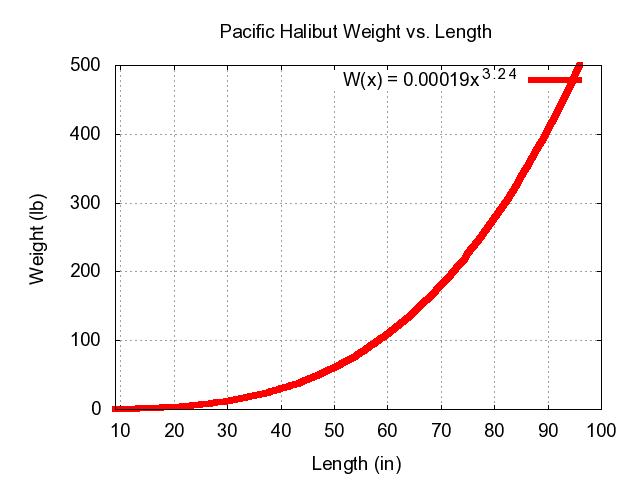
Females typically reach over 2.4 metres in length and weigh up to 230 kilograms. Some reports mention individuals reaching 363 kilograms, though verified records show sport-caught fish around 208 kilograms.
Where do Pacific halibut spawn?
They spawn in winter, primarily from December to February. Mature fish migrate to deep waters along the edge of the continental shelf, usually at depths between 183 and 457 metres, to release their eggs.
What do Pacific halibut eat?
They consume a wide variety of prey including cod, pollock, salmon, herring, octopus, crab, and shrimp. They are strong swimmers that sometimes leave the bottom to chase pelagic fish or scavenge seal remains.
Is Pacific halibut safe to eat?
Yes, it is a popular food fish with firm white flesh. Commercial and sport fisheries harvest it extensively. Native communities traditionally smoke and dry it for winter use. It is managed to ensure sustainable populations.
Good reading and sources
- Pacific halibut on WikipediaEncyclopedia
- More photos on Wikimedia CommonsPhotos
- Wikidata recordOpen data
The facts on this page come from the Wikipedia article "Pacific halibut", written by its contributors and used under the CC BY-SA 4.0 licence, and from its Wikidata record (CC0). EveryFish rewrote the text in its own words, with AI assistance, and compares every page with the article to make sure no passage is copied. It may be reused under the same CC BY-SA 4.0 licence with a link back.
It may contain mistakes, and figures change over time. Nothing here is investment or buying advice. If something is wrong, tell us. Last refreshed 2026-11-15.
Like Pacific halibut
All flatfish 🇺🇸 United States and 3 moreHalibut
Large flatfish species prized for food and sport in northern oceans.Flatfish · Coasts and shelves
 🇬🇧 United Kingdom and 2 morePlaice
A group of flatfish species, including the commercially vital European plaice, found in northern seas.Flatfish · Coasts and shelves
 WorldYellowfin sole
A flatfish of the northern Pacific sandy bottoms.Flatfish · Coasts and shelves · 1814
 🇺🇸 United States and 1 moreYellowtail flounder
A flatfish species found in the western North Atlantic, known for its yellow fins and vulnerable conservation status.Flatfish · Coasts and shelves · 1835
More from Pleuronectidae
All of them 🇨🇦 Canada and 4 moreAtlantic halibut
The world's largest flatfish, found in the North Atlantic.Flatfish · Coasts and shelves
 EuropeEuropean flounder
A right-eyed flatfish found in European coastal waters and rivers.Flatfish · Rivers and lakes
 WorldAmerican plaice
North Atlantic flatfish found on soft seabedsFlatfish · Coasts and shelves