
European flounder
A right-eyed flatfish found in European coastal waters and rivers.
The European flounder is a common flatfish native to the north-eastern Atlantic and Mediterranean. It tolerates fresh water and supports fisheries in the Baltic Sea and North Sea regions.
- Grows up to 60 cm and weighs nearly 3 kg
- Tolerates freshwater and travels far up rivers
- Camouflages with dull brown and reddish spots
- Introduced to North America via ballast water
- Listed as Least Concern by the IUCN
What it is
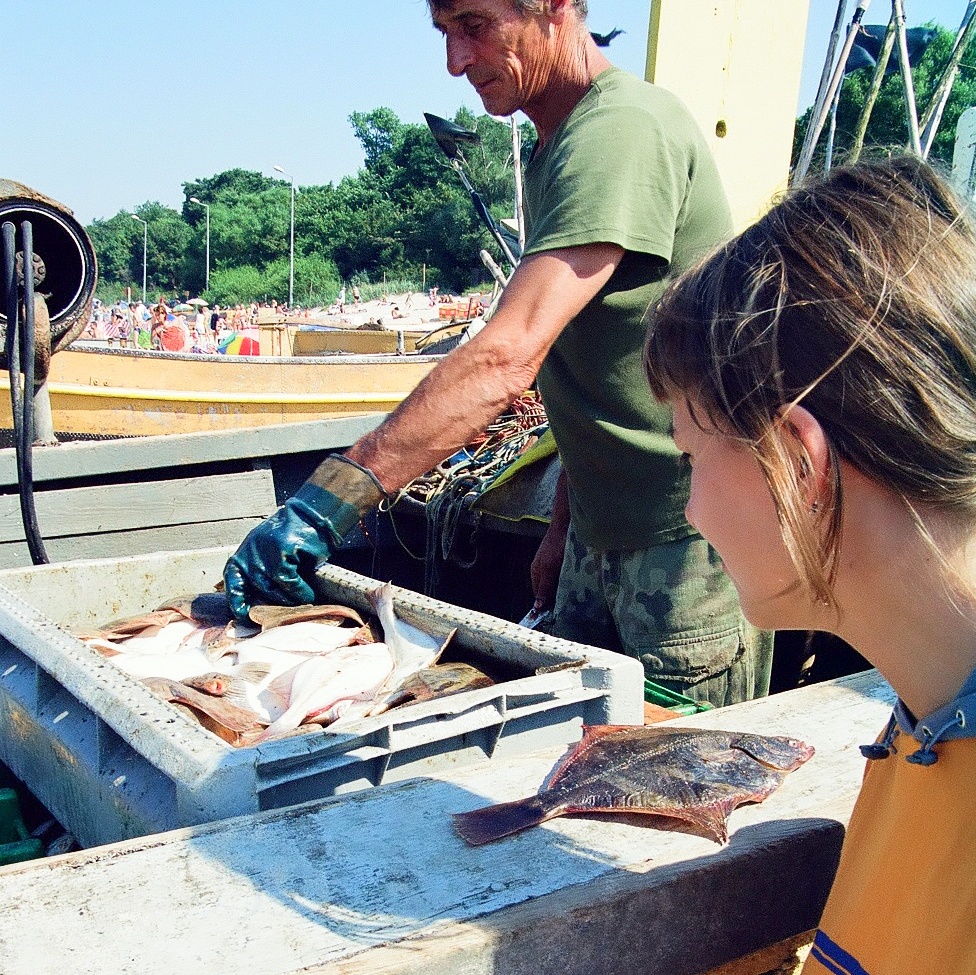
This flatfish has an oval body that is wider than it is long. Most individuals are right-eyed, meaning both eyes sit on the right side as the fish rests on the seabed. The upper surface displays dull brown or olive tones with reddish spots for camouflage. The underside is pearly white, earning it the name white fluke. Rough skin with small tubercles lines the lateral line and fin bases. Adults typically reach 50 centimetres, though some grow to 60 centimetres.
Where it lives
Native waters stretch from the White Sea and Baltic down to the Mediterranean and Black Sea. It inhabits sandy, shingle, or muddy seabeds from the shore to depths of 100 metres. Unusually for its family, this species enters estuaries and rivers, tolerating low salinity. In the British Isles, it travels far inland along major river systems. Accidental introduction via ballast water has established populations off eastern Canada and the United States.
How it lives
The fish feeds on the seabed, mainly at night. During daylight, it buries itself partially in sediment to hide. Its diet includes bivalve molluscs, shrimps, polychaete worms, and small fish. In autumn, it leaves freshwater habitats and moves to deeper water for winter. Spring sees a migration to spawning grounds at a steady pace without feeding. It sometimes hybridises with the European plaice, particularly in the western Baltic Sea.
Breeding and life cycle
Spawning occurs between January and July, later in northern areas. Females release about a million buoyant eggs that float to the surface for fertilisation. Larvae hatch within six to eleven days and drift as plankton towards the coast. Young fish use tidal streams to enter estuaries and rivers, where they grow in low salinity. Males mature at 11.5 centimetres and females at 18 centimetres. Some Baltic populations now breed in shallow water as a distinct species.
Fish and people
Fisheries target this species in the Baltic Sea, Netherlands, and Denmark. Bottom trawling accounts for most of the annual catch, which totals around nineteen thousand tonnes. The meat is sold fresh or frozen and suits frying, boiling, or baking. It is less prized than sole or plaice. Studies show males in polluted estuaries may exhibit high oestrogen exposure levels, indicated by vitellogenins in their blood, though they remain less sensitive than rainbow trout.
Status and threats
The IUCN lists the species as Least Concern due to its wide range and large population. Numbers are declining slightly but not enough to raise alarm globally. However, environmental changes in the Baltic Sea have reduced breeding grounds. In the Gulf of Finland, the European flounder has nearly disappeared, replaced by the Baltic flounder which has outcompeted it over thousands of years.


Questions people ask about European flounder
Is the European flounder safe to eat?
Yes, it is caught for human consumption and marketed fresh or frozen. It can be fried, boiled, steamed, or baked. While it is not as highly valued as sole or plaice, it remains a standard food fish in northern European fisheries.
Why is it called the white fluke?
The name comes from its pearly-white underside. As a flatfish, it rests on one side, keeping the coloured upper side hidden and the white belly visible against the light when viewed from below, providing counter-shading camouflage.
Can this fish live in rivers?
Yes, unlike many other flatfish, it regularly enters freshwater. It migrates into rivers to feed and can be found far inland in places like the River Severn. It returns to the sea or estuaries to spawn, tolerating low salinity levels well.
How does it reproduce?
Spawning happens in spring and summer. Eggs and sperm are released into open water where they float and fertilise. The resulting larvae drift with currents toward the coast before settling in shallow estuaries and rivers to grow.
Good reading and sources
- European flounder on WikipediaEncyclopedia
- More photos on Wikimedia CommonsPhotos
- Wikidata recordOpen data
The facts on this page come from the Wikipedia article "European flounder", written by its contributors and used under the CC BY-SA 4.0 licence, and from its Wikidata record (CC0). EveryFish rewrote the text in its own words, with AI assistance, and compares every page with the article to make sure no passage is copied. It may be reused under the same CC BY-SA 4.0 licence with a link back.
It may contain mistakes, and figures change over time. Nothing here is investment or buying advice. If something is wrong, tell us. Last refreshed 2026-11-15.
Like European flounder
All flatfish 🇨🇦 Canada and 4 moreAtlantic halibut
The world's largest flatfish, found in the North Atlantic.Flatfish · Coasts and shelves
 🇺🇸 United States and 1 moreSummer flounder
A predatory flatfish of the US Atlantic coast.Flatfish · Coasts and shelves
 EuropeCommon dab
Small flatfish of the North Sea sandy bottomsFlatfish · Coasts and shelves · 1758