
Oceanic whitetip shark
A large pelagic requiem shark with distinctive white-tipped fins found in tropical oceans.
The oceanic whitetip shark is a robust, grey-bronze requiem shark inhabiting open tropical seas. It is known for its long pectoral fins and aggressive feeding habits, though populations have collapsed due to intense fishing pressure for fins and meat.
- Maximum recorded length exceeds four metres.
- IUCN status is critically endangered.
- Population declined by approximately 98%.
- Feeds on bony fish, squid, and scavenged carcasses.
- Gives live birth after nine-month gestation.
What it is
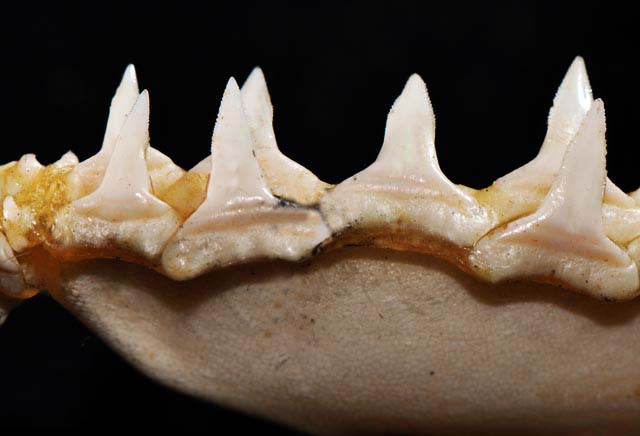
This large requiem shark features a stocky body covered in grey-bronze skin that fades to white on the belly. Its most striking trait consists of elongated, wing-like fins with rounded white tips. Adults typically reach three metres in length and weigh around 150 kilograms, though specimens can exceed four metres. The species possesses a rounded snout and circular eyes protected by nictitating membranes. Two distinct tooth types aid in capturing prey: serrated triangular teeth in the upper jaw and thinner, serrated blades in the lower jaw.
Where it lives
The species inhabits tropical and warm temperate zones globally, spanning latitudes from 45 degrees north to 43 degrees south. It prefers deep offshore waters with temperatures above twenty degrees Celsius, though it tolerates cooler waters down to fifteen degrees. Populations are often denser further from land, yet individuals occasionally appear near continental shelves or islands at depths as shallow as thirty-seven metres. Historically abundant, recent data indicates severe population declines across all inhabited regions.
How it lives
These sharks generally swim slowly near the surface but accelerate during warmer summer months. They hunt alone or gather in groups when food concentrates, engaging in frenzied feeding behaviours. Their diet includes lancetfish, tuna, squid, and seabirds. They sometimes scavenge whale carcasses and compete with silky sharks. Pilot fish and remoras frequently accompany them. Evidence suggests they dive deeply to battle giant squid, indicated by sucker scars on their skin.
Breeding and life cycle
Females give live birth after a gestation period lasting nine months to one year. Embryos develop internally and receive nourishment via a placental sac. Litter sizes range from two to fourteen pups. Newborns measure between forty-five and seventy-five centimetres depending on the region. Sharks reach sexual maturity at lengths of approximately one point seven to one point nine metres, typically between four and seven years of age.
Fish and people
Historically feared by mariners, this shark has been linked to attacks on shipwreck survivors and swimmers. It is targeted commercially for its fins and meat, which are sold fresh, smoked, or dried. Skin is processed into leather. Captive specimens have survived for several years in aquarium settings. Conservation efforts include international trade restrictions under CITES and protection laws in various nations following drastic population drops.
Status and threats
The IUCN lists the species as critically endangered due to an estimated ninety-eight percent population decline. Overfishing for fins and meat, along with bycatch in longlines and gillnets, drives this collapse. Pollution, particularly mercury accumulation, poses additional threats. International trade is now heavily restricted under CITES Appendix I, and national protections exist in places like New Zealand and the United States.



Questions people ask about Oceanic whitetip shark
How dangerous is the oceanic whitetip shark to humans?
It is considered highly aggressive and dangerous to shipwreck survivors. Records show twenty-one attacks between 1955 and 2020, five of which were fatal. Notable incidents occurred during World War II involving sunken ships.
What does the oceanic whitetip shark eat?
Its diet primarily consists of bony fish like tuna and barracuda, along with squid and other cephalopods. It also eats stingrays, sea turtles, seabirds, crustaceans, and marine mammal carcasses.
Why is the oceanic whitetip shark critically endangered?
Intense fishing pressure for fins and meat caused a ninety-eight percent population decline. Bycatch in longlines and gillnets further reduces numbers. International trade is now restricted under CITES Appendix I.
Where does the oceanic whitetip shark live?
It inhabits tropical and warm temperate oceans worldwide between 45°N and 43°S latitude. It prefers deep offshore waters above twenty degrees Celsius but can be found near islands at shallower depths.
Good reading and sources
- 'Historic' day for shark protectionBBC, Article
- Extinction: 'Time is running out' to save sharks and raysBBC, Article
- Oceanic whitetip shark on WikipediaEncyclopedia
- More photos on Wikimedia CommonsPhotos
- Wikidata recordOpen data
The facts on this page come from the Wikipedia article "Oceanic whitetip shark", written by its contributors and used under the CC BY-SA 4.0 licence, and from its Wikidata record (CC0). EveryFish rewrote the text in its own words, with AI assistance, and compares every page with the article to make sure no passage is copied. It may be reused under the same CC BY-SA 4.0 licence with a link back.
It may contain mistakes, and figures change over time. Nothing here is investment or buying advice. If something is wrong, tell us. Last refreshed 2026-11-15.
Like Oceanic whitetip shark
All sharks WorldScalloped hammerhead
A coastal shark with a distinctive indented head.Shark · Coasts and shelves · 1834
 WorldBramble shark
A deep-sea shark with thorn-like skin scales.Shark · Open ocean · 1788
 WorldAngelshark
Flat-bodied sharks that bury themselves in sandy seabeds to ambush prey.Shark · Coasts and shelves · 1758
 WorldSchool shark
A temperate houndshark valued for liver oil and meat.Shark · Coasts and shelves
More from Carcharhinidae
All of them WorldSicklefin lemon shark
Large Indo-Pacific requiem shark with sickle-shaped fins.Shark · Coasts and shelves · 1837
 WorldWhitetip reef shark
Small Indo-Pacific reef shark with white-tipped finsShark · Coasts and shelves · 1837
 WorldMilk shark
A small coastal requiem shark found in tropical waters worldwide.Shark · Coasts and shelves · 1837
 WorldBlacktip reef shark
Small coral reef shark with distinct black fin tipsShark · Coasts and shelves · 1824