
Emperor tetra
A small freshwater fish from Colombia, prized in the aquarium trade for its striking colours and distinct sexual dimorph
The emperor tetra is a ray-finned fish native to western Colombia. It was introduced to the global aquarium hobby in 1960 and remains a popular choice for home tanks due to its unique appearance and relatively peaceful nature.
- Named after English traveler Mervyn George Palmer who collected the type specimen.
- First imported to the US aquarium trade in 1960.
- Males have metallic blue eyes; females have metallic green eyes.
- Body length reaches up to 76 mm at maturity.
- Prefers subdued lighting to show purple hues effectively.
What it is
The emperor tetra is a slender, flat-bodied freshwater fish that reaches approximately 76 mm in length. Its colouration shifts based on lighting conditions; subdued light with floating plants enhances purple hues, while bright environments make yellow tones dominant. A distinctive black line runs within a blue stripe along the body. The dorsal, pectoral, and anal fins are yellow. Males exhibit larger size, longer anal fins, and a more pointed tail compared to females. Sexual dimorphism is pronounced, with males displaying metallic blue eyes and females showing metallic green eyes. This species is often mistaken for the royal tetra, which shares similar visual traits and common names.
Where it lives
This fish is endemic to western Colombia, specifically inhabiting the Atrato and San Juan river basins. These freshwater systems provide the natural environment for the species. Outside of this region, the fish has no wild presence. It was first brought into the international aquarium market in 1960, arriving in the United States. Since that initial introduction, it has become widely established in captive populations globally, though it remains confined to these specific Colombian waters in the wild.
How it lives
Emperor tetras are omnivores, feeding on both plant and animal materials. In captivity, they thrive on standard flake or pellet diets supplemented with live options like daphnia and mosquito larvae, as well as frozen bloodworms. They are generally placid but can be disturbed by aggressive tank mates. While they do not school as tightly as many other tetra species, adding fresh cool water can trigger temporary schooling behaviour among groups. They prefer stable water parameters, including a pH around 6.5, low hardness, and temperatures between 23 and 27 degrees Celsius.
Breeding and life cycle
Reproduction occurs readily in large, densely planted aquariums where a single pair may breed without special stimulation. If no other fish are present and parents are well-fed, some fry may survive. Young fish initially consume natural foods such as protozoa and algae found in the tank. As they grow, they benefit from screened daphnia and specialized dry fry food. The breeding process relies on providing adequate cover and suitable environmental conditions rather than complex interventions.
Fish and people
The primary interaction between humans and this species is through the aquarium trade. It is valued for its beauty and relative ease of care. Introduced in 1960, it has maintained a steady presence in home aquaria. Hobbyists appreciate its distinct eye colour differences between sexes and its ability to display vibrant colours under proper lighting. It is kept as an ornamental pet rather than for food or sport. Care requires attention to water quality and tank mates to ensure the fish remains calm and healthy.
Status and threats
No specific conservation threats or protection measures are detailed in the provided sources. The species is considered least concern in terms of general availability in the aquarium trade. However, its wild population is restricted to specific river basins in Colombia. The focus remains on its status as a successful captive-bred aquarium specimen.


Questions people ask about Emperor tetra
How can I tell male emperor tetras apart from females?
The most reliable method is observing eye colour. Males possess metallic blue eyes, while females have metallic green eyes. Additionally, males are generally larger with longer anal fins and a more pointed tail shape compared to females.
What kind of diet does the emperor tetra require?
They are omnivores that eat both animal and vegetable matter. A good base diet includes flake or pelleted food. They also benefit from supplements like live daphnia, mosquito larvae, and frozen bloodworms to ensure optimal health.
Why do my emperor tetras look different depending on the light?
Their colouration changes with lighting conditions. Subdued lighting and floating plants enhance their purple hues. In brighter aquariums, yellow coloration becomes dominant. Adjusting light levels allows you to highlight specific aspects of their appearance.
Do emperor tetras school like other tetra species?
They do not school as readily as most tetras. Pairs often appear happier together. However, introducing fresh cool water can trigger temporary schooling behaviour in groups, causing them to swim across the aquarium for several minutes.
Good reading and sources
- Nematobrycon palmeri on WikipediaEncyclopedia
- More photos on Wikimedia CommonsPhotos
- Wikidata recordOpen data
The facts on this page come from the Wikipedia article "Nematobrycon palmeri", written by its contributors and used under the CC BY-SA 4.0 licence, and from its Wikidata record (CC0). EveryFish rewrote the text in its own words, with AI assistance, and compares every page with the article to make sure no passage is copied. It may be reused under the same CC BY-SA 4.0 licence with a link back.
It may contain mistakes, and figures change over time. Nothing here is investment or buying advice. If something is wrong, tell us. Last refreshed 2026-11-15.
Like Emperor tetra
All other fish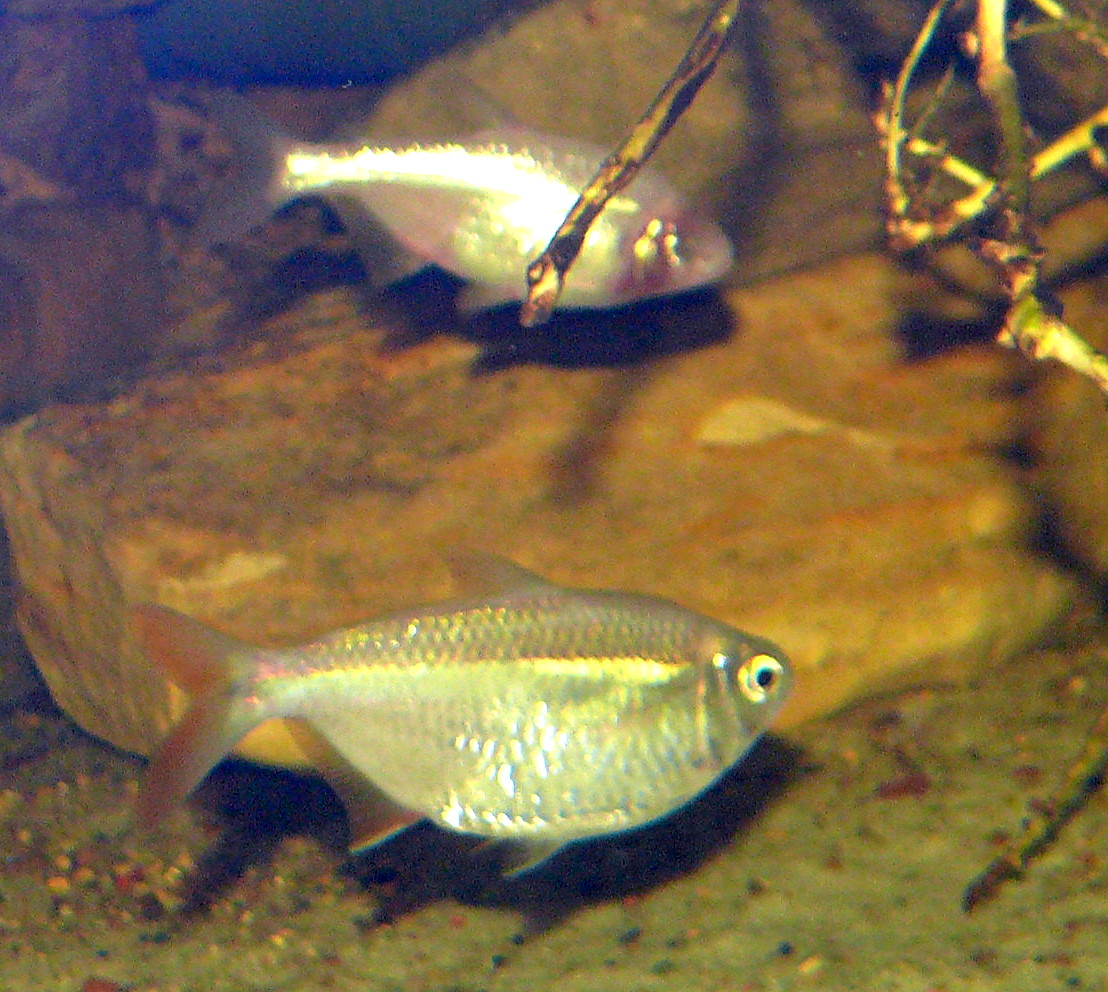 🇺🇸 United States and 1 moreMexican tetra
A freshwater characin with surface and blind cave forms, studied for evolutionary biology.Other · Rivers and lakes
 🇧🇷 Brazil and 4 moreWolf fish
A predatory freshwater ray-finned fish found across Central and South America.Other · Rivers and lakes
 Southeast AsiaKissing gourami
A Southeast Asian freshwater fish known for its unique mouth-to-mouth sparring behaviour.Other · Rivers and lakes
 🇧🇷 BrazilBanded leporinus
A striped freshwater fish from the Amazon kept in home tanks and occasionally caught by anglers.Other · Rivers and lakes
More from Acestrorhamphidae
All of them 🇧🇷 BrazilLemon tetra
Small yellow freshwater fish from the Amazon basin.Other · Rivers and lakes
 🇧🇷 Brazil and 2 moreBlack tetra
Small freshwater characin with dark vertical barsOther · Rivers and lakes
 Latin America and the CaribbeanPenguinfish
Small striped characin from South American riversOther · Rivers and lakes
🇧🇷 Brazil and 4 moreSerpae tetra
Small red freshwater fish from South AmericaOther · Rivers and lakes · 1882