
Lemon tetra
Small yellow freshwater fish from the Amazon basin.
The lemon tetra is a small characin native to the Amazon River system in Brazil. First collected near Santarém, it has been a popular aquarium species since 1932 due to its bright yellow fins and hardy nature.
- Grows to a maximum length of 5 cm
- Native to the Rio Tapajos in Brazil
- Popular aquarium fish since 1932
- Males joust ritually to establish rank
- Adults often eat their own eggs
What it is
The lemon tetra is a deep-bodied freshwater fish reaching five centimetres in length. Its body is translucent yellow with a pearlescent sheen on the scales. The dorsal fin is mainly black with a yellow centre, while the anal fin features intense lemon-yellow rays and a black margin. Males display wider black borders on the anal fin than females. The upper iris is often bright red, fading to grey if the fish is ill. An adipose fin is present, sometimes edged in black.
Where it lives
This species originates from the Amazon River basin in South America. It was first collected in the Rio Tapajos near Santarém, Brazil, where that river joins the Amazon proper. In the wild, it inhabits clear, shallow waters with modest currents. The environment is typically slightly acidic and low in minerals. Large shoals gather near stands of aquatic vegetation, occupying middle to lower water levels.
How it lives
Lemon tetras form large shoals of thousands in the wild to confuse predators through disruptive colouration. They weave quickly through each other when threatened. In captivity, they thrive in groups of six or more within planted tanks. Males establish social rank through ritualised jousting, darting at rivals without causing harm. This behaviour signals fitness to females. They are peaceful community fish, suitable for tanks with other small South American species like dwarf cichlids or Corydoras catfish.
Breeding and life cycle
Spawning occurs communally in the wild among thickets of fine-leaved plants. In aquariums, males court females with quivering motions and fin flicks. The pair releases a cloud of non-adhesive eggs that fall to the substrate. Adults often eat these eggs, so breeders use traps like glass marbles to protect them. A female may lay up to 300 eggs. Fry hatch in about 72 hours at 28 °C and become free-swimming after absorbing their yolk sacs. Sexual maturity arrives at eight to nine months.
Fish and people
Introduced to the aquarium trade in 1932, this fish remains a long-standing favourite. It is valued for its vivid colouration, which improves in planted tanks with soft, acidic water. The species is hardy and accepts various foods, including flakes and live bloodworms. Keeping them in large schools replicates their natural behaviour and reduces stress. They are not used for food but are prized for their aesthetic appeal in home aquaria.

Questions people ask about Lemon tetra
How large do lemon tetras grow?
They are small fish, reaching a maximum length of five centimetres or two inches. Their deep bodies give them a distinct lozenge shape compared to more slender tetra species.
What water conditions do they prefer?
They thrive in soft, slightly acidic water with a pH between 6.0 and 7.4. Temperatures should range from 21 to 28 °C, though they can tolerate higher heat if oxygen levels remain high.
Why do lemon tetras eat their eggs?
In the wild, communal spawning creates many eggs, and adults eat some to reduce competition. In aquariums, this instinct leads them to consume their own clutch unless protected by egg traps.
How can you tell males from females?
Examine the black border on the anal fin. Males have a wide black margin, while females show only a fine line. Males may also have taller dorsal fins, but this is less reliable.
Good reading and sources
The facts on this page come from the Wikipedia article "Lemon tetra", written by its contributors and used under the CC BY-SA 4.0 licence, and from its Wikidata record (CC0). EveryFish rewrote the text in its own words, with AI assistance, and compares every page with the article to make sure no passage is copied. It may be reused under the same CC BY-SA 4.0 licence with a link back.
It may contain mistakes, and figures change over time. Nothing here is investment or buying advice. If something is wrong, tell us. Last refreshed 2026-11-15.
Like Lemon tetra
All other fish WorldSilver dollar
Round, silver tropical fish related to piranhas, popular in aquariums.Other · Rivers and lakes
 Southeast AsiaKissing gourami
A Southeast Asian freshwater fish known for its unique mouth-to-mouth sparring behaviour.Other · Rivers and lakes
 Southeast AsiaBumblebee goby
Small striped freshwater and brackish gobies from AsiaOther · Rivers and lakes
 🇨🇳 China and 4 moreCelestial Eye goldfish
Fancy goldfish with upward-facing telescope eyesOther · Rivers and lakes
More from Acestrorhamphidae
All of them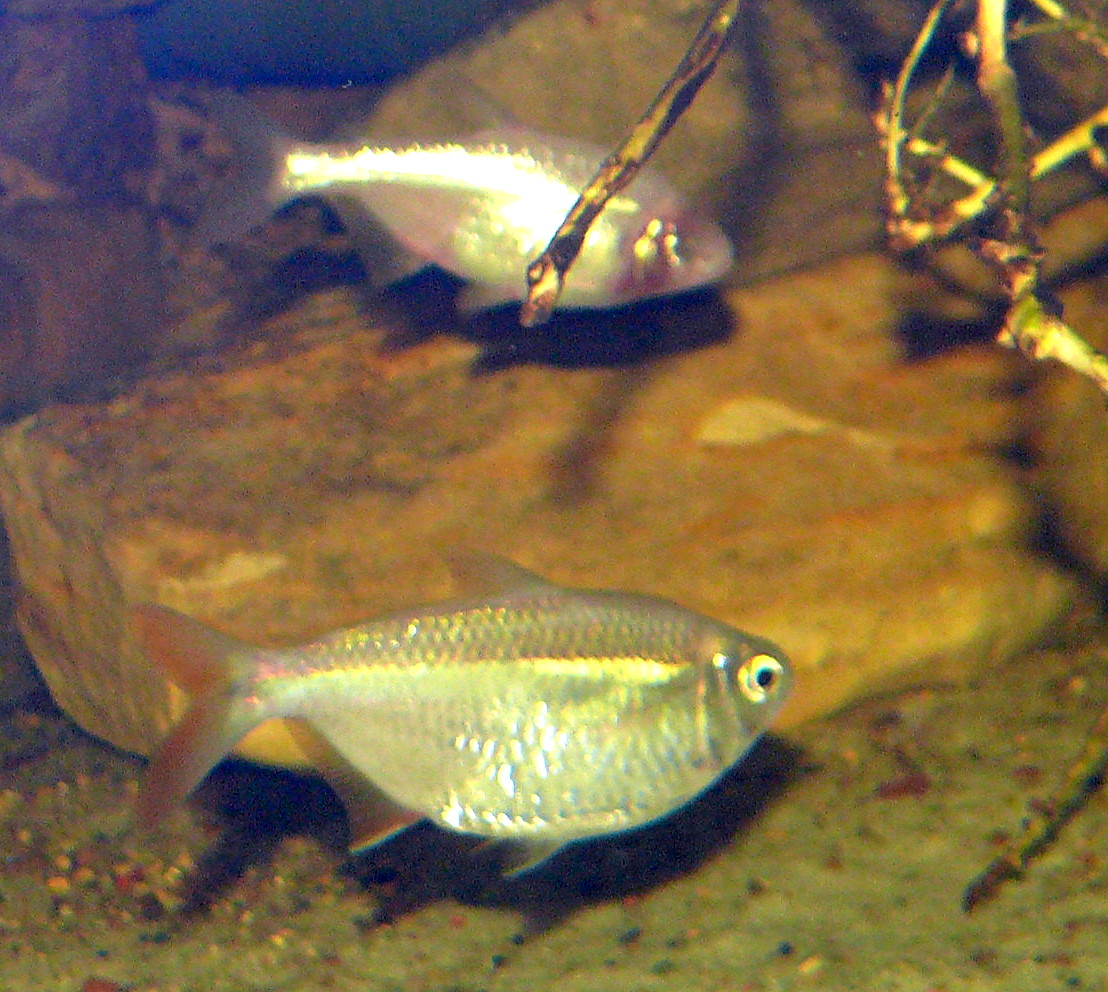 🇺🇸 United States and 1 moreMexican tetra
A freshwater characin with surface and blind cave forms, studied for evolutionary biology.Other · Rivers and lakes
 Latin America and the CaribbeanPenguinfish
Small striped characin from South American riversOther · Rivers and lakes
 🇧🇷 Brazil and 2 moreBlack tetra
Small freshwater characin with dark vertical barsOther · Rivers and lakes
 🇨🇴 ColombiaEmperor tetra
A small freshwater fish from Colombia, prized in the aquarium trade for its striking colours and distinct sexual dimorphOther · Rivers and lakes