
Gag grouper
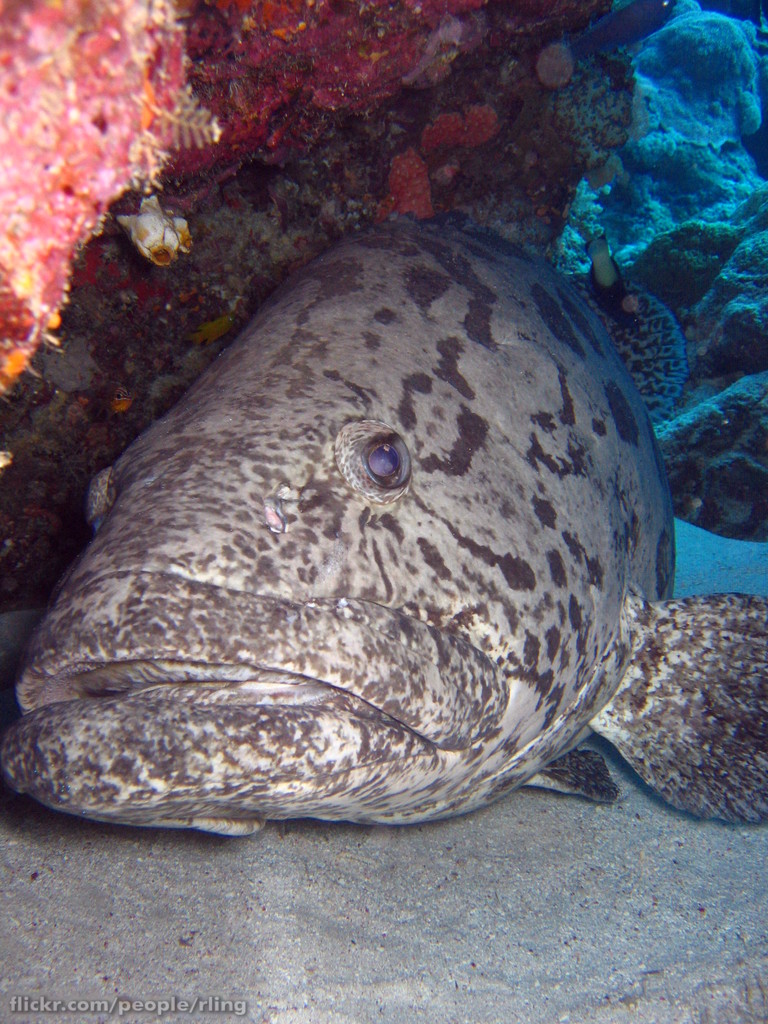
A large, mottled grey grouper from the western Atlantic.
The gag grouper is a marine fish found in the western Atlantic, ranging from the US coast to Brazil. It starts life as a female and changes sex to male as it grows older. Fishers target this species for food, leading to conservation measures in the US and Mexico.
- Starts life as female, changes to male later
- Can grow up to 145 cm and weigh 36.5 kg
- Found in western Atlantic from US to Brazil
- Makes thumping sounds when stressed
- Risk of ciguatera poisoning if eaten
What it is
This robust fish has an oblong body that is compressed from side to side. Its head profile curves outward, and the bone covering the gills has a rounded lobe with large serrations. The dorsal fin holds eleven spines and up to eighteen soft rays, while the tail fin is square. Adults often display a mottled grey or brown appearance with dark blotches. Large males may show a black colour phase on their rear body and fins. They can grow up to 145 centimetres long and weigh over 36 kilograms.
Where it lives
The species lives in the western Atlantic Ocean with two separate populations. One group ranges from Bermuda and North Carolina down to the Yucatan Peninsula in Mexico, largely skipping Cuba. The other population inhabits southern Brazil from Rio de Janeiro to Santa Catarina. Juveniles sometimes appear as far north as Massachusetts. They occupy both brackish estuaries and marine environments, moving offshore as they mature.
How it lives
Young fish hide in seagrass beds, eating small crustaceans. Adults move to rocky bottoms between ten and 152 metres deep. They hunt other fish, such as herring and jacks, as well as crabs and squid. These groupers may live alone or form groups of up to fifty individuals. When stressed, they vibrate their swim bladder to make thumping noises. Their diet shifts from small invertebrates to larger prey as they grow in size and strength.
Breeding and life cycle
All individuals begin life as females. They reach maturity at five or six years old and spawn at least once before some change into males. This sex change usually happens around ten years of age when the fish is nearly a metre long. Spawning occurs in winter and spring on offshore grounds. In the Atlantic, the season peaks in March and April. After breeding, females move to shallower water while males stay deeper. Fishing pressure has reduced the number of males in some areas.
Fish and people
Commercial and recreational fishers catch this species using lines and spearguns. They often target the large groups that form during spawning. Young fish are frequently caught accidentally in shrimp fisheries. The meat is eaten, but there are reports of ciguatera poisoning from consuming it. Due to vulnerability to overfishing, both Mexico and the United States have implemented rules to protect the population. It is a common target in the eastern Gulf of Mexico.
Status and threats
Overfishing poses a significant threat to this species. Conservation measures are in place in the United States and Mexico to manage stocks. The concentration of fishing effort on large males during spawning aggregations has altered sex ratios in some populations. Continued monitoring and regulation are necessary to ensure the sustainability of the fishery and the health of the remaining groups.

Questions people ask about Gag grouper
Is the gag grouper dangerous to eat?
The flesh is consumed by humans, but there have been reports of ciguatera poisoning. This illness comes from toxins in certain reef fish. Consumers should be aware of this risk when eating large specimens from tropical waters.
How does the gag grouper reproduce?
It is a protogynous hermaphrodite. All fish are born female and mature at five or six years. Some change to males later, typically around ten years old. They spawn in offshore waters during winter and spring months.
Where do young gag groupers live?
Juveniles inhabit shallow estuaries and seagrass beds. These areas provide protection and food sources like small crustaceans. As they grow, they move to deeper offshore rocky habitats where adults reside.
Good reading and sources
- Mycteroperca microlepis on WikipediaEncyclopedia
- More photos on Wikimedia CommonsPhotos
- Wikidata recordOpen data
The facts on this page come from the Wikipedia article "Mycteroperca microlepis", written by its contributors and used under the CC BY-SA 4.0 licence, and from its Wikidata record (CC0). EveryFish rewrote the text in its own words, with AI assistance, and compares every page with the article to make sure no passage is copied. It may be reused under the same CC BY-SA 4.0 licence with a link back.
It may contain mistakes, and figures change over time. Nothing here is investment or buying advice. If something is wrong, tell us. Last refreshed 2026-11-15.
Like Gag grouper
All perches, basses and snappers WorldDusky grouper
Large reef-dwelling fish found in the Atlantic and Mediterranean.Perch-like · Coasts and shelves · 1834
 WorldBluefin trevally
Large tropical marine predator with electric blue finsPerch-like · Coasts and shelves · 1833
 🇺🇸 United States and 4 moreMutton snapper
A colourful Atlantic reef fish prized for its meat.Perch-like · Coasts and shelves · 1828
 🇺🇸 United States and 1 moreYellow perch
Freshwater fish native to North America with distinctive vertical bars.Perch-like · Rivers and lakes · 1814
More from Serranidae
All of them Southeast AsiaHumpback grouper
A spotted marine fish with a distinctive humped head profile.Perch-like · Coral reefs · 1828
 🇺🇸 United States and 1 moreRed grouper
A large marine fish from the western Atlantic known for its reddish colour and role in reef ecosystems.Shark · Coasts and shelves · 1828
 WorldOrange-spotted grouper
A large Indo-Pacific marine fish prized for its flesh and known for changing sex.Other · Coasts and shelves · 1822
 WorldPotato grouper
Large Indo-Pacific reef grouper with dark blotches.Perch-like · Coral reefs · 1959