
Mozambique tilapia
A hardy cichlid from southeastern Africa, now farmed globally and listed as a major invasive species.
Native to rivers in southeastern Africa, this cichlid is prized for aquaculture due to its resilience and adaptability. Human introduction has spread it worldwide, where it often displaces native wildlife through competition and hybridization.
- Ranked among the top 100 worst invasive species globally.
- Females carry eggs and fry in their mouths for protection.
- Males use urine pheromones to signal dominance to rivals.
- Can survive in polluted waters and varied salinity levels.
- Hybrids with blue tilapia create the popular Florida Red strain.
What it is
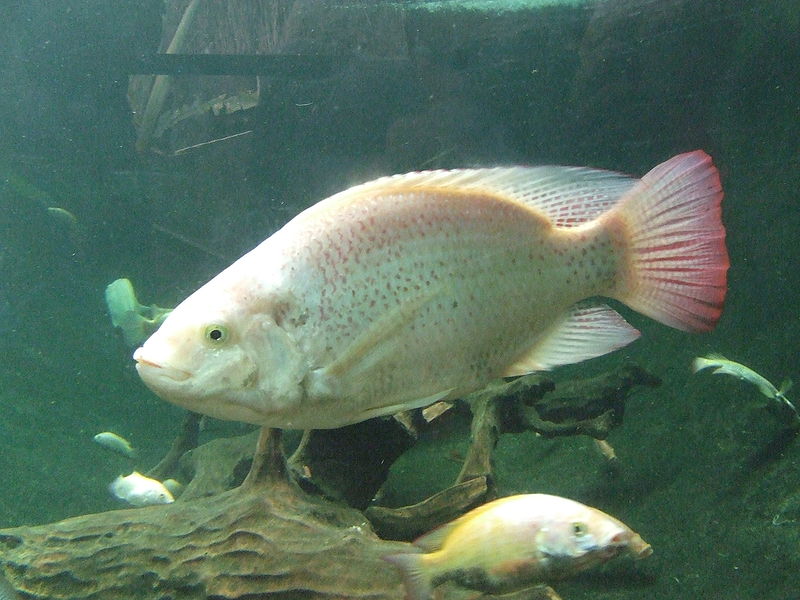
The Mozambique tilapia is a deep-bodied cichlid with a laterally compressed shape. Wild individuals display dull greenish or yellowish hues with faint banding. They possess long dorsal fins featuring spines at the front. Adults typically reach thirty-nine centimetres in length and weigh over one kilogram. This robust fish thrives in warm waters between seventeen and thirty-five degrees Celsius. It prefers slow-moving inland waters but tolerates brackish conditions.
Where it lives
This species originates from southeastern Africa, including the Zambezi and Limpopo basins across Mozambique, Zimbabwe, Zambia, and Malawi. Its natural range extends to the Eastern Cape province of South Africa. Human activity has introduced it to tropical and subtropical regions worldwide. It now inhabits diverse environments from Hawaii to California, often escaping aquaculture facilities or being released intentionally.
How it lives
These fish are opportunistic omnivores consuming algae, plants, and small animals. They form strict social hierarchies maintained through aggression and urinary pheromones. Males establish territories in shallow water aggregations known as leks to attract females. When resources become scarce, adults may cannibalize young. Their ability to adapt to varying food sources allows them to dominate local ecosystems rapidly.
Breeding and life cycle
Males excavate nests while females practice maternal mouthbrooding, carrying fertilized eggs in their mouths until hatching. This strategy protects offspring but reduces the mother's fitness temporarily. Breeding occurs in synchronized groups during specific seasons. Dominant males secure more mates by defending larger territories and producing attractive acoustic signals during courtship rituals.
Fish and people
Farmed globally for its mild white flesh and hardiness, this species supports aquaculture industries. It constitutes a small fraction of total tilapia production but is frequently used in hybrid breeding programs. These hybrids improve growth rates and fillet quality. The fish also serves as a bioassay organism for testing metal toxicity in freshwater systems due to its pollution resistance.
Status and threats
Listed among the world's worst invasive species by the Invasive Species Specialist Group. It threatens native biodiversity by competing for food and nesting sites. Hybridization with Nile tilapia endangers pure populations in its native range. Conservation efforts focus on managing introduced stocks to prevent ecological damage to local fish communities.


Questions people ask about Mozambique tilapia
Why is it called the Jesus fish?
In Jamaica, locals named it the Jesus fish because the population multiplies so rapidly that it seems to appear everywhere, similar to biblical miracles.
How does it reproduce?
Males dig nests and defend territories. Females lay eggs, which males fertilize. The female then stores the eggs in her mouth until they hatch, a process called mouthbrooding.
Is it safe to eat?
Yes, it has mild white flesh and is widely consumed. However, wild specimens from polluted areas may accumulate toxins, so farmed stock is generally preferred for consumption.
Why is it considered invasive?
It outcompetes native fish for food and space. It also hybridizes with local species, diluting their genetic purity and potentially driving native populations toward extinction.
Good reading and sources
- Mozambique tilapia on WikipediaEncyclopedia
- More photos on Wikimedia CommonsPhotos
- Wikidata recordOpen data
The facts on this page come from the Wikipedia article "Mozambique tilapia", written by its contributors and used under the CC BY-SA 4.0 licence, and from its Wikidata record (CC0). EveryFish rewrote the text in its own words, with AI assistance, and compares every page with the article to make sure no passage is copied. It may be reused under the same CC BY-SA 4.0 licence with a link back.
It may contain mistakes, and figures change over time. Nothing here is investment or buying advice. If something is wrong, tell us. Last refreshed 2026-11-15.
Like Mozambique tilapia
All cichlids 🇲🇽 Mexico and 1 moreMayan cichlid
A hardy cichlid from Mesoamerica with a distinctive tail spot.Cichlid · Rivers and lakes
 Sub-Saharan AfricaJewel cichlid
Brightly colored African cichlids kept in aquariums for their vivid breeding colours and parental care.Cichlid · Rivers and lakes
 🇪🇬 Egypt and 4 moreNile tilapia
A hardy cichlid farmed globally for food.Cichlid · Rivers and lakes · 1758
 🇨🇷 Costa Rica and 1 moreMidas cichlid
Large aggressive cichlid from Central AmericaCichlid · Rivers and lakes
More from Cichlidae
All of them 🇹🇿 Tanzania and 2 moreSingida tilapia
A cichlid fish native to the Lake Victoria basin in East Africa.Cichlid · Rivers and lakes
 🇭🇳 Honduras and 3 moreJaguar cichlid
Large predatory cichlid from Central American lakesCichlid · Rivers and lakes
 WorldAuratus cichlid
Small, colourful cichlid from Lake MalawiCichlid · Rivers and lakes
 Sub-Saharan AfricaPrincess cichlid
A cooperative schooling cichlid from Lake Tanganyika.Cichlid · Rivers and lakes