
Midas cichlid
Large aggressive cichlid from Central America
The Midas cichlid is a large freshwater fish native to rivers in Costa Rica and Nicaragua. It is popular in the aquarium trade for its size and variable colouration. The species is omnivorous and known for territorial aggression.
- Native to San Juan River in Costa Rica and Nicaragua
- Omnivorous diet of plants, molluscs and small fish
- Highly territorial and aggressive in aquarium settings
- Wild colours range from grey to bright orange or gold
- Part of a complex group evolving in volcanic crater lakes
What it is
The Midas cichlid is a robust freshwater fish with a heavy build. It possesses powerful jaws and sharp teeth, giving it a physical advantage over many other aquarium species. Wild specimens are typically grey or olive brown with black bars on their sides. Some individuals display pink, white, yellow or orange hues. These bright forms are often called golds. Aquarium variants may show accentuated head humps due to selective breeding.
Where it lives
This species is endemic to the San Juan River system. Its natural range includes adjacent watersheds in Costa Rica and Nicaragua. Populations also exist in volcanic crater lakes such as Apoyo and Xiloá. The fish inhabits freshwater environments. It is found in rivers and isolated lake systems within this Central American region.
How it lives
Midas cichlids are omnivorous feeders. Their diet includes plant matter, molluscs and smaller fish. They are highly territorial and aggressive towards other fish. This behaviour requires careful selection of tank mates in captivity. They can dominate other aquarium-sized cichlids in fights. In the wild, they form part of complex species groups in crater lakes.
Breeding and life cycle
Genetic studies indicate that multiple species within this group evolved via sympatric speciation. This process occurred in isolated volcanic crater lakes. The breeding population in Laguna de Apoyo is dominated by related species. Specific spawning behaviours and egg care details are not detailed in the provided text.
Fish and people
The fish is widely kept in the aquarium trade under the name Midas cichlid. Hobbyists value its size and colour variations. Selective breeding has produced forms with distinct morphological traits. It is also consumed as food in its native range. Care guides emphasize managing its aggressive nature in community tanks.
Status and threats
The International Union for Conservation of Nature lists this species as Least Concern. It faces no immediate threat of extinction. However, related species in the same crater lakes have smaller populations. Some relatives are considered Critically Endangered. The broader species complex contains many undescribed members restricted to small habitats.


Questions people ask about Midas cichlid
Is the Midas cichlid aggressive?
Yes, they are heavily built and very territorial. They have powerful jaws and sharp teeth. They can dominate other aquarium-sized cichlids in fights. Keepers must choose cohabitants carefully to avoid conflict.
What do Midas cichlids eat?
They are omnivorous. Their natural diet consists of plant material, molluscs and smaller fish. This varied diet helps them thrive in different freshwater environments within their native range.
Where are Midas cichlids found?
They are endemic to the San Juan River and nearby watersheds. Their range covers parts of Costa Rica and Nicaragua. They also live in volcanic crater lakes like Apoyo and Xiloá.
Good reading and sources
- Amphilophus citrinellus on WikipediaEncyclopedia
- More photos on Wikimedia CommonsPhotos
- Wikidata recordOpen data
The facts on this page come from the Wikipedia article "Amphilophus citrinellus", written by its contributors and used under the CC BY-SA 4.0 licence, and from its Wikidata record (CC0). EveryFish rewrote the text in its own words, with AI assistance, and compares every page with the article to make sure no passage is copied. It may be reused under the same CC BY-SA 4.0 licence with a link back.
It may contain mistakes, and figures change over time. Nothing here is investment or buying advice. If something is wrong, tell us. Last refreshed 2026-11-15.
Like Midas cichlid
All cichlids 🇧🇷 Brazil and 3 moreSpeckled peacock bass
A large South American cichlid prized for sport and food.Cichlid · Rivers and lakes
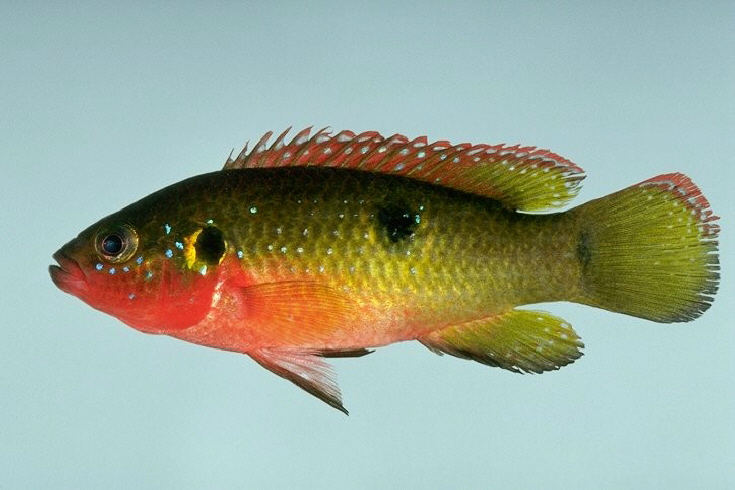 Sub-Saharan AfricaJewel cichlid
Brightly colored African cichlids kept in aquariums for their vivid breeding colours and parental care.Cichlid · Rivers and lakes
 🇭🇳 Honduras and 3 moreJaguar cichlid
Large predatory cichlid from Central American lakesCichlid · Rivers and lakes
 🇧🇮 Burundi and 3 moreGiant cichlid
The largest living cichlid species, native to Lake Tanganyika in Africa.Cichlid · Rivers and lakes · 1899
More from Cichlidae
All of them 🇹🇿 Tanzania and 2 moreSingida tilapia
A cichlid fish native to the Lake Victoria basin in East Africa.Cichlid · Rivers and lakes
 Sub-Saharan AfricaPrincess cichlid
A cooperative schooling cichlid from Lake Tanganyika.Cichlid · Rivers and lakes
 WorldAuratus cichlid
Small, colourful cichlid from Lake MalawiCichlid · Rivers and lakes
 🇧🇷 Brazil and 2 morePeacock bass
Large predatory cichlids from South American rivers known for sport fishing and invasive impact.Cichlid · Rivers and lakes