
Lesser electric ray
A small numbfish that generates electricity to stun prey.
The lesser electric ray is a small, slow-moving fish found in shallow Atlantic waters. It uses electric organs to defend itself and catch food. Though populations have dropped sharply, it remains listed as least concern by conservation groups.
- Generates 14 to 37 volts to stun prey
- Found from Brazil to North Carolina
- Population dropped to 2% in Gulf of Mexico
- Nocturnal hunter buried in sand
- Produces up to twenty live young
What it is
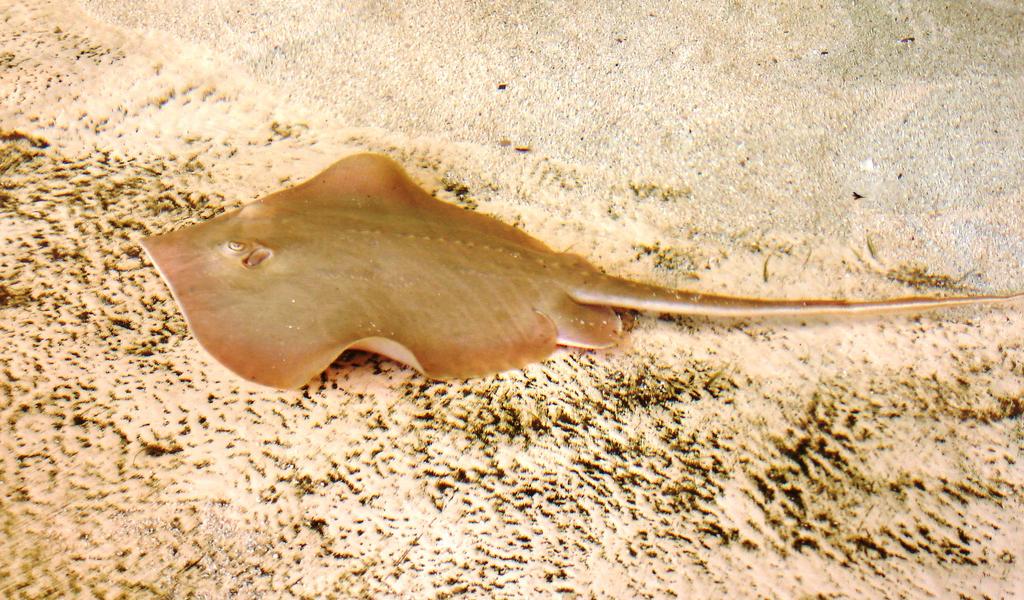
This species belongs to the numbfish family and features a nearly circular body with a short tail. Adults reach about 45 centimetres in length and 20 centimetres in width. Their colour varies from dark brown to reddish orange, often marked with irregular or oval rings. The underside is white or greenish. Two elongated electric organs extend from the eyes to the rear of the disc. These organs produce voltage to stun targets.
Where it lives
It inhabits the western coastal fringes of the Atlantic Ocean. Its range extends from northeastern Brazil up to North Carolina. The Gulf of Mexico, Caribbean Sea, and West Indies also host this fish. It prefers the surf zone of sandy or muddy beaches. While common in intertidal shallow waters, it has been recorded at depths of up to 55 metres.
How it lives
The animal is nocturnal and sluggish. It stays motionless under sand or mud during the day. At night, it forages in the substrate for food. Its diet includes polychaete annelids, benthic worms, and juvenile snake eels. It also consumes sea anemones, small bony fish, and various crustaceans. It maintains a territory within the beach surf zone.
Breeding and life cycle
Females reach maturity at the age of two. They do not lay eggs but produce live young. A single birth can yield as many as twenty offspring. This reproductive strategy helps the young survive in their coastal environment.
Fish and people
Fisheries often catch this ray as bycatch. Shrimp fisheries and seine netters frequently encounter it in coastal waters. Its electric shock can be dangerous to humans handling it. Despite population drops, it is not currently considered at risk of extinction by major reviews.
Status and threats
Populations in the Gulf of Mexico have fallen to roughly 2% of 1972 levels. Similar declines occurred elsewhere. In 2016, the US National Marine Fisheries Service reviewed its status. They concluded it was not in danger of extinction across its range. The International Union for Conservation of Nature rates it as least concern.


Questions people ask about Lesser electric ray
How strong is its electric shock?
The electric organs generate a peak voltage between 14 and 37 volts. This power is used to stun prey items and to defend the ray against potential threats.
Where does this ray live?
It lives in shallow coastal waters along the western Atlantic. You can find it from northeastern Brazil to North Carolina, including the Gulf of Mexico and the Caribbean Sea.
What does it eat?
It feeds mainly on polychaete annelids and benthic worms. It also eats juvenile snake eels, sea anemones, small bony fish, and various types of crustaceans found in the substrate.
Good reading and sources
- Lesser electric ray on WikipediaEncyclopedia
- More photos on Wikimedia CommonsPhotos
- Wikidata recordOpen data
The facts on this page come from the Wikipedia article "Lesser electric ray", written by its contributors and used under the CC BY-SA 4.0 licence, and from its Wikidata record (CC0). EveryFish rewrote the text in its own words, with AI assistance, and compares every page with the article to make sure no passage is copied. It may be reused under the same CC BY-SA 4.0 licence with a link back.
It may contain mistakes, and figures change over time. Nothing here is investment or buying advice. If something is wrong, tell us. Last refreshed 2026-11-15.
Like Lesser electric ray
All rays and skates 🇺🇸 United States and 2 moreRound stingray
A small coastal ray from the eastern Pacific known for its painful tail spine.Ray · Coasts and shelves
 WorldBluespotted ribbontail ray
A small, colourful reef stingray with electric blue spots.Ray · Coasts and shelves · 1775
 North AmericaYellow stingray
Small, camouflaging stingray of the western Atlantic.Ray · Coasts and shelves · 1816
 🇺🇸 United States and 1 moreAtlantic stingray
Small stingray found in Atlantic coastal waters and fresh rivers.Ray · Rivers and lakes · 1824