Kryptoglanis shajii
A tiny blind cave catfish from Kerala
Kryptoglanis shajii is a small subterranean catfish found in the Western Ghats of India. It lacks eyes and dorsal fins, living in underground waters and paddy fields. This unique species forms its own distinct family due to its unusual physical traits.
- Grows to only 5.9 cm in length
- Lacks a dorsal fin completely
- Eyes are hidden under the skin
- Found in caves and paddy fields
- Only member of its own family
What it is
This fish is a tiny catfish that lives underground. It grows to just under six centimetres in length. The body lacks a dorsal fin entirely. Its anal fin merges with the tail fin, carrying over seventy rays together. No spines appear on any fins. Four pairs of barbels surround an upward-facing mouth. The lower jaw projects forward and holds four sets of teeth. Eyes are present but hidden under the skin, making them non-functional for vision. These strange features place it in its own unique family.
Where it lives
The species inhabits the Western Ghats region in Kerala, India. It was first found in subsurface underground waters. Later observations showed it also lives in dense vegetation within paddy fields. In the Chalakudy area, it appears common in these agricultural habitats. It shares the distinction of being an underground-living catfish in India only with the genus Horaglanis.
How it lives
This catfish strongly avoids light, which suits its subterranean origins. It feeds on small invertebrates found in its environment. The upwardly directed mouth suggests it picks food from surfaces or the water column above. Its hidden eyes indicate adaptation to dark environments where sight is unnecessary. It likely relies on its barbels to sense surroundings and locate prey in murky or dark water.
Fish and people
Scientists study this fish due to its unique morphological traits. It represents a distinct evolutionary line as the sole member of its family. Its discovery adds to the understanding of biodiversity in the Western Ghats. It remains a subject of biological interest rather than commercial exploitation.
Questions people ask about Kryptoglanis shajii
Where does this fish live?
It lives in subsurface underground waters in the Western Ghats of Kerala, India. It is also found in dense vegetation within paddy fields, particularly in the Chalakudy area.
Why is it in its own family?
Its morphology differs from all other catfish. It lacks a dorsal fin, has subcutaneous eyes, and its anal fin merges with the caudal fin. These unique traits justify its classification in a separate family.
Can this fish see?
No, it cannot see effectively. Although it has eyes, they are subcutaneous, meaning they are covered by skin. This adaptation suits its life in dark underground waters and dense vegetation where it avoids light.
Good reading and sources
The facts on this page come from the Wikipedia article "Kryptoglanis shajii", written by its contributors and used under the CC BY-SA 4.0 licence, and from its Wikidata record (CC0). EveryFish rewrote the text in its own words, with AI assistance, and compares every page with the article to make sure no passage is copied. It may be reused under the same CC BY-SA 4.0 licence with a link back.
It may contain mistakes, and figures change over time. Nothing here is investment or buying advice. If something is wrong, tell us. Last refreshed 2026-11-15.
Like Kryptoglanis shajii
All catfishes 🇺🇸 United StatesWidemouth blindcat
A pale, eyeless catfish from Texas aquifersCatfish · Rivers and lakes
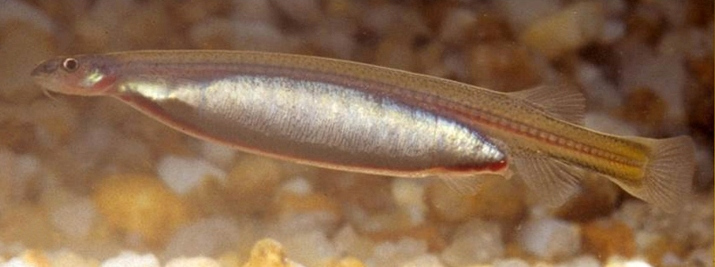 🇧🇷 Brazil and 4 moreCandiru
A tiny parasitic catfish from the Amazon that feeds on blood.Catfish · Rivers and lakes
 🇹🇭 Thailand and 4 moreMekong giant catfish
A massive freshwater fish native to the Mekong basin, now critically endangered.Catfish · Rivers and lakes
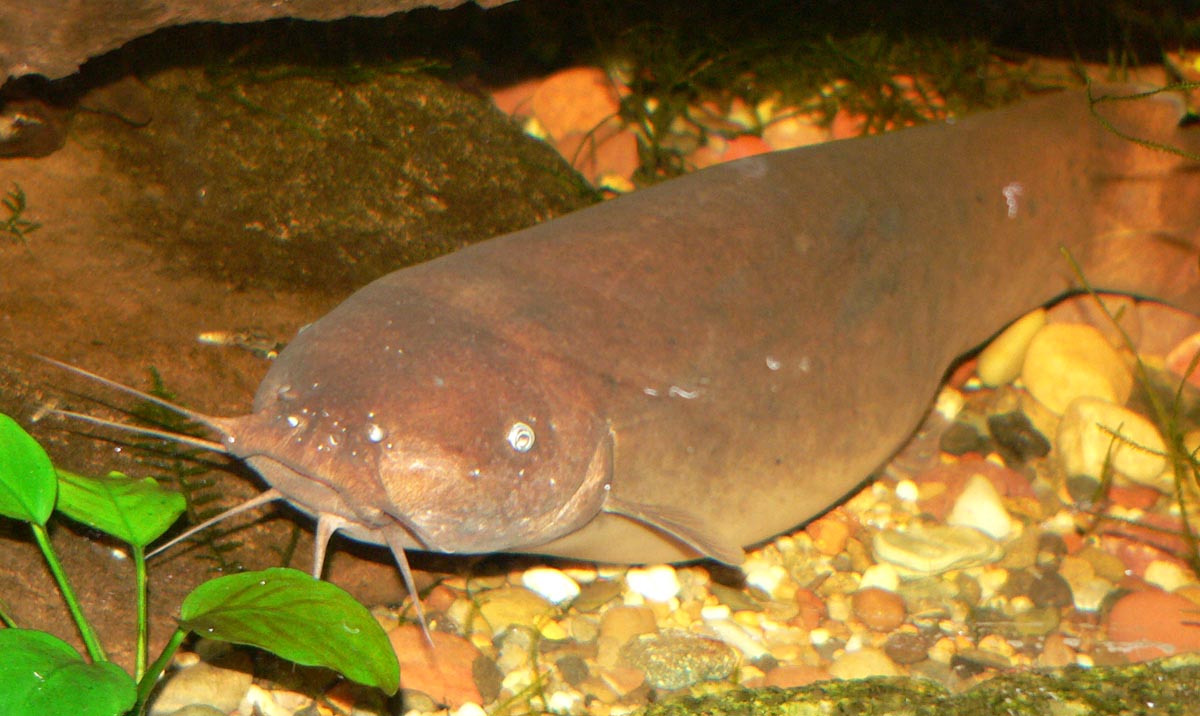 🇳🇬 Nigeria and 1 moreElectric catfish
African catfish that generates strong electric shocksCatfish · Rivers and lakes