
Jack Dempsey
Aggressive cichlid native to Central America
The Jack Dempsey is a medium-sized freshwater cichlid from southern Mexico to Honduras. It is popular in aquariums for its iridescent colours but is an invasive species in Australia and other regions due to its hardy nature.
- Native to freshwater in southern Mexico and Honduras
- Males grow up to 25 cm with pointed fin tips
- Parents pre-chew food to feed their young fry
- Established invasive population in New South Wales
- Changes colour to almost black when breeding
What it is
The Jack Dempsey is a medium-sized cichlid with a robust body and strong facial features. Its name references a famous boxer due to its aggressive look. Adults display dark purple-grey bodies with bright iridescent blue, green, and gold flecks. Two grey-black bars run across the top of the head between the eyes. Mature males have long pointed tips on their dorsal and anal fins, while females do not. The fish changes colour under stress or during breeding, often turning almost black. Aquarium variants include Gold, Electric Blue, and pink forms.
Where it lives
This species is native to freshwater habitats in southern Mexico and Honduras. It thrives in slow-moving, warm, and murky waters such as swamps, weedy canals, and drainage ditches. It also inhabits mud- and sand-bottomed rivers. Outside its native range, it has established populations in Australia, the United States, and Thailand. In Australia, it was found in a flooded quarry in New South Wales. It prefers temperatures between 22 and 30 degrees Celsius but can survive in cooler water down to 8 degrees.
How it lives
Jack Dempseys are carnivorous predators that eat worms, crustaceans, insects, and smaller fish. They are known for their aggressive behaviour and territorial nature. In the wild, they dominate space and compete fiercely for food. This aggression helps them survive in varied conditions but poses risks to native species where introduced. They are hardy and adaptable, capable of living in diverse water conditions. Their diet includes almost anything smaller than themselves, including frogs and invertebrates.
Breeding and life cycle
Females lay between 500 and 800 eggs on flat hard surfaces like rocks or logs. Both parents participate in incubating the eggs and guarding the fry after hatching. They show substantial parental care, often pre-chewing food for their young. However, stress or environmental disturbances can cause them to eat their own fry. During spawning, both genders become extremely aggressive towards other fish to protect their territory and offspring.
Fish and people
This fish is a popular choice for aquariums due to its striking appearance and personable mannerisms. It requires a tank with plenty of hiding places like caves. It is not suitable for community tanks because of its territorial aggression. In Australia, it is considered an invasive species likely released by aquarium owners. Eradication attempts using explosives in New South Wales failed to remove the population. Experts warn that imported ornamental fish pose significant biosecurity risks to local ecosystems.
Status and threats
The species is established in several non-native regions, causing concern for local biodiversity. In Australia, it is one of many aquarium fish that have impacted native aquatic ecosystems. Authorities attempted eradication in 2004 and 2005 but ceased further work. Non-native fish are implicated in the decline of many native Australian fish and frog species. The introduction of such species is considered a key threatening process, though import controls remain limited.


Questions people ask about Jack Dempsey
Why is it called Jack Dempsey?
The name refers to the famous 1920s boxer Jack Dempsey. The fish has aggressive behaviour and strong facial features that resemble the boxer's appearance and fighting style.
Can Jack Dempseys live in community tanks?
They are generally not suitable for community tanks due to their aggressive and territorial nature. They may coexist in well-populated tanks but often bully tank mates if space is limited.
What do Jack Dempseys eat?
They are carnivorous and eat worms, crustaceans, insects, and other fish. In the wild, they consume almost anything smaller than themselves, including frogs and invertebrates.
How do they care for their young?
Both parents guard the eggs and fry after hatching. They are attentive caregivers and often pre-chew food to feed their offspring, though stress may lead to filial cannibalism.
Good reading and sources
- Jack Dempsey (fish) on WikipediaEncyclopedia
- More photos on Wikimedia CommonsPhotos
- Wikidata recordOpen data
The facts on this page come from the Wikipedia article "Jack Dempsey (fish)", written by its contributors and used under the CC BY-SA 4.0 licence, and from its Wikidata record (CC0). EveryFish rewrote the text in its own words, with AI assistance, and compares every page with the article to make sure no passage is copied. It may be reused under the same CC BY-SA 4.0 licence with a link back.
It may contain mistakes, and figures change over time. Nothing here is investment or buying advice. If something is wrong, tell us. Last refreshed 2026-11-15.
Like Jack Dempsey
All cichlids 🇲🇽 Mexico and 1 moreMayan cichlid
A hardy cichlid from Mesoamerica with a distinctive tail spot.Cichlid · Rivers and lakes
 🇳🇮 NicaraguaRed devil cichlid
Large aggressive cichlid from Central American lakesCichlid · Rivers and lakes
 🇺🇸 United States and 1 moreTexas cichlid
The only cichlid native to the United StatesCichlid · Rivers and lakes
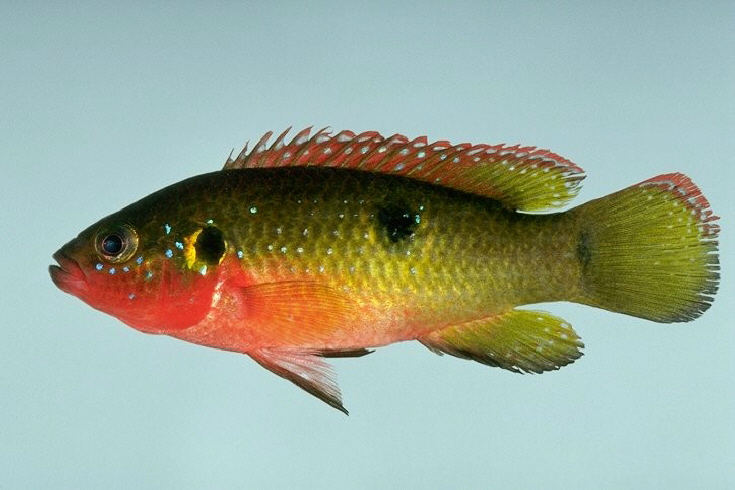 Sub-Saharan AfricaJewel cichlid
Brightly colored African cichlids kept in aquariums for their vivid breeding colours and parental care.Cichlid · Rivers and lakes
More from Cichlidae
All of them 🇹🇿 Tanzania and 2 moreSingida tilapia
A cichlid fish native to the Lake Victoria basin in East Africa.Cichlid · Rivers and lakes
 WorldAuratus cichlid
Small, colourful cichlid from Lake MalawiCichlid · Rivers and lakes
 🇭🇳 Honduras and 3 moreJaguar cichlid
Large predatory cichlid from Central American lakesCichlid · Rivers and lakes
 Sub-Saharan AfricaPrincess cichlid
A cooperative schooling cichlid from Lake Tanganyika.Cichlid · Rivers and lakes