
Black dragonfish
Deep-sea fish with infrared light and stalked larval eyes
The black dragonfish is a deep-sea species found in southern oceans. Females grow large and migrate vertically, while males remain small and deep. They use unique infrared bioluminescence to hunt prey they can see.
- Females reach 40 cm while males stay at 4 cm
- Emits nearly infrared light visible to itself
- Larvae have long dangling eye stalks
- Females migrate vertically; males stay deep
- Found in southern oceans down to 2,000 m
What it is
This barbeled dragonfish belongs to the family Stomiidae. It shows extreme differences between sexes. Females are black with six stripes and can reach forty centimetres in length. Males are brown, lack pelvic fins and barbel, and grow only to four centimetres. Both have bioluminescent capabilities. The light emitted is nearly infrared, making it hard for humans to see. Unusually, these fish can detect their own glow, using it actively for hunting rather than just attraction.
Where it lives
The species lives in southern subtropical and temperate waters. Its distribution circles the globe between latitudes twenty-five and sixty degrees south. These fish inhabit deep ocean zones, diving as far down as two thousand metres. They are adapted to the high pressure and darkness of the deep sea environment in these specific southern regions.
How it lives
Females perform a daily vertical migration. They stay below five hundred metres during the day and rise to surface waters at night. Males do not migrate, staying below one thousand metres constantly. Larvae have distinctive long eye stalks dangling from their bodies. These retract as the fish matures. The ability to see their own infrared light gives them a hunting advantage in the dark.
Questions people ask about Black dragonfish
How big does the black dragonfish get?
Size depends on sex. Females grow up to forty centimetres long. Males are much smaller, reaching only four centimetres. This extreme difference is a key feature of the species.
Why is its light special?
Most deep-sea fish use light to attract prey. This species can see its own bioluminescence. The light is nearly infrared, allowing it to hunt effectively without being easily seen by others.
Do they move around the ocean?
Females migrate daily. They stay deep during the day and rise to the surface at night. Males do not migrate and remain below one thousand metres at all times.
Good reading and sources
- Idiacanthus atlanticus on WikipediaEncyclopedia
- More photos on Wikimedia CommonsPhotos
- Wikidata recordOpen data
The facts on this page come from the Wikipedia article "Idiacanthus atlanticus", written by its contributors and used under the CC BY-SA 4.0 licence, and from its Wikidata record (CC0). EveryFish rewrote the text in its own words, with AI assistance, and compares every page with the article to make sure no passage is copied. It may be reused under the same CC BY-SA 4.0 licence with a link back.
It may contain mistakes, and figures change over time. Nothing here is investment or buying advice. If something is wrong, tell us. Last refreshed 2026-11-15.
Like Black dragonfish
All other fish WorldGlasshead barreleye
Deep-sea fish with mirror-based eyesOther · Open ocean
 WorldMarine hatchetfish
Small deep-sea fish with a distinctive compressed body shape and bioluminescent camouflage.Other · Open ocean
 WorldRibbonfish
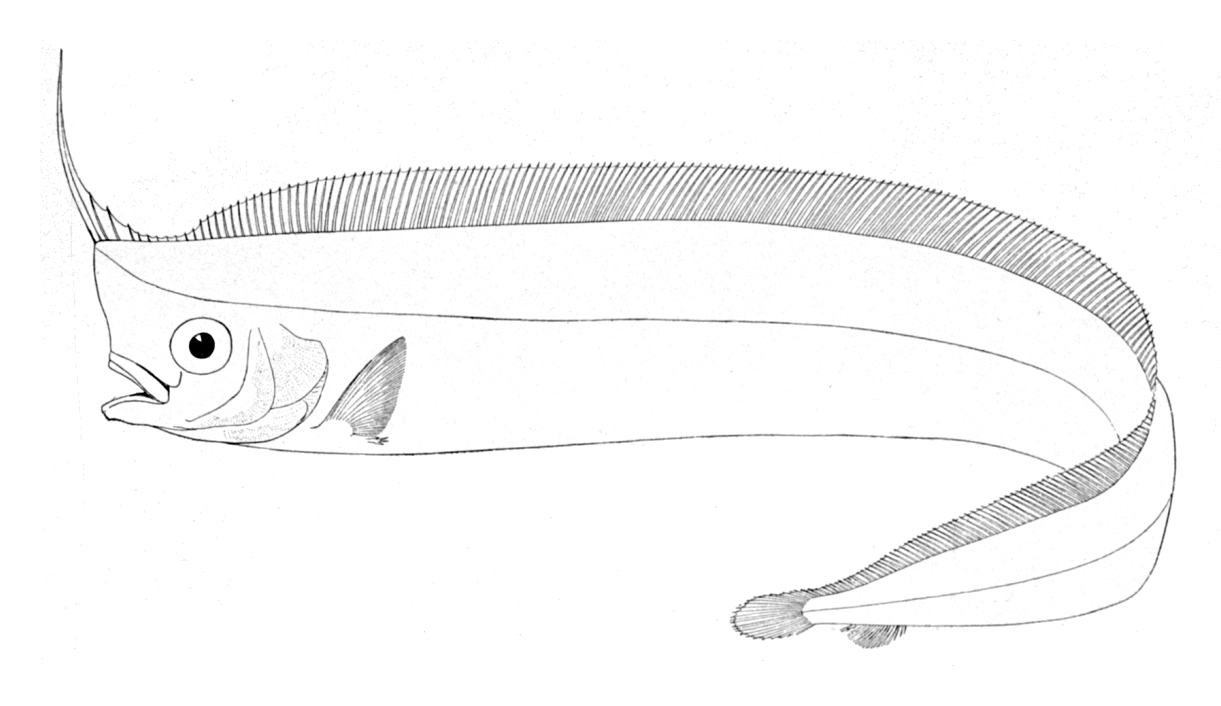
Deep-sea lampriforms with long, tape-like bodiesOther · Open ocean
 WorldCrestfish
Deep-sea ribbon fish with a head crest and ink sacsOther · Open ocean
More from Stomiidae
All of them WorldStareater
Small deep-sea fish with a red glowing lureOther · Deep sea
 WorldPacific blackdragon
Deep-sea fish with light-absorbing skin and a glowing chin lure.Other · Open ocean
 WorldViperfish
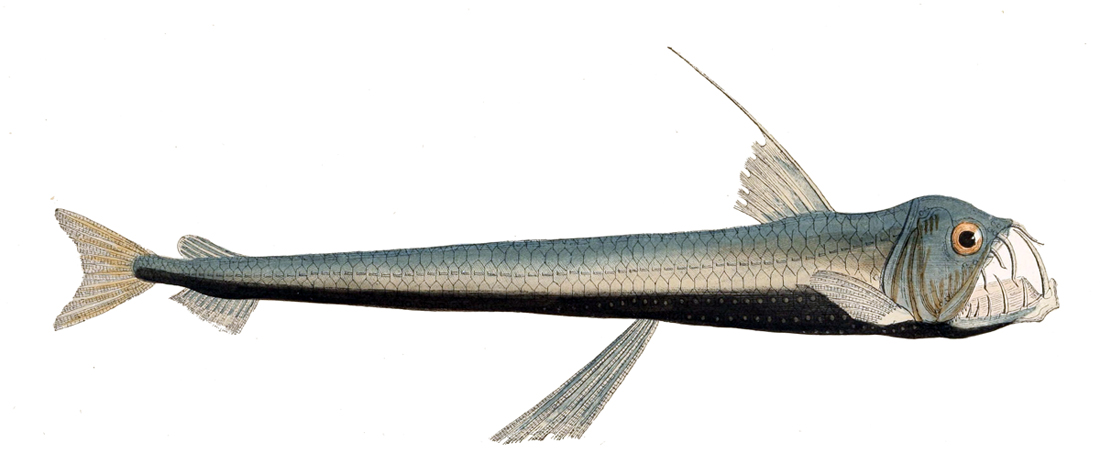
Deep-sea fish with fang-like teeth and bioluminescent lures in the genus Chauliodus.Other · Open ocean · 1801
 WorldSloane's viperfish
Deep-sea dragonfish with huge teeth and light organsOther · Open ocean · 1801