
Glowlight tetra
Small freshwater fish with a bright orange stripe
The glowlight tetra is a peaceful freshwater characin from Guyana and Suriname. It features a distinct iridescent orange stripe and is popular in community aquariums for its calm nature and ease of care.
- Features a bright iridescent orange stripe
- Native to rivers in Guyana and Suriname
- Grows up to 5 cm in length
- Requires soft water for successful breeding
- Best kept in shoals of eight or more
What it is
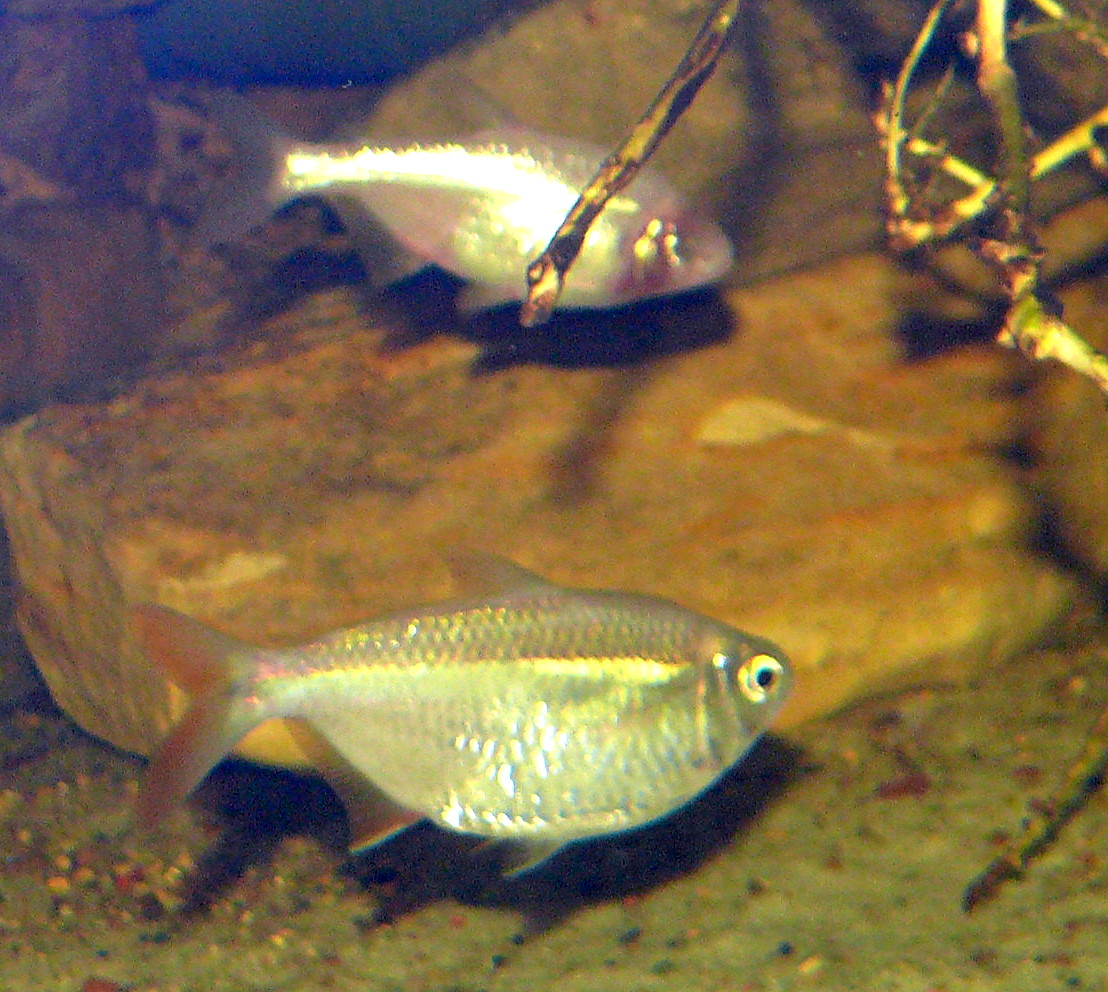
This small ray-finned fish belongs to the American characins. It has a silver body with a bright iridescent orange or red stripe running from its snout to the tail base. The front of the dorsal fin matches this colour, while other fins remain transparent or silver. Adults grow to about 4 or 5 centimetres, making them larger than neon tetras. They are known for their peaceful temperament and attractive appearance in tanks.
Where it lives
Wild populations live in the Essequibo and Courantyne River systems. These waters are located in Guyana and Suriname in South America. The species inhabits freshwater environments typical of these river basins. It is not found in marine or brackish conditions naturally.
How it lives
In nature, it feeds on aquatic insect larvae. In captivity, it accepts live, frozen, and dry foods as an omnivore. Vegetable matter helps vary its diet. This fish is shoaling and feels most secure in groups of eight or more. It swims tightly when threatened but ranges freely when comfortable. It prefers planted tanks with open swimming space and subdued lighting.
Breeding and life cycle
Captive breeding requires soft, slightly acidic water and dim light. Spawning occurs over fine-leaved plants like java moss. The pair rolls during the act, scattering 120 to 150 eggs. Parents must be removed afterwards to prevent egg eating. Fry hatch in about a day and appear glass-like. They need infusoria initially, then brine shrimp nauplii. Clean water is vital to prevent fry mortality.
Fish and people
Aquarists value this species for community tanks due to its calm nature. It is inexpensive and widely available, including golden and albino variants. It often plays a supporting role to neon tetras but can shoal with them. Proper care involves keeping them in groups in spacious, well-planted aquariums with dark substrates to enhance their colours.
Questions people ask about Glowlight tetra
What do glowlight tetras eat?
In the wild, they consume aquatic insect larvae. In aquariums, they are omnivores that accept small live, frozen, and dry flake foods. Adding vegetable matter is recommended to provide a varied and balanced diet for captive specimens.
How many glowlight tetras should I keep?
They are shoaling fish that feel most secure in groups. A minimum of four is acceptable, but eight or more is ideal. Larger groups encourage natural behaviour, making them more active and visually appealing in the aquarium.
What water conditions do they need?
They prefer soft to slightly hard water with a pH between 6.0 and 7.5. Ideal temperature ranges from 22 to 28 degrees Celsius. Soft water is essential for breeding, though they can adapt to harder conditions for general maintenance.
Good reading and sources
- Hemigrammus erythrozonus on WikipediaEncyclopedia
- More photos on Wikimedia CommonsPhotos
- Wikidata recordOpen data
The facts on this page come from the Wikipedia article "Hemigrammus erythrozonus", written by its contributors and used under the CC BY-SA 4.0 licence, and from its Wikidata record (CC0). EveryFish rewrote the text in its own words, with AI assistance, and compares every page with the article to make sure no passage is copied. It may be reused under the same CC BY-SA 4.0 licence with a link back.
It may contain mistakes, and figures change over time. Nothing here is investment or buying advice. If something is wrong, tell us. Last refreshed 2026-11-15.
Like Glowlight tetra
All other fish Southeast AsiaKissing gourami
A Southeast Asian freshwater fish known for its unique mouth-to-mouth sparring behaviour.Other · Rivers and lakes
 Southeast AsiaBumblebee goby
Small striped freshwater and brackish gobies from AsiaOther · Rivers and lakes
 WorldWeather loach
Small freshwater fish active before stormsOther · Rivers and lakes
 WorldSilver dollar
Round, silver tropical fish related to piranhas, popular in aquariums.Other · Rivers and lakes
More from Acestrorhamphidae
All of them Latin America and the CaribbeanPenguinfish
Small striped characin from South American riversOther · Rivers and lakes
 🇺🇸 United States and 1 moreMexican tetra
A freshwater characin with surface and blind cave forms, studied for evolutionary biology.Other · Rivers and lakes
 🇧🇷 Brazil and 2 moreBlack tetra
Small freshwater characin with dark vertical barsOther · Rivers and lakes
 🇧🇷 BrazilLemon tetra
Small yellow freshwater fish from the Amazon basin.Other · Rivers and lakes