
Gummy shark
A bottom-dwelling shark from southern Australia known for its crushing teeth and commercial fillets.
The gummy shark (Mustelus antarcticus) is a small to medium-sized ground shark found along the southern coasts of Australia. It is widely fished for its meat, which is sold as flake, and remains listed as least concern by conservation bodies despite local population pressures.
- Female gummy sharks grow larger than males, reaching 175 cm.
- Teeth crush shells, creating a jaw appearance lacking visible points.
- Females store sperm for up to 13 months before fertilizing eggs.
- Meat is sold as flake, popular in Australian fish and chip shops.
- Salinity changes in estuaries cause metabolic stress for juveniles.
What it is
This slender shark features a dark grey back marked with white spots and a silvery-white belly. Its name comes from flat, plate-like teeth used to crush hard prey, giving its jaws a toothless look. Males grow to about 157 cm while females reach 175 cm. Young sharks are born at 30 to 35 cm long. Growth rates vary by region, with slower development in areas like Central Queensland compared to southern waters.
Where it lives
These sharks inhabit the southern seas around Australia, including Tasmania and Bass Strait. They also appear in coastal Pacific areas like Japan and parts of the Indian Ocean. They prefer sandy bottoms near the shore, moving closer at night to hunt. Their range extends from Shark Bay in Western Australia to Port Stephens in New South Wales, living at depths up to 350 metres in moderate temperatures.
How it lives
They feed on crustaceans, worms, small fish, and cephalopods using their powerful crushing teeth. Juveniles stay close to shore, while adults travel further. Females cover larger distances than males. Strong sexual segregation occurs, with females often in western waters for breeding and males in southeastern zones. Predators include the broadnose sevengill shark for juveniles and humans for adults.
Breeding and life cycle
Reproduction is ovoviviparous, meaning eggs hatch inside the mother. Females can mate with multiple males to boost genetic diversity. Sperm storage allows fertilization up to 13 months later. Breeding happens between November and February, with an eleven to twelve month gestation period. Litters contain up to 57 pups, averaging 14. Females give birth in sheltered nurseries.
Fish and people
Fished heavily for food, especially in southern Australia where harvests exceed 1,800 tonnes annually. Fillets are marketed as flake for fish and chips. Recreational fishing has strict bag limits, often requiring release of smaller sharks. Bycatch from other fisheries and new gear types affect growth rates. Tagging programs track migration, though discard survival rates remain unclear.
Status and threats
Listed as least concern globally, but local populations face threats. Climate change alters salinity in nurseries like Pittwater Estuary, stressing young sharks. Hypersalinity disrupts their ion balance and metabolism. Overfishing impacts growth in younger age groups. Conservation efforts monitor physiological stress and reproductive capacity to manage sustainable harvest levels effectively.

Questions people ask about Gummy shark
What does the gummy shark eat?
It hunts crustaceans, marine worms, small fish, and cephalopods like squid and cuttlefish. Its flat teeth crush shells and bodies for easy consumption.
Is the gummy shark dangerous to humans?
No. It poses no threat to beachgoers or fishermen. It stays on the sea bed and flees when spotted, minimizing human contact.
How big do gummy sharks get?
Males reach 157 cm and females 175 cm. Newborns measure 30 to 35 cm. Growth varies by region and sex.
Why are they called gummy sharks?
Their flat, plate-like teeth resemble gums, giving their jaws a superficial toothless appearance when viewed from the outside.
Good reading and sources
The facts on this page come from the Wikipedia article "Gummy shark", written by its contributors and used under the CC BY-SA 4.0 licence, and from its Wikidata record (CC0). EveryFish rewrote the text in its own words, with AI assistance, and compares every page with the article to make sure no passage is copied. It may be reused under the same CC BY-SA 4.0 licence with a link back.
It may contain mistakes, and figures change over time. Nothing here is investment or buying advice. If something is wrong, tell us. Last refreshed 2026-11-15.
Like Gummy shark
All sharks 🇦🇺 AustraliaLongnose sawshark
A slender Australian shark with a long, toothed snout.Shark · Coasts and shelves
 WorldSmall-spotted catshark
A common shallow-water shark found across the northeast Atlantic and Mediterranean.Shark · Coasts and shelves
 WorldSalmon shark
A warm-blooded mackerel shark of the northern PacificShark · Coasts and shelves
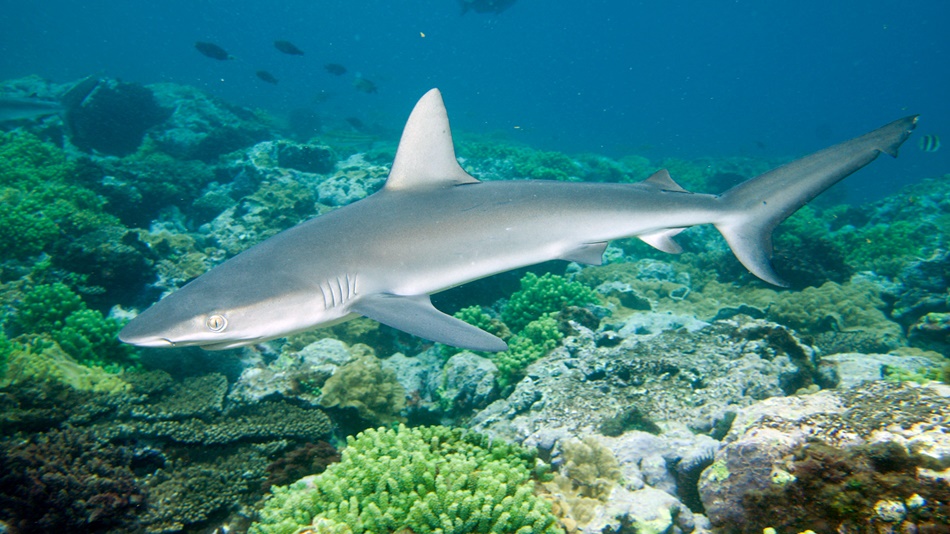 WorldGalapagos shark
Large requiem shark of tropical oceanic islandsShark · Coasts and shelves · 1905
More from Triakidae
All of them EuropeCommon smooth-hound
A grey-brown houndshark of the eastern Atlantic and Mediterranean.Shark · Coasts and shelves
 WorldSchool shark
A temperate houndshark valued for liver oil and meat.Shark · Coasts and shelves
 🇺🇸 United States and 1 moreLeopard shark
A coastal Pacific houndshark with black saddle markings and spots.Shark · Coasts and shelves · 1854