
Southern cavefish
A blind cavefish from the eastern United States.
The southern cavefish is a small, eyeless fish living in underground waters of the eastern US. It belongs to the Amblyopsidae family and survives on scarce food in isolated karst systems. Listed as near threatened, it faces risks from pollution and habitat changes.
- Lives in underground karst waters of the eastern US
- Blind and pigment-free due to cave adaptation
- Broods fewer than 50 eggs in gill chamber
- Listed as near threatened by IUCN
- Metabolic rate drops to survive food shortages
What it is
The southern cavefish is a small, pale fish adapted to life in total darkness. It lacks functional eyes and pigmentation, typical of obligate troglobites. This species belongs to the family Amblyopsidae and is the only current member of the genus Typhlichthys. It inhabits underground water systems in karst landscapes, where it lives in isolation from surface environments.
Where it lives
This fish is endemic to the eastern United States, specifically in states south of the Ohio River and east of the Mississippi. Its range includes Indiana, Kentucky, Tennessee, Alabama, Georgia, Missouri, Arkansas, and Oklahoma. It occupies the Ozark Plateau, Cumberland Plateau, and Interior Low Plateaus. The population is divided by the Mississippi River and lives in isolated subterranean habitats.
How it lives
The southern cavefish feeds primarily on aquatic arthropods like amphipods and isopods. To survive long periods without food, it maintains a depressed metabolic rate. It is mostly found in still waters or pools near water tables. The fish lives a solitary existence in dark caves, with little interaction between isolated groups.
Breeding and life cycle
Reproduction is slow, with females producing fewer than 50 eggs. These eggs are brooded within the female's gill chamber for protection. Young fish take about two years to reach sexual maturity. The total lifespan is short, lasting only around four years. This low reproductive output makes population recovery difficult after declines.
Fish and people
Scientists study this species to understand adaptation to extreme environments. It holds no commercial value for food or aquariums due to its specialized habitat needs. Conservation efforts focus on protecting groundwater quality and cave structures from human interference. It serves as an indicator of healthy subterranean ecosystems.
Status and threats
The International Union for Conservation of Nature lists it as near threatened. Populations have declined due to pollution, dropping water tables, and reservoir flooding. Vandalism in caves also poses a direct threat. Conservation categories vary across its range, but habitat protection remains critical for its survival.
Questions people ask about Southern cavefish
Where does the southern cavefish live?
It lives in subterranean waters and cave pools in the eastern United States, including states like Kentucky, Missouri, and Alabama. It prefers karst regions with isolated underground systems.
Why is the southern cavefish blind?
As an obligate troglobite, it has evolved in total darkness where vision is unnecessary. Over time, it lost functional eyes and pigmentation to adapt to its lightless environment.
What threatens the southern cavefish?
Major threats include groundwater pollution, lowering water tables, reservoir flooding, and cave vandalism. These factors reduce its already limited habitat and population density.
Good reading and sources
- Typhlichthys subterraneus on WikipediaEncyclopedia
- More photos on Wikimedia CommonsPhotos
- Wikidata recordOpen data
The facts on this page come from the Wikipedia article "Typhlichthys subterraneus", written by its contributors and used under the CC BY-SA 4.0 licence, and from its Wikidata record (CC0). EveryFish rewrote the text in its own words, with AI assistance, and compares every page with the article to make sure no passage is copied. It may be reused under the same CC BY-SA 4.0 licence with a link back.
It may contain mistakes, and figures change over time. Nothing here is investment or buying advice. If something is wrong, tell us. Last refreshed 2026-11-15.
Like Southern cavefish
All other fish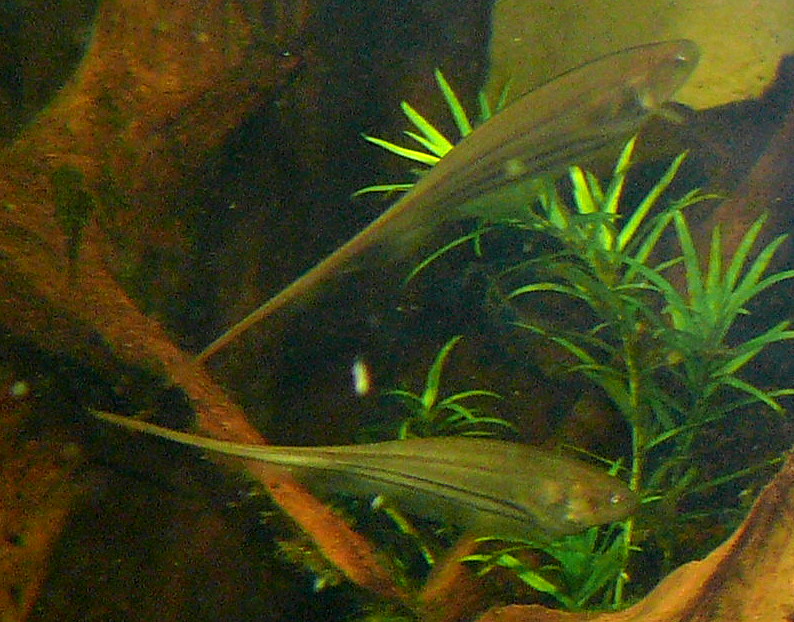 🇵🇦 Panama and 1 moreGlass knifefish
Translucent electric fish from South American riversOther · Rivers and lakes
 🇧🇷 Brazil and 4 moreHoplias aimara
A large freshwater predator from South America known for its size and mercury accumulation.Other · Rivers and lakes · 1846
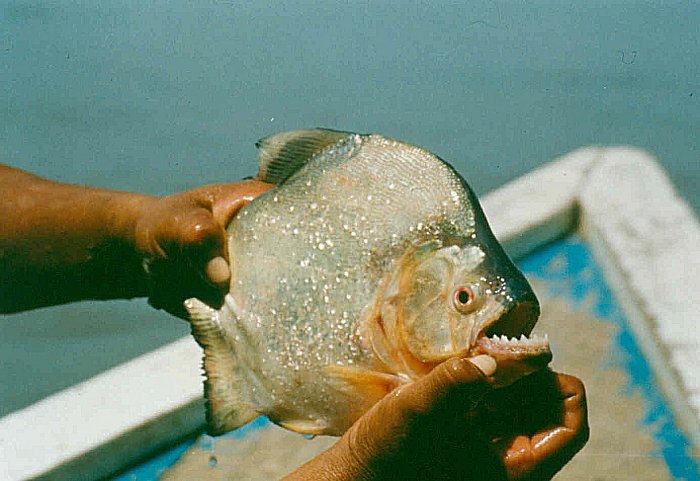 🇸🇷 Suriname and 2 moreRedeye piranha
A large freshwater fish from South America with a rhombus-shaped body and red eyes.Other · Rivers and lakes · 1766