
Glass knifefish
Translucent electric fish from South American rivers
Glass knifefishes are freshwater species in the family Sternopygidae found in Panama and South America. They use electric signals to navigate deep river channels and include thirty living species across seven genera.
- Translucent bodies with large eyes and short snouts
- Swim vertically in deep, swift river channels
- Produce monophasic tone-like electric discharges
- Includes the only cave-dwelling gymnotiform species
- Maximum length reaches 140 cm in some species
What it is
Glass knifefishes belong to the family Sternopygidae within the order Gymnotiformes. These animals are often called rattail knifefishes. They display a laterally compressed body shape and appear translucent when alive. The snout is short, while the eyes are large, matching or exceeding the distance between the nostrils. Brush-like teeth cover both jaws. A distinctive feature is the anal fin, which starts at the isthmus on the belly between the gill covers. Some species grow up to 140 cm in length.
Where it lives
These fishes inhabit freshwater environments across Panama and South America. Many species prefer the deep, fast-moving waters of major river channels, such as the Amazon and its tributaries. They have been observed swimming vertically in depths greater than twenty metres. Other species live in smaller streams and rivers. One specific species, Eigenmannia vicentespelaea, resides in caves, making it the only cave-dwelling member of its order. Fossil evidence from Bolivia indicates an ancient presence in the region.
How it lives
Glass knifefishes generate a tone-like electric organ discharge that occurs in a single phase. This ability helps them navigate and communicate in dark or murky waters. Their large eyes suggest visual sensing also plays a role, despite their preference for deep or subterranean habitats. They swim with a vertical orientation in strong currents. The group includes thirty living species divided into seven genera, showing diverse adaptations within similar freshwater ecosystems.
Fish and people
Some species are kept in home aquariums due to their unique appearance and behaviour. Scientists study these fish to understand electric signal production and evolution. The fossil genus Humboldtichthys provides insight into the historical development of electric fishes in South America. Their translucent bodies and electric capabilities make them subjects of interest for biological research rather than commercial fishing.
Questions people ask about Glass knifefish
Where do glass knifefishes live?
They inhabit freshwater streams and rivers in Panama and South America. Many species prefer deep, fast-moving channels in large rivers like the Amazon, while one species lives exclusively in caves.
How do glass knifefishes navigate?
They produce a tone-like electric organ discharge that occurs monophasically. This electric sense helps them detect objects and communicate in dark or turbulent water where visibility is low.
Are glass knifefishes kept in aquariums?
Yes, some species are popular in the aquarium trade. Their translucent appearance and unique electric abilities make them interesting for hobbyists and researchers interested in neotropical fish.
Good reading and sources
- Glass knifefish on WikipediaEncyclopedia
- More photos on Wikimedia CommonsPhotos
- Wikidata recordOpen data
The facts on this page come from the Wikipedia article "Glass knifefish", written by its contributors and used under the CC BY-SA 4.0 licence, and from its Wikidata record (CC0). EveryFish rewrote the text in its own words, with AI assistance, and compares every page with the article to make sure no passage is copied. It may be reused under the same CC BY-SA 4.0 licence with a link back.
It may contain mistakes, and figures change over time. Nothing here is investment or buying advice. If something is wrong, tell us. Last refreshed 2026-11-15.
Like Glass knifefish
All other fish 🇯🇵 JapanJapanese rice fish
Small freshwater fish native to Japan and a key model organism.Other · Rivers and lakes
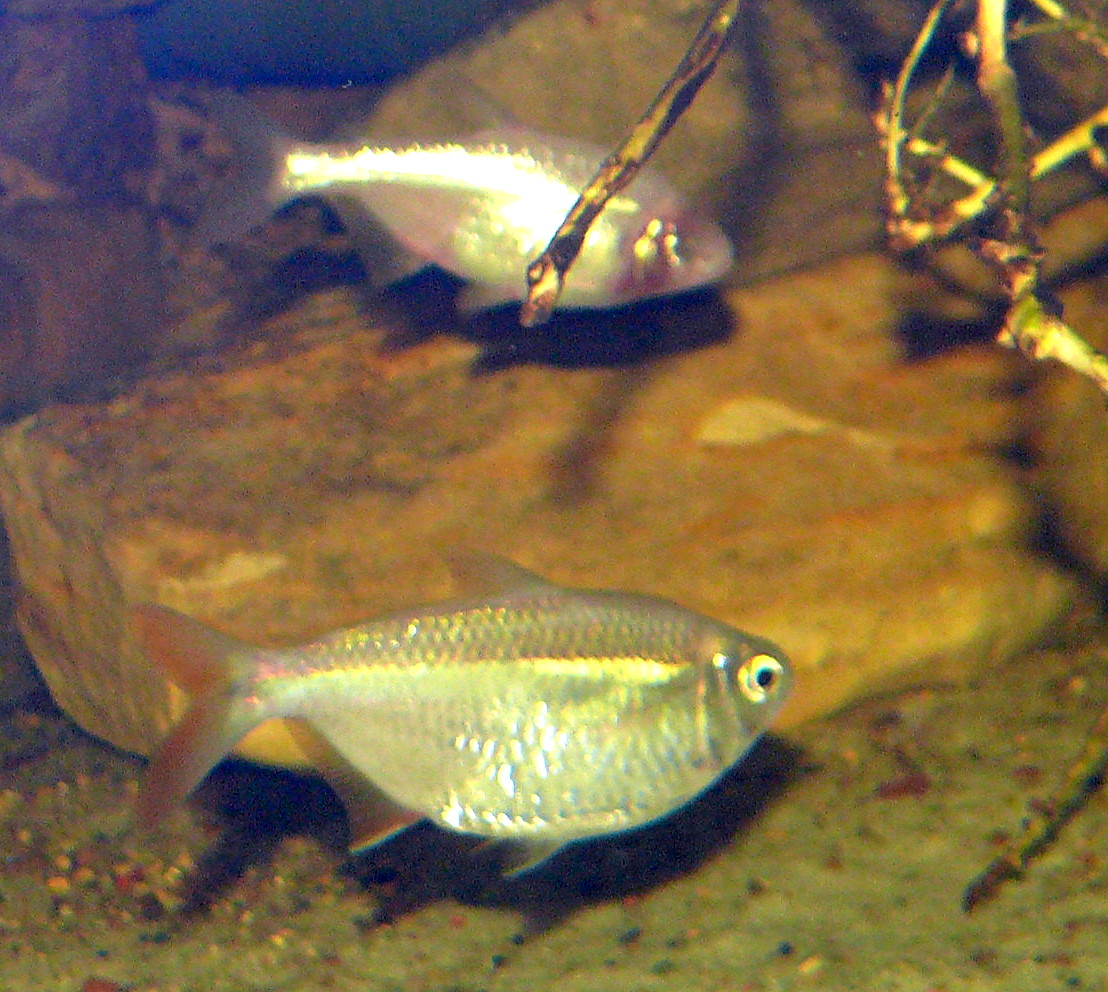 🇺🇸 United States and 1 moreMexican tetra
A freshwater characin with surface and blind cave forms, studied for evolutionary biology.Other · Rivers and lakes
 South AsiaGreen spotted puffer
Small brackish water pufferfish with a tiny genomeOther · Rivers and lakes