
Sand tiger shark
Large shark of subtropical and temperate coastal waters worldwide
The sand tiger shark lives in coastal waters of the Atlantic, Pacific and Indian Oceans on the continental shelf. It reaches up to 3.2 metres long and ranks as the most common large shark kept in public aquariums due to its tolerance for captivity.
- Maximum length reaches 3.2 metres
- Gulps air to stay suspended in water
- Largest embryo eats its siblings before birth
- Listed as critically endangered by IUCN
- Most widely kept large shark in aquariums
What it is
The sand tiger shark has a stout body and a pointed head with small eyes. Adults measure between 2 and 3.2 metres long with most around 2.2 to 2.5 metres and weighing 91 to 159 kilograms. The back is grey brown with reddish brown spots toward the rear while the belly stays pale. Two broad dorsal fins sit behind the pectoral fins and the tail has a long upper lobe. This species occupies the continental shelf in subtropical and temperate regions.
Where it lives
Sand tiger sharks appear in the Atlantic Ocean along the east coast of the Americas from Maine to Argentina and in the eastern Atlantic from the Mediterranean to Cameroon. In the Indian Ocean they range from South Africa to India and the Red Sea. In the Pacific they occur near Japan and Australia. They stay in waters up to 191 metres deep including estuaries, bays and reefs.
How it lives
These sharks feed at night after sheltering near rocks and reefs during the day. They gulp air at the surface to achieve neutral buoyancy and hunt quietly. Their food consists mostly of bony fish along with crustaceans, squid and other sharks and rays. They sometimes form groups to hunt schools of fish. Juveniles stay in coastal areas while adults migrate long distances along the coast each year.
Breeding and life cycle
Mating takes place in specific seasons depending on the hemisphere. During courtship males and females bite each other lightly. In reproduction the embryos in each uterus compete and the strongest one consumes the others and then unfertilised eggs. Only one young develops per uterus. Females give birth in cooler waters after a long gestation.
Fish and people
This shark causes no confirmed human deaths despite its appearance. It tolerates captivity well and ranks as the most common large shark in public aquariums. Different regions use distinct common names for it.
Status and threats
The species is listed as critically endangered by the IUCN. It has not been seen in the Mediterranean since 2003 and is considered gone from there.


Questions people ask about Sand tiger shark
What is its maximum size?
Adults can grow to 3.2 metres long and weigh up to 159 kilograms.
How does it hunt?
It gulps air to maintain buoyancy and hunts stealthily at night.
What happens during reproduction?
The dominant embryo eats the others in the uterus.
Does it attack people?
No human fatalities have been confirmed for this species.
Is it endangered?
It is categorised as critically endangered on the IUCN Red List.
Good reading and sources
- Sand tiger shark on WikipediaEncyclopedia
- More photos on Wikimedia CommonsPhotos
- Wikidata recordOpen data
The facts on this page come from the Wikipedia article "Sand tiger shark", written by its contributors and used under the CC BY-SA 4.0 licence, and from its Wikidata record (CC0). EveryFish rewrote the text in its own words, with AI assistance, and compares every page with the article to make sure no passage is copied. It may be reused under the same CC BY-SA 4.0 licence with a link back.
It may contain mistakes, and figures change over time. Nothing here is investment or buying advice. If something is wrong, tell us. Last refreshed 2026-11-15.
Like Sand tiger shark
All sharks WorldSicklefin lemon shark
Large Indo-Pacific requiem shark with sickle-shaped fins.Shark · Coasts and shelves · 1837
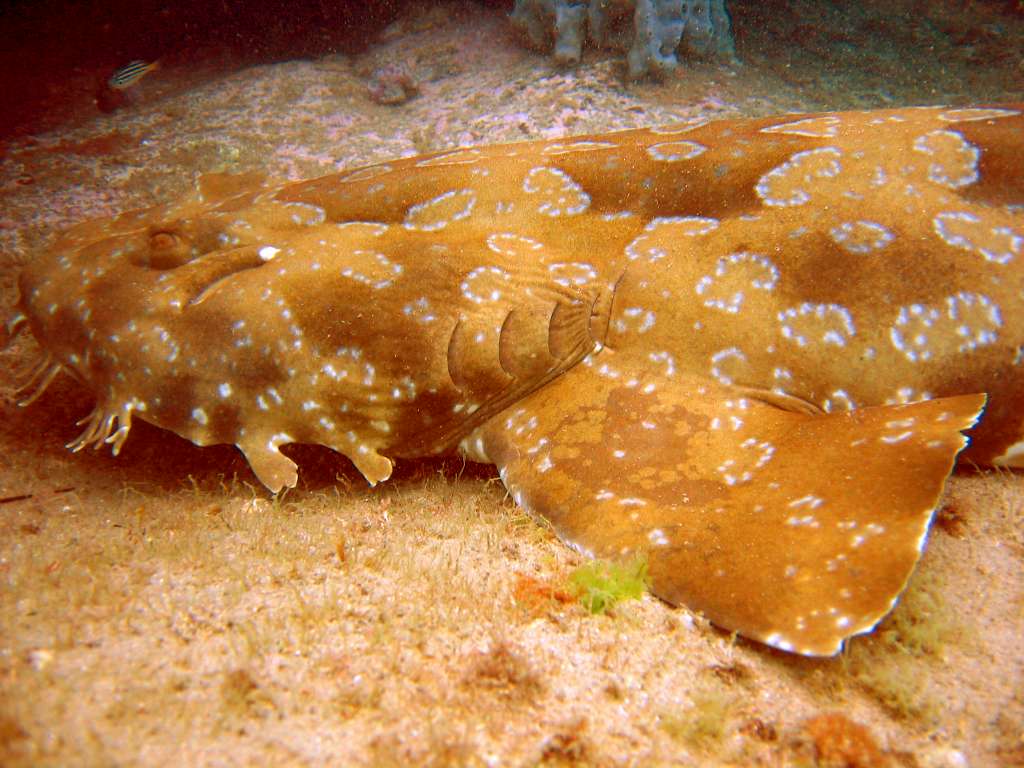 🇦🇺 Australia and 2 moreWobbegong
Camouflaged bottom-dwelling sharks found in the western Pacific and eastern Indian Ocean.Shark · Coasts and shelves
 🇮🇩 Indonesia and 4 moreWhitespotted bamboo shark
A small, bottom-dwelling carpet shark with purple and pink spots, common in Asian coral reefs.Shark · Coasts and shelves
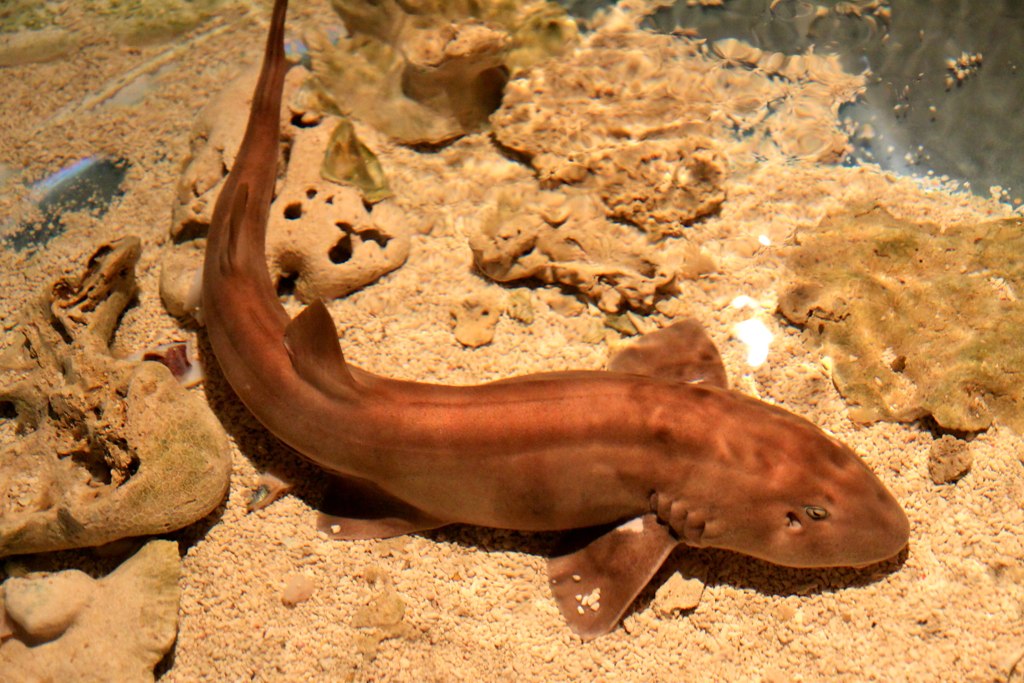 WorldBrownbanded bamboo shark
Small, docile reef shark suited for captivityShark · Coral reefs