
Queen parrotfish
A colourful reef fish that turns coral into sand
The queen parrotfish is a common reef dweller in the tropical West Atlantic and Caribbean. It changes sex from female to male and scrapes algae from coral, producing fine sand as waste. This activity helps maintain healthy reef structures while supporting local ecosystems.
- Changes sex from female to male at maturity
- Produces fine sand by digesting coral and algae
- Sleeps in a protective mucus cocoon at night
- Grows up to 60 cm in length
- Listed as least concern by IUCN
What it is
This heavy-bodied marine fish has a spindle shape and a beak-like mouth. Adults grow to about 60 cm. It belongs to the wrasse family and shows distinct colour changes during its life. Juveniles are small, while adults display bright hues depending on their sex and maturity. The species is native to warm western Atlantic waters.
Where it lives
It lives on rocky and coral reefs in the Caribbean Sea, the tropical West Atlantic Ocean and the southern Gulf of Mexico. These fish inhabit depths reaching 25 metres. They prefer areas with abundant coral growth where they can find their primary food sources. The environment is typically warm and clear, suitable for reef development.
How it lives
Active during the day, it rests at night in crevices or on the seabed. It secretes a mucus cocoon for protection against predators like sharks and eels. The diet consists mainly of algae scraped from surfaces, along with some coral and sponges. It acts as a scraper, eroding carbonate material less aggressively than excavator species.
Breeding and life cycle
All individuals start as females. At around 25 cm, some change sex to become males. Groups usually contain one terminal-phase male and several females. Courtship involves the male circling the female before both release gametes into the water. The fertilised eggs join the plankton, where larvae develop before settling on reefs.
Fish and people
Fishers target this species in some regions, contributing to local food supplies. Its role in producing sand through digestion is vital for beach formation. Conservation efforts focus on marine protected areas to counter overfishing and habitat loss. However, management challenges remain due to open ecosystem dynamics and external pressures.
Status and threats
The International Union for Conservation of Nature lists it as least concern. Populations remain common across their range. Threats include overfishing and degradation of reef habitats. Marine protected areas aim to support recovery, but their effectiveness varies. Poor management can hinder population maintenance, requiring careful monitoring of biomass and abundance.


Questions people ask about Queen parrotfish
Why is it called a parrotfish?
It has a beak-like mouth formed by fused teeth, which it uses to scrape algae and coral from hard surfaces. This structure resembles a parrot's beak, giving the group its common name.
How does it produce sand?
The fish eats algae and coral, grinding the calcium carbonate in its gut. It excretes the indigestible mineral particles as fine white sand, contributing significantly to beach sediment in tropical regions.
Do all queen parrotfish change sex?
Yes, they are protogynous hermaphrodites. All individuals begin life as females. Some transition to males when they reach an average length of 25 cm, changing colour and behaviour in the process.
What is the mucus cocoon for?
At night, the fish secretes a layer of mucus that surrounds its body. This cocoon may help mask its scent from predators such as moray eels and sharks while it sleeps in reef crevices.
Good reading and sources
- Queen parrotfish on WikipediaEncyclopedia
- More photos on Wikimedia CommonsPhotos
- Wikidata recordOpen data
The facts on this page come from the Wikipedia article "Queen parrotfish", written by its contributors and used under the CC BY-SA 4.0 licence, and from its Wikidata record (CC0). EveryFish rewrote the text in its own words, with AI assistance, and compares every page with the article to make sure no passage is copied. It may be reused under the same CC BY-SA 4.0 licence with a link back.
It may contain mistakes, and figures change over time. Nothing here is investment or buying advice. If something is wrong, tell us. Last refreshed 2026-11-15.
Like Queen parrotfish
All reef fish WorldRegal blue tang
Bright blue reef fish with a yellow tail and black markings.Reef fish · Coral reefs
 WorldParrotfish
Reef-dwelling wrasses with beak-like teeth that grind coral into sand.Reef fish · Coasts and shelves
 🇮🇩 Indonesia and 2 moreRed lionfish
Venomous coral reef fish native to the Indo-Pacific and invasive in the Atlantic.Reef fish · Coral reefs · 1758
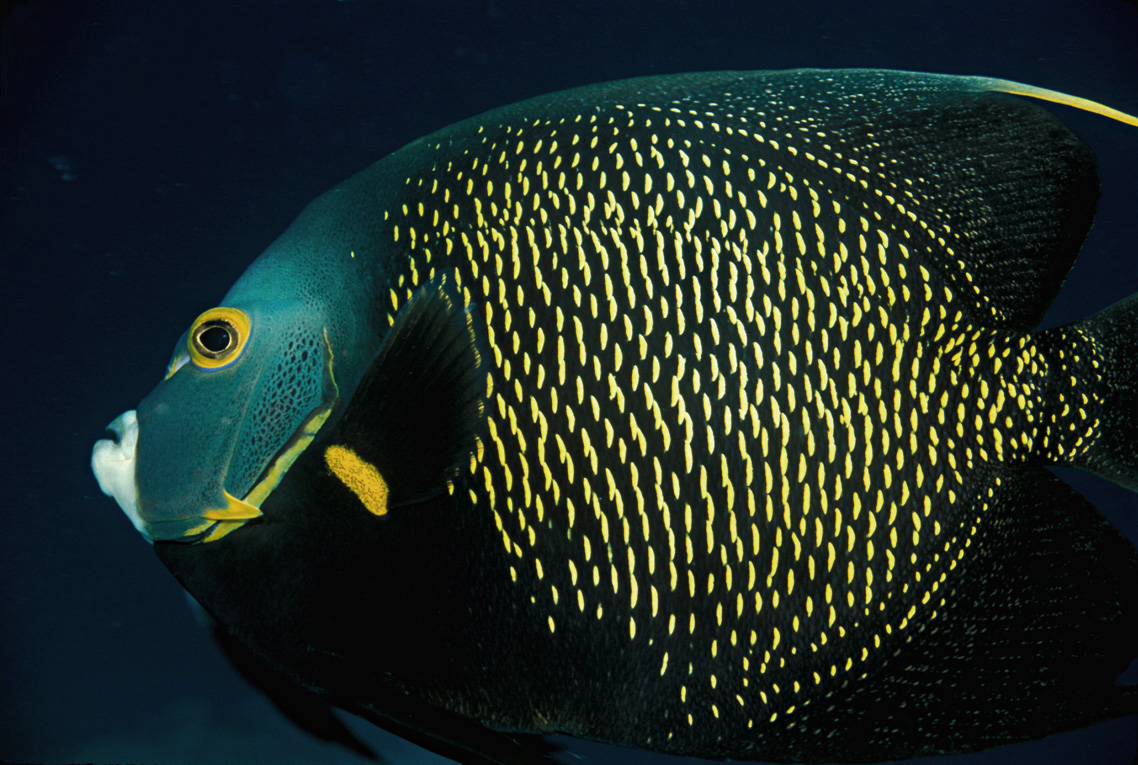 🇧🇷 Brazil and 1 moreFrench angelfish
A slow-growing Caribbean reef fish known for its sponge diet.Reef fish · Coasts and shelves · 1799
More from Labridae
All of them OceaniaBluestreak cleaner wrasse
A small reef fish that cleans parasites from larger marine animals.Reef fish · Coral reefs
 WorldBluehead wrasse
A small Atlantic reef fish known for changing sex and colour.Other · Coral reefs
 WorldGreen humphead parrotfish
The largest parrotfish species, known for its massive head and role in reef bioerosion.Reef fish · Coasts and shelves
 WorldWrasse
A large family of colourful marine fish known for sex change and cleaning symbiosis.Reef fish · Coasts and shelves