
Endler's livebearer
A small, colourful freshwater fish from Venezuela known for its bright patterns and ease of breeding in home aquariums.
Native to the Paria Peninsula in Venezuela, this tiny fish is a popular choice for hobbyists due to its vivid colours and hardy nature. It was first collected in 1937 and rediscovered by John Endler in 1975, leading to its widespread presence in the global aquarium trade.
- First collected in 1937 and rediscovered by John Endler in 1975.
- IUCN listed as Vulnerable in 2024 due to habitat threats.
- Males display intense black, orange, and metallic green patterns.
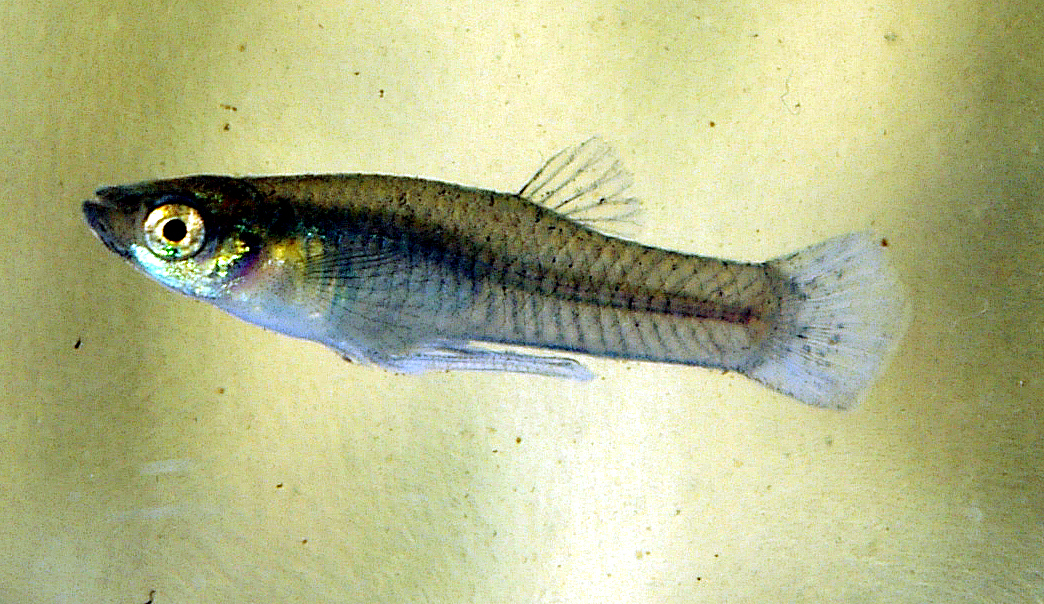
- Females grow up to twice the size of males but remain pale.
- Gives birth to live young every 23 days in numbers of 1-30.
What it is
Endler's livebearer is a diminutive freshwater fish belonging to the genus Poecilia. Males display intense black, orange, and metallic green markings, often featuring double sword tails or distinct colour bars. Females are significantly larger, reaching up to twice the size of males, but remain pale silver or dull gold. The species is highly variable in pattern, with breeders developing specific lines like red chest or yellow sword types. They are hardy creatures that thrive in well-maintained aquarium environments with proper aquascaping and water parameters.
Where it lives
This species is endemic to the Paria Peninsula in Venezuela. Its natural habitat includes Laguna de Patos and Laguna Campoma, along with their connected streams and canals. A distinct population exists in the El Tigre stream, which is not linked to the main lagoon systems. These freshwater bodies provide the specific environment where the fish evolved. Human activity near these lagoons, including municipal waste runoff, poses a direct threat to the original wild populations.
How it lives
Males exhibit vibrant colours that intensify over six months, while females maintain a subdued appearance throughout their lives. They are prolific breeders, giving birth to live young approximately every twenty-three days. Fry hatch between one and thirty per brood, initially hiding at the tank bottom to absorb yolk sacs. They feed on algae, microorganisms, and small foods like crushed flakes or baby brine shrimp. Natural hybridization with common guppies occurs in the wild, diluting pure gene pools.
Breeding and life cycle
Females give birth to live fry, a process that can be stressful and sometimes fatal for the mother if the brood is large. Newborns spend their first hours vulnerable at the bottom of the tank before becoming active swimmers. Males begin showing colour within three to four weeks but take several months to reach full intensity. Breeders carefully manage male-to-female ratios and registry records to prevent unwanted hybridization with common guppies, maintaining pure strains for the hobby.
Fish and people
The fish is a staple in the aquarium trade, often sold as Endler's guppy despite being a separate species. Hobbyists prize them for their beauty and ease of care, though purebred specimens are rarer than hybrids in general pet shops. Conservation efforts aim to protect wild populations from pollution and invasive species. Some enthusiasts maintain detailed breeding logs to preserve specific phenotypes, avoiding the genetic dilution caused by crossing with common guppy varieties.
Status and threats
The International Union for Conservation of Nature listed Poecilia wingei as Vulnerable in 2024. Wild populations face extinction risks from habitat pollution, garbage dump runoff, and the introduction of invasive species. Hybridization with released common guppies further threatens the genetic integrity of native stocks. Conservation status reflects the pressure from human encroachment on their limited natural range in Venezuela.


Questions people ask about Endler's livebearer
Is Endler's guppy a real species?
Yes, Poecilia wingei is recognized as a distinct species separate from the common guppy, though taxonomic debates persist. Molecular data supports its status as a unique taxon, despite some claims that it shares identical genetics with P. reticulata.
How do I care for Endler's livebearers?
They require proper aquascaping, stable water parameters, and appropriate tank mates. Maintain correct male-to-female ratios to reduce stress. Feed them powdered fry food, brine shrimp, or crushed flakes, ensuring they have access to algae and microorganisms.
Why are my Endlers changing colour?
Male colours intensify over six months, while females may shift from pale silver to dull gold depending on light exposure. Environmental changes can trigger colour adjustments in females, though they remain less vibrant than males throughout their lives.
Can Endlers breed with common guppies?
Yes, they can cross with P. reticulata and P. obscura, producing fertile hybrids. This dilutes pure gene pools, so hobbyists avoid mixing strains. Natural hybridization also occurs in the wild where both species share habitats.
Where is Endler's livebearer native?
It is native to the Paria Peninsula in Venezuela. Specific locations include Laguna de Patos, Laguna Campoma, and the El Tigre stream. These freshwater lagoons and connected streams provide its natural habitat.
Good reading and sources
- Poecilia wingei on WikipediaEncyclopedia
- More photos on Wikimedia CommonsPhotos
- Wikidata recordOpen data
The facts on this page come from the Wikipedia article "Poecilia wingei", written by its contributors and used under the CC BY-SA 4.0 licence, and from its Wikidata record (CC0). EveryFish rewrote the text in its own words, with AI assistance, and compares every page with the article to make sure no passage is copied. It may be reused under the same CC BY-SA 4.0 licence with a link back.
It may contain mistakes, and figures change over time. Nothing here is investment or buying advice. If something is wrong, tell us. Last refreshed 2026-11-15.
Like Endler's livebearer
All killifish and livebearers 🇲🇽 MexicoButterfly splitfin
A critically endangered livebearing fish from Mexico.Livebearer · Rivers and lakes · 1971
🇲🇿 MozambiqueBluefin notho
A small annual killifish from Mozambique kept in aquaria.Livebearer · Rivers and lakes · 1926
 🇬🇳 Guinea and 2 moreClown killi
Small West African freshwater fish with ringed patternsLivebearer · Rivers and lakes · 1915
 🇳🇬 Nigeria and 1 moreBlue lyretail
A colourful West African killifish kept in home aquariums.Livebearer · Rivers and lakes · 1911
More from Poeciliidae
All of them 🇺🇸 United StatesEastern mosquitofish
A small livebearing fish native to the eastern US, now invasive in many regions.Livebearer · Rivers and lakes · 1859
 🇲🇽 Mexico and 1 moreGreen swordtail
A hardy live-bearing fish popular in home aquariums.Livebearer · Rivers and lakes · 1848
 🇺🇸 United States and 1 moreSailfin molly
Small livebearing fish with a large dorsal fin in males.Livebearer · Rivers and lakes · 1821
 🇺🇸 United States and 4 moreMosquitofish
Small North American fish introduced globally for mosquito control.Livebearer · Rivers and lakes