
Northern snakehead
A freshwater fish from East Asia known for its air-breathing ability and invasive spread in North America.
The northern snakehead is a temperate fish native to China and Korea. It has been farmed for food globally and introduced to many regions, where it often becomes an invasive pest that disrupts local ecosystems.
- Breathes air via suprabranchial organ
- Can survive outside water for days
- Female lays up to 100,000 eggs annually
- Invasive in US Mid-Atlantic states
- World record weight is 9.53 kg
What it is
This species belongs to the snakehead family and possesses a long body covered in scales that extend onto the head. Its colour ranges from golden tan to pale brown with dark blotches along the sides and back. The fish features a large mouth with sharp teeth, small eyes positioned above the jaw, and a long dorsal fin. Adults typically reach one metre in length, though specimens up to 1.5 metres have been recorded. It lacks the black eyespot found on similar bowfin fish and has a more elongated head shape.
Where it lives
Native populations inhabit rivers across China, Russia, and the Korean peninsula, extending from Siberia to Hainan. The species thrives in stagnant waters, muddy streams, and swampy areas with vegetation. It cannot survive in water with high salinity. Invasive populations exist in the United States, particularly in the Mid-Atlantic region, as well as in Central Asian rivers like the Amu Darya. Historical introductions to Europe failed to establish lasting populations.
How it lives
The northern snakehead breathes air using a specialized organ, allowing it to survive out of water for days. This trait enables it to move overland between isolated ponds. It is a predatory fish that feeds on other fish, crustaceans, and amphibians. Young individuals may wriggle short distances on land, but adults remain primarily aquatic. The fish prefers murky, slow-moving water and acts as an apex predator in its invaded habitats.
Breeding and life cycle
Sexual maturity occurs at three or four years of age when fish are about thirty centimetres long. Mating takes place in shallow water during early mornings. Females release up to 100,000 spherical yellow eggs which hatch within two days. Parents guard the eggs until the young absorb their yolk sacs. The population can double rapidly due to high reproductive output and early maturation.
Fish and people
The fish is a major food source in Asia, with significant aquaculture production worldwide. In the United States, it is targeted by sport anglers who hold state records for rod-and-reel catches. Conservation efforts involve draining ponds and applying rotenone to eliminate invasive groups. Some Chinese cultures respect the species for parental care, noting that juveniles feed on their mother after spawning.
Status and threats
The species is listed as least concern globally due to its abundance in native ranges. However, it is classified as an invasive alien species of union concern in the European Union, banning trade and release. In the United States, it poses a threat to native biodiversity. Authorities actively monitor and remove populations in states like Maryland, Virginia, and New York to prevent further ecological damage.


Questions people ask about Northern snakehead
How does the northern snakehead breathe?
It uses a suprabranchial organ to breathe atmospheric air. This allows it to survive in low-oxygen water and stay out of water for several days while moving between bodies of water.
Where is the northern snakehead native?
It is native to temperate East Asia, including China, Russia, North Korea, and South Korea. Its range extends from the Amur River watershed down to Hainan island.
Is the northern snakehead dangerous to humans?
No, it is not considered dangerous to humans. It is a predatory fish that eats smaller fish and invertebrates. It is valued as a food fish and sport catch in many regions.
Why is it considered invasive in the US?
It outcompetes native species for food and habitat. Its ability to breathe air and move overland allows it to spread rapidly into new waterways, disrupting local ecosystems.
Good reading and sources
- Northern snakehead on WikipediaEncyclopedia
- More photos on Wikimedia CommonsPhotos
- Wikidata recordOpen data
The facts on this page come from the Wikipedia article "Northern snakehead", written by its contributors and used under the CC BY-SA 4.0 licence, and from its Wikidata record (CC0). EveryFish rewrote the text in its own words, with AI assistance, and compares every page with the article to make sure no passage is copied. It may be reused under the same CC BY-SA 4.0 licence with a link back.
It may contain mistakes, and figures change over time. Nothing here is investment or buying advice. If something is wrong, tell us. Last refreshed 2026-11-15.
Like Northern snakehead
All other fish WorldNile perch
Large freshwater predator native to Africa, now invasive in many lakes.Other · Rivers and lakes
 🇧🇼 Botswana and 1 moreAfrican tigerfish
Predatory freshwater fish known for sharp teeth and leaping hunting behaviour.Other · Rivers and lakes · 1861
 🇺🇸 United StatesWhite sucker
A common North American freshwater cypriniform fish with fleshy lips used for bottom feeding.Other · Rivers and lakes · 1803
 🇺🇸 United States and 4 moreLargemouth bass
A large freshwater predator native to North America, prized by anglers and invasive in many regions.Other · Rivers and lakes · 1802
More from Channidae
All of them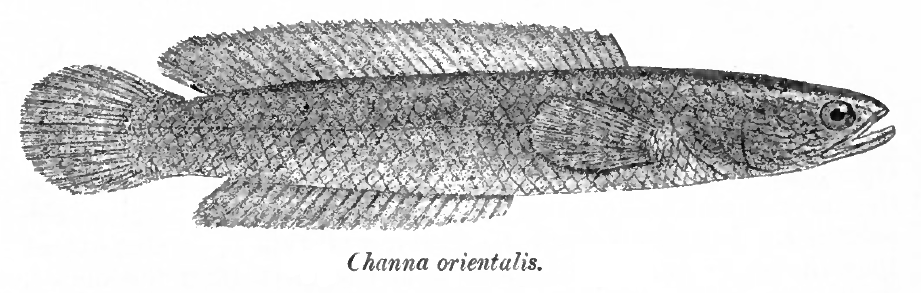 WorldSnakehead
Elongated freshwater predators with air-breathing organs found in Asia and Africa.Other · Rivers and lakes
 Southeast AsiaGiant snakehead
A large freshwater predator from Southeast Asia known for air breathing and invasive potential.Other · Rivers and lakes
 🇦🇫 Afghanistan and 4 moreSpotted snakehead
Small carnivorous fish from South AsiaOther · Rivers and lakes
 🇮🇷 Iran and 4 moreDwarf snakehead
Small freshwater fish native to southern AsiaOther · Rivers and lakes