
Spotted snakehead
Small carnivorous fish from South Asia
The spotted snakehead is a small freshwater and brackish water fish native to the Indian Subcontinent. It feeds on insects and smaller fish, serving as a valued food source in local diets while facing few conservation threats.
- Males can grow up to 31 cm in length
- Found in swamps, ponds and brackish waters
- Listed as Least Concern by IUCN
- Valued as a food fish in South Asia
- Diet includes insects, larvae and small fish
What it is
The spotted snakehead is a member of the snakehead family. It typically reaches lengths of about 15 centimetres, though male specimens have been recorded at up to 31 centimetres. This fish inhabits swamps, ponds and brackish water systems across its range. Its body shape and habits align with other predatory freshwater species found in the region.
Where it lives
This species is distributed widely across the Indian Subcontinent and adjacent areas. Its range includes Afghanistan, Pakistan, India, Sri Lanka, Nepal, Bangladesh, Myanmar and Tibet. It thrives in varied aquatic environments such as stagnant ponds, swampy areas and brackish water systems where salinity levels fluctuate.
How it lives
As a carnivore, the spotted snakehead primarily consumes other small fishes, yolk flies and fish larvae. Its diet also includes crustaceans, molluscs, insects and semi-digested materials, with occasional plant matter. Feeding habits shift with the seasons, and mature individuals eat less during the spawning period. Juveniles maintain a constant feeding routine throughout their growth.
Breeding and life cycle
Specific details on egg laying or fry development are not provided in the available records. However, it is noted that mature fish reduce their feeding intensity during the spawning period. This behavioural change suggests a focus on reproductive activities rather than foraging during this critical life stage.
Fish and people
Local communities value this fish highly for food. It provides a significant source of protein in regions where it is abundant. Despite its culinary importance, it holds little appeal for the aquarium trade. Fishers target it in natural habitats, contributing to local diets without significant commercial farming operations mentioned.
Status and threats
The International Union for Conservation of Nature lists the spotted snakehead as Least Concern. This classification reflects the absence of major threats to its populations. The species remains widespread and stable across its native range, with no immediate conservation actions required to prevent decline.

Questions people ask about Spotted snakehead
How big does the spotted snakehead get?
Most individuals grow to around 15 centimetres. Male fish can reach larger sizes, with recorded lengths of up to 31 centimetres in captured specimens.
What does the spotted snakehead eat?
It is a carnivore that feeds on small fishes, yolk flies, larvae, crustaceans, molluscs and insects. It may also consume semi-digested materials and some plant matter.
Is the spotted snakehead endangered?
No, it is listed as Least Concern by the IUCN. There are no major threats currently affecting its population stability across its wide geographic range.
Good reading and sources
- Channa punctata on WikipediaEncyclopedia
- More photos on Wikimedia CommonsPhotos
- Wikidata recordOpen data
The facts on this page come from the Wikipedia article "Channa punctata", written by its contributors and used under the CC BY-SA 4.0 licence, and from its Wikidata record (CC0). EveryFish rewrote the text in its own words, with AI assistance, and compares every page with the article to make sure no passage is copied. It may be reused under the same CC BY-SA 4.0 licence with a link back.
It may contain mistakes, and figures change over time. Nothing here is investment or buying advice. If something is wrong, tell us. Last refreshed 2026-11-15.
Like Spotted snakehead
All other fish 🇩🇪 Germany and 4 moreEuropean smelt
Small coastal fish with a cucumber scentOther · Rivers and lakes
 WorldNile perch
Large freshwater predator native to Africa, now invasive in many lakes.Other · Rivers and lakes
 🇹🇷 Turkey and 4 moreAnchovy
Small, oily forage fish found in oceans and some rivers worldwide.Herring · Coasts and shelves
 North AmericaAtlantic croaker
Noisy marine fish of the western Atlantic coastOther · Coasts and shelves
More from Channidae
All of them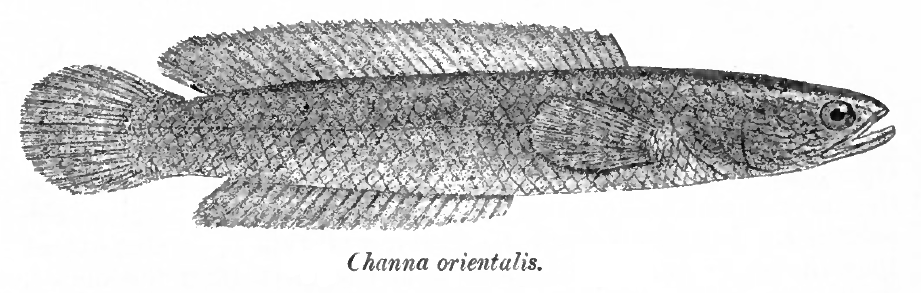 WorldSnakehead
Elongated freshwater predators with air-breathing organs found in Asia and Africa.Other · Rivers and lakes
 Southeast AsiaGiant snakehead
A large freshwater predator from Southeast Asia known for air breathing and invasive potential.Other · Rivers and lakes
 🇮🇷 Iran and 4 moreDwarf snakehead
Small freshwater fish native to southern AsiaOther · Rivers and lakes