
Malabar snakehead
A vulnerable freshwater fish endemic to the Western Ghats of India.
The Malabar snakehead is a distinct freshwater species found only in the southern Western Ghats of India. Once mistaken for the giant snakehead, it was reclassified as a valid endemic species in 2011. It faces threats from habitat loss and pollution.
- Endemic to the southern Western Ghats of India
- Reclassified as a valid species in 2011
- Listed as Vulnerable on the IUCN Red List
- Has 103–105 lateral line scales
- Known by four different local names based on colour
What it is
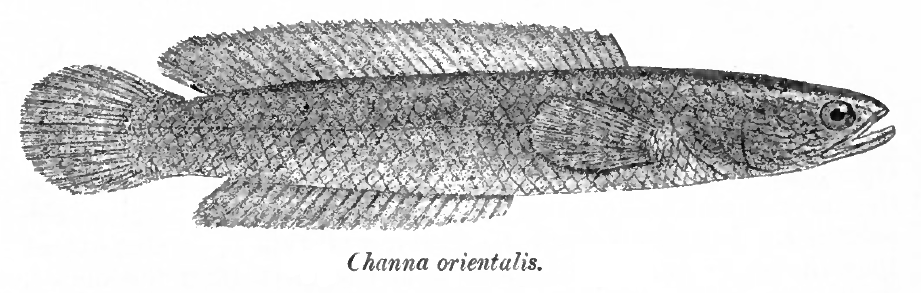
The Malabar snakehead is a freshwater fish belonging to the snakehead family. It is native to the southern Western Ghats in India. This species displays multiple colour phases during its life, which often leads local fishers to mistake different growth stages for separate species. It possesses gular scales on the throat area and a high count of lateral line scales, distinguishing it from relatives.
Where it lives
This fish is endemic to peninsular India, specifically the southern Western Ghats. It inhabits several river systems and their associated reservoirs. In Kerala, it is found in the Meenachil, Manimala, Pampa, Achenkovil, Chalakudy, and Kallada Rivers. In Tamil Nadu, populations exist in the Chittar and Tambaraparani Rivers. Its distribution is restricted to these specific freshwater basins.
How it lives
Individuals of this species share the same ecological habitats regardless of their colour phase. The varying appearances throughout their life history cause confusion among observers, who assign different vernacular names to each phase. These names include pulivaka, karivaka, manalvaka, and charalvaka. Despite these visual differences, all forms occur sympatrically, meaning they live in the same geographic area and interact within the same ecosystem.
Fish and people
Local communities identify the fish by different names depending on its colour phase. These traditional names reflect the belief that the varying appearances represent distinct species. The fish is part of the local freshwater biodiversity in Kerala and Tamil Nadu.
Status and threats
The International Union for Conservation of Nature lists this species as Vulnerable. Its restricted range makes it particularly sensitive to environmental changes. Major threats include active fishing, loss of natural habitat, and water pollution. The limited distribution across specific river systems in the Western Ghats means that localised damage can have significant impacts on the overall population stability.
Questions people ask about Malabar snakehead
Why was the Malabar snakehead confused with other species?
Juveniles of this fish look very similar to juveniles of the giant snakehead. This resemblance led scientists to classify it as a synonym of that species for 134 years. It was only recognized as a distinct species in 2011 after detailed study.
Where can the Malabar snakehead be found?
It lives exclusively in the freshwater rivers and reservoirs of the southern Western Ghats in India. Specific locations include rivers in Kerala such as the Chalakudy and Kallada, and rivers in Tamil Nadu like the Tambaraparani.
What is the conservation status of this fish?
The species is listed as Vulnerable by the IUCN. It faces risks from its limited geographic range, ongoing fishing activities, habitat destruction, and pollution in the river systems where it lives.
Good reading and sources
- Malabar snakehead on WikipediaEncyclopedia
- More photos on Wikimedia CommonsPhotos
- Wikidata recordOpen data
The facts on this page come from the Wikipedia article "Malabar snakehead", written by its contributors and used under the CC BY-SA 4.0 licence, and from its Wikidata record (CC0). EveryFish rewrote the text in its own words, with AI assistance, and compares every page with the article to make sure no passage is copied. It may be reused under the same CC BY-SA 4.0 licence with a link back.
It may contain mistakes, and figures change over time. Nothing here is investment or buying advice. If something is wrong, tell us. Last refreshed 2026-11-15.
Like Malabar snakehead
All other fish 🇦🇺 AustraliaGolden perch
A medium-sized Australian freshwater fish prized by anglers.Other · Rivers and lakes · 1845
 🇮🇳 IndiaDwarf pufferfish
A tiny freshwater pufferfish from India prized for its bright colours and small size in home aquaria.Other · Rivers and lakes · 1941
 🇳🇿 New ZealandGiant kōkopu
New Zealand's largest freshwater fish, known for its amphidromous life cycle and traditional food value.Other · Rivers and lakes · 1789
 🇮🇳 IndiaGollum snakehead
Subterranean fish from Kerala aquifersOther · Rivers and lakes · 2019
More from Channidae
All of them 🇨🇳 China and 4 moreNorthern snakehead
A freshwater fish from East Asia known for its air-breathing ability and invasive spread in North America.Other · Rivers and lakes · 1842
 Southeast AsiaGiant snakehead
A large freshwater predator from Southeast Asia known for air breathing and invasive potential.Other · Rivers and lakes
 🇦🇫 Afghanistan and 4 moreSpotted snakehead
Small carnivorous fish from South AsiaOther · Rivers and lakes
 WorldSnakehead
Elongated freshwater predators with air-breathing organs found in Asia and Africa.Other · Rivers and lakes