
Malabar blood snapper
A red reef snapper from the Indo-Pacific.
The Malabar blood snapper is a marine fish native to the Indian Ocean and western Pacific. It grows up to one metre long and lives on coastal reefs. Fishers value it as high-quality food, leading to commercial harvests across its range.
- Grows up to 100 cm long and weighs 7.9 kg
- Juveniles have a distinctive black band on the tail
- Hunted at night for fish and crustaceans
- Farmed in mariculture systems in southern China
- Listed as Least Concern by the IUCN
What it is
This species is a ray-finned fish belonging to the snapper family. It has a deep body with a steep forehead and a concave snout profile. The dorsal fin holds eleven spines and up to fourteen soft rays. Adults display red or reddish-orange colouring on their back and flanks, fading to pale shades on the abdomen. Juveniles feature a distinct diagonal dark band running from the jaw to the dorsal fin, plus a black band across the tail base with a white edge. The mouth is large, helping distinguish it from similar scarlet snappers.
Where it lives
Its distribution covers the Indo-West Pacific region. Populations extend from the Persian Gulf eastward to Fiji and north to Japan. In the south, it reaches Australia, where it inhabits coasts from Shark Bay to Sydney. Records also confirm presence in Tonga, Kosrae, and Jeju Island. Reports from Eastern Africa remain unverified. Adults prefer deeper offshore reefs, often near sponges or gorgonian corals, while juveniles stay in shallow waters close to shore.
How it lives
These fish are nocturnal hunters that forage at night. They form mixed groups with other snappers, such as the crimson snapper in Australian waters. Their diet consists mainly of other fish. They also consume benthic crustaceans, cephalopods, and various bottom-dwelling invertebrates. This feeding behaviour supports their growth in reef environments where prey is abundant among structures like hard muddy bottoms.
Breeding and life cycle
Spawning activity occurs throughout much of the year in equatorial regions. In areas further from the equator, such as off New Caledonia and Australia, breeding peaks during spring and summer months. This seasonal pattern aligns with warmer water temperatures that support larval development and survival in these specific geographic zones.
Fish and people
Fishers prize this species as a high-quality food source. Commercial, artisanal, and recreational operators catch it using trawls, handlines, and bottom longlines. Some catches enter international export markets. In southern China, farmers raise it in mariculture systems. While popular for consumption, it is not primarily kept in home aquariums due to its size and predatory nature.
Status and threats
Overfishing has reduced populations in places like the Persian Gulf and Indonesia. However, strict regulations in Australia have helped maintain stable numbers there. The International Union for Conservation of Nature lists the species as Least Concern overall. This assessment reflects the balance between local declines and managed stability in other parts of its wide range.
Questions people ask about Malabar blood snapper
How big does the Malabar blood snapper get?
It reaches a maximum total length of 100 cm, though 50 cm is more common. The heaviest recorded specimen weighed 7.9 kg.
Where does this fish live?
It inhabits the Indo-West Pacific, from the Persian Gulf to Fiji and Japan to Australia. Adults live on coastal and offshore reefs, while juveniles prefer shallow shore waters.
Is it safe to eat?
Yes, it is considered a high-quality food fish. It is widely caught by commercial and recreational fishers and is even farmed in mariculture in southern China.
How can you tell it apart from similar snappers?
It has a larger head and mouth than the scarlet snapper. Juveniles also show a wide diagonal dark band and a black band across the tail base with a white edge.
Good reading and sources
- Lutjanus malabaricus on WikipediaEncyclopedia
- More photos on Wikimedia CommonsPhotos
- Wikidata recordOpen data
The facts on this page come from the Wikipedia article "Lutjanus malabaricus", written by its contributors and used under the CC BY-SA 4.0 licence, and from its Wikidata record (CC0). EveryFish rewrote the text in its own words, with AI assistance, and compares every page with the article to make sure no passage is copied. It may be reused under the same CC BY-SA 4.0 licence with a link back.
It may contain mistakes, and figures change over time. Nothing here is investment or buying advice. If something is wrong, tell us. Last refreshed 2026-11-15.
Like Malabar blood snapper
All perches, basses and snappers WorldEmperor red snapper
Large Indo-Pacific reef snapper with distinctive juvenile bands.Perch-like · Coasts and shelves · 1816
 Southeast AsiaHumpback grouper
A spotted marine fish with a distinctive humped head profile.Perch-like · Coral reefs · 1828
 WorldRed porgy
A pink-hued seabream found in warm Atlantic coastal waters.Perch-like · Coasts and shelves · 1758
 WorldPotato grouper
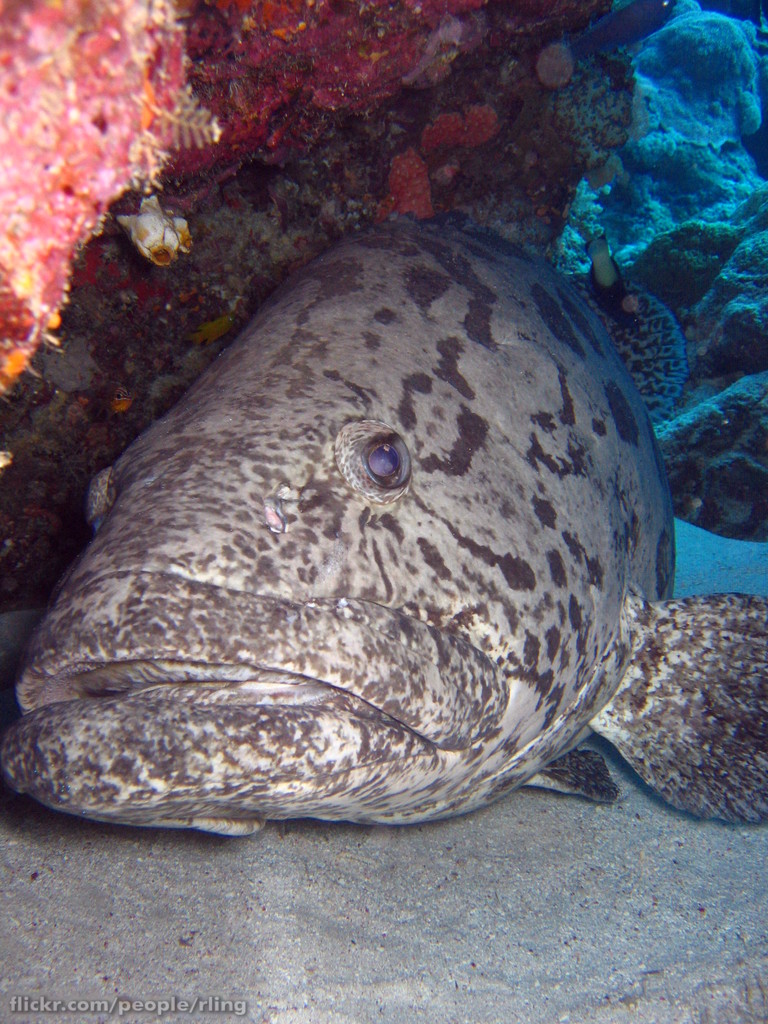
Large Indo-Pacific reef grouper with dark blotches.Perch-like · Coral reefs · 1959
More from Lutjanidae
All of them WorldGolden snapper
A large Indo-Pacific snapper with distinctive rusty scale spots.Perch-like · Coasts and shelves · 1792
 WorldBluestripe snapper
Bright yellow reef fish with four blue stripesPerch-like · Coasts and shelves · 1775
 WorldMangrove red snapper
Large Indo-Pacific snapper found in mangroves and reefsPerch-like · Rivers and lakes · 1775
 🇺🇸 United States and 4 moreMutton snapper
A colourful Atlantic reef fish prized for its meat.Perch-like · Coasts and shelves · 1828