
John Dory
Coastal marine fish with a dark spot and binocular vision
The John Dory is a demersal coastal fish found in the Atlantic, Mediterranean, and Indo-Pacific. It uses binocular vision and a jaw extension to catch prey. Chefs value its white flesh, though it is rarely sold in supermarkets.
- Uses binocular vision to judge distance for hunting
- Extends jaw like a tube to suck in prey
- Dark side spot may confuse potential victims
- Prized by chefs but rare in supermarkets
- Two genetic clades separated by 4.8 million years
What it is
This fish has a laterally compressed body that appears very thin from the front. Its colour ranges from olive-yellow to brown with a greyish belly. A prominent dark spot marks each flank. The head features large eyes positioned for forward vision. Long spines support the dorsal fin, while microscopic sharp scales cover the skin. Adults reach up to ninety centimetres, though males are usually smaller than females. It is a poor swimmer due to its flat, round shape.
Where it lives
Populations inhabit the northeast Atlantic and Mediterranean Sea. They range from northern Africa to Norway, though they are scarce north of Ireland. Other groups live off Southeast Asia, Japan, Australia, and New Zealand. In New Zealand, they are more common around the North Island than the colder South Island waters. These fish stay near the seabed at depths between five and three hundred and sixty metres.
How it lives
John Dories hunt by stalking prey before extending their jaws like a tube. This action sucks small fish, crustaceans, or cephalopods into the mouth. Water exits through the gills while the premaxillary bone grinds the food. Their forward-facing eyes provide depth perception essential for striking accurately. The dark side spot may confuse victims. Sharks and large bony fish prey on them. They usually live alone rather than in schools.
Breeding and life cycle
Reproduction begins when the fish are three or four years old. They release pelagic eggs into the water column. These eggs drift as part of the plankton community. The typical lifespan in the wild is approximately twelve years. Genetic studies show two distinct groups that diverged millions of years ago. One group lives in the Mediterranean and northeast Atlantic. The other inhabits African, Asian, and Oceanian coasts.
Fish and people
Chefs prize this fish for its versatile white flesh. Eliza Acton noted its delicious taste despite an uninviting look. It is rarely found in supermarkets because it is often caught as bycatch. In Indonesia, markets may sell catfish fillets under the name dory. Māori people in New Zealand call it kuparu. They offered pickled specimens to Captain James Cook in 1769. Legends claim the side spot is Saint Peter’s thumbprint.


Questions people ask about John Dory
Why is it called John Dory?
The name dory comes from the French word dorée, meaning gilded. The prefix John likely originated from a seventeenth-century song about a sea captain. Older theories linking it to golden yellow or janitor are now rejected by etymologists.
Is the fish sold as dory in markets always John Dory?
No. In some markets, such as those in Indonesia, fillets labelled dory often come from shark catfish species like Pangasius. True John Dory is not typically sold in supermarkets due to its status as bycatch.
How does the John Dory catch its food?
It stalks prey silently, then rapidly extends its jaw forward in a tube shape. This creates suction that pulls small fish or crustaceans into its mouth. Its large forward-facing eyes help it judge distance accurately during the strike.
Good reading and sources
The facts on this page come from the Wikipedia article "John Dory", written by its contributors and used under the CC BY-SA 4.0 licence, and from its Wikidata record (CC0). EveryFish rewrote the text in its own words, with AI assistance, and compares every page with the article to make sure no passage is copied. It may be reused under the same CC BY-SA 4.0 licence with a link back.
It may contain mistakes, and figures change over time. Nothing here is investment or buying advice. If something is wrong, tell us. Last refreshed 2026-11-15.
Like John Dory
All other fish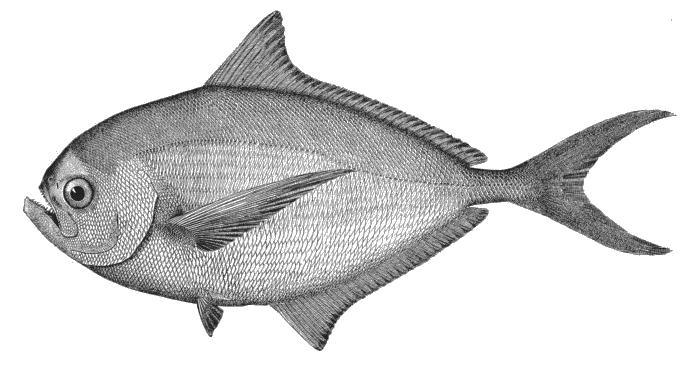 WorldPomfret
A family of scombriform fish found in oceans worldwide, valued as food.Other · Open ocean
 EuropeAtlantic horse mackerel
Slender jack mackerel of the eastern Atlantic and Mediterranean.Other · Coasts and shelves
 WorldPorcupinefish
Spiny marine fish that inflate into a defensive sphere to deter predators.Other · Coasts and shelves
 WorldStriped marlin
Fast pelagic predator with blue stripesOther · Open ocean