
Goliath tigerfish
A massive freshwater predator from the Congo River Basin known for its size and sharp teeth.
The goliath tigerfish is a large predatory fish native to central Africa. It lives in the Congo River Basin and Lake Tanganyika, where it hunts other fish using its powerful jaws and sharp teeth.
- Largest tigerfish species, reaching 2 m and 70 kg.
- Native to the Congo River Basin and Lake Tanganyika.
- Teeth replace simultaneously every five days.
- Known as mbenga, meaning dangerous fish in Swahili.
- Attacks have been reported against humans and crocodiles.
What it is
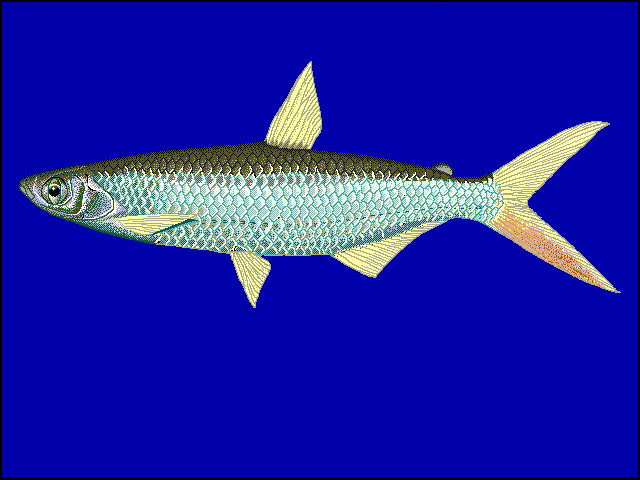
This species belongs to the family Alestidae and is the largest member of the Hydrocynus genus. Adults typically reach 1.5 metres in length and weigh around 50 kilograms, with the largest recorded specimen weighing 70 kilograms and measuring approximately 2 metres. The body is streamlined and silvery-grey, resembling that of a tuna. It features a black adipose fin and possesses exceptionally large, dagger-shaped teeth. These teeth are arranged in interlocking grooves along the jaws, with the upper jaw holding twelve to twenty teeth and the lower jaw holding eight to fourteen. The teeth are replaced simultaneously every few days and can grow up to 2.5 centimetres long.
Where it lives
The goliath tigerfish is endemic to central Africa. Its range includes the Congo River Basin, specifically the Lualaba River and Lake Upemba, as well as Lake Tanganyika. The type locality is Mbandaka on the main Congo River. Genetic studies suggest that geological barriers, such as sharp changes in riverbed slope, historically restricted upstream dispersal, confining the species to these basins. It inhabits highly oxygenated, fast-flowing waters, including deep river channels and open lake areas, which allows it to swim strongly in turbulent conditions.
How it lives
As an ambush predator, this fish uses calmer eddies within rapids to spot prey. It relies on keen sight to detect targets before accelerating rapidly to chase them down. The diet consists primarily of other fish, including smaller members of its own species. It has also been reported to attack larger animals such as crocodiles and humans, taking chunks out of their bodies. The Nile crocodile is the only known natural predator of mature individuals. Juveniles feed on animal plankton before transitioning to small fish, growing slowly at four to six inches per year until reaching full adult size over ten years.
Breeding and life cycle
Although generally solitary hunters, females migrate together to breed near riverbanks or lakeshores. They lay thousands of eggs among thick vegetation to protect them from predators, as the parents provide no care after spawning. The larvae feed on animal plankton during their early stage. As they grow, they transition to eating small fish and eventually adopt the adult diet of larger prey. The slow growth rate of juveniles means it takes up to a decade for young fish to reach their maximum potential size.
Fish and people
Locally known as mbenga, meaning dangerous fish, the species holds cultural significance in the Congo region. Some native beliefs consider it an evil spirit to be avoided when starting water journeys. It is a major target for sport fishing, often described as one of the world's greatest freshwater gamefish due to the difficulty of capturing it. The fish is also consumed as food, though dried tigerfish are susceptible to infestation by Dermestes beetles, causing economic losses. Bacterial contamination is another concern, leading sellers to use traditional methods or pesticides to preserve the catch.
Status and threats
The conservation status is listed as least concern according to the IUCN Red List assessment from 2010. However, the current status remains unknown due to limited recent data. The species faces threats from overfishing for both sport and food. Dried fish products suffer from pest infestations and bacterial issues, impacting local economies.


Questions people ask about Goliath tigerfish
How big does a goliath tigerfish get?
Adults typically reach 1.5 metres and weigh 50 kilograms. The largest recorded specimen weighed 70 kilograms and measured about 2 metres in length, making it the largest species in its genus.
Where does the goliath tigerfish live?
It is found in the Congo River Basin, including the Lualaba River and Lake Upemba, as well as Lake Tanganyika. It prefers fast-flowing, highly oxygenated waters in deep channels and open lakes.
What do goliath tigerfish eat?
They are piscivores that feed on other fish, including smaller members of their own species. They have also been known to attack larger animals like crocodiles and humans, tearing chunks out of their prey.
Is the goliath tigerfish dangerous to humans?
Yes, it is considered dangerous. Locals call it mbenga, meaning dangerous fish. It has attacked humans, and hunting it is considered one of the world's greatest sports fishing challenges due to its size and strength.
Can you keep a goliath tigerfish in an aquarium?
It is sometimes kept as a display fish but requires a very large tank of around 15,000 litres. Due to their size and predatory nature, they are hostile to other inhabitants and should be kept alone or with very large species.
Good reading and sources
- Hydrocynus goliath on WikipediaEncyclopedia
- More photos on Wikimedia CommonsPhotos
- Wikidata recordOpen data
The facts on this page come from the Wikipedia article "Hydrocynus goliath", written by its contributors and used under the CC BY-SA 4.0 licence, and from its Wikidata record (CC0). EveryFish rewrote the text in its own words, with AI assistance, and compares every page with the article to make sure no passage is copied. It may be reused under the same CC BY-SA 4.0 licence with a link back.
It may contain mistakes, and figures change over time. Nothing here is investment or buying advice. If something is wrong, tell us. Last refreshed 2026-11-15.
Like Goliath tigerfish
All other fish 🇧🇼 Botswana and 1 moreAfrican tigerfish
Predatory freshwater fish known for sharp teeth and leaping hunting behaviour.Other · Rivers and lakes · 1861
 🇧🇷 BrazilBanded leporinus
A striped freshwater fish from the Amazon kept in home tanks and occasionally caught by anglers.Other · Rivers and lakes
 🇺🇸 United States and 1 moreStriped bass
Anadromous marine fish native to the Atlantic coast of North America, known for sport fishing and culinary use.Other · Rivers and lakes
 🇷🇺 Russia and 3 moreBurbot
A coldwater freshwater fish with a chin whisker, native to the Northern Hemisphere.Other · Rivers and lakes · 1758
More from Alestidae
All of them 🇨🇩 Democratic Republic of the CongoCongo tetra
A colourful African freshwater fish kept in home aquaria for its bright scales and feathery tail.Other · Rivers and lakes · 1899
 🇺🇬 UgandaNangnang fish
A small freshwater fish from the Nile basin, prized as a fried snack in Uganda.Other · Rivers and lakes
 WorldTetra
Common name for small freshwater characiform fishes popular in aquaria.Livebearer · Rivers and lakes
 🇪🇬 Egypt and 3 morePebbly fish
A silver characin from African rivers and lakes.Other · Rivers and lakes