
European bitterling
Small freshwater fish that breeds inside mussels
The European bitterling is a small temperate freshwater fish native to Europe. It belongs to the family Acheilognathidae and is known for its unique breeding strategy involving freshwater mussels. Historically, it was used in early pregnancy tests due to hormonal reactions.
- Grows up to 10 cm in length
- Breeds by laying eggs inside mussels
- Used historically for pregnancy testing
- Native to rivers from France to Russia
- Reaches maturity in one year
What it is
The European bitterling is a small ray-finned fish found in temperate freshwater environments. It grows to a maximum length of 10 cm. Its body is adapted for life among aquatic plants over sandy or muddy substrates. As the only species of its genus in its native range, it is often called simply the bitterling, though this term technically applies to other related species as well.
Where it lives
This species originates in Europe, with a distribution stretching from the Rhone River basin in France eastward to the Neva River in Russia. It inhabits shallow waters, preferring areas with clear, slow-running or still currents. The fish is typically found among vegetation where the bottom consists of sand or mud.
How it lives
The European bitterling feeds primarily on plant material. It supplements this diet with small animals such as worms, crustaceans, and insect larvae. It lives in shallow zones where vegetation provides cover. Both males and females reach sexual maturity within one year, growing to a length of 30 to 35 mm before they can reproduce.
Breeding and life cycle
Spawning occurs in clear, slow-moving or static water. The female uses an ovipositor to deposit eggs inside the gill chambers of freshwater mussels. The male releases sperm into the water current drawn in by the mussel, fertilizing the eggs internally. The young remain protected within the mussel for about a month before emerging as swimming larvae.
Fish and people
Historically, this fish played a role in medical science. Female bitterlings were injected with human urine to test for pregnancy. If the woman was pregnant, hormones in the urine caused the fish's ovipositors to protrude. This method is no longer in use, but it remains a notable part of the species' history.


Questions people ask about European bitterling
How does the European bitterling reproduce?
The female deposits eggs inside freshwater mussels using an ovipositor. The male fertilizes them by releasing sperm into the mussel's inhalent current. The young stay protected inside the mussel for about a month before leaving as larvae.
What does the European bitterling eat?
It feeds mainly on plants. It also consumes small amounts of worms, crustaceans, and insect larvae. This diet supports its life in shallow, vegetated freshwater habitats.
Why was this fish used in pregnancy tests?
Female fish were injected with human urine. If the woman was pregnant, hormones in the urine caused the fish's ovipositors to protrude. This visible reaction indicated a positive result in early medical testing methods.
Good reading and sources
- European bitterling on WikipediaEncyclopedia
- More photos on Wikimedia CommonsPhotos
- Wikidata recordOpen data
The facts on this page come from the Wikipedia article "European bitterling", written by its contributors and used under the CC BY-SA 4.0 licence, and from its Wikidata record (CC0). EveryFish rewrote the text in its own words, with AI assistance, and compares every page with the article to make sure no passage is copied. It may be reused under the same CC BY-SA 4.0 licence with a link back.
It may contain mistakes, and figures change over time. Nothing here is investment or buying advice. If something is wrong, tell us. Last refreshed 2026-11-15.
Like European bitterling
All other fish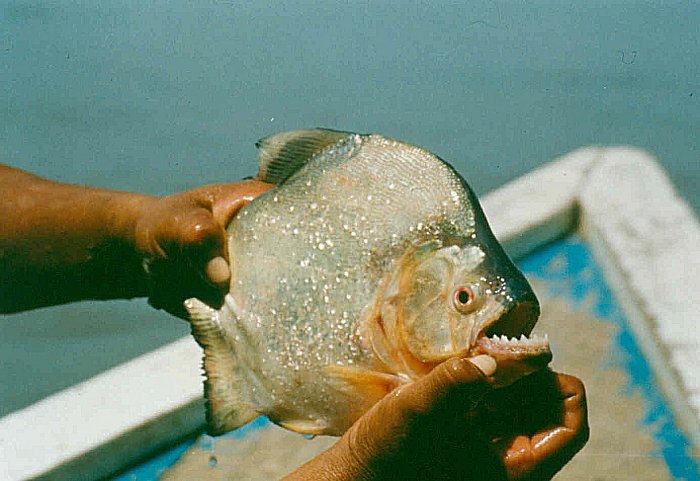 🇸🇷 Suriname and 2 moreRedeye piranha
A large freshwater fish from South America with a rhombus-shaped body and red eyes.Other · Rivers and lakes · 1766
 🇧🇷 Brazil and 4 moreHoplias aimara
A large freshwater predator from South America known for its size and mercury accumulation.Other · Rivers and lakes · 1846
 🇺🇸 United StatesSouthern cavefish
A blind cavefish from the eastern United States.Other · Rivers and lakes · 1859
 🇺🇸 United StatesDevils Hole pupfish
A tiny fish found only in one cavern in Nevada.Other · Rivers and lakes · 1930
