
Bronze corydoras
Small armored catfish popular in home aquariums
The bronze corydoras is a small freshwater catfish native to South America. It is widely kept in aquariums due to its hardy nature and sociable behaviour. The species is commercially bred in large numbers across the globe.
- Females grow slightly larger than males at 7 cm
- Absorbs atmospheric air through the intestine
- Uses unique T-position for sperm transfer
- Commercially bred in US, Europe and Singapore
- Albino variants are sometimes dyed bright colours
What it is
This small armored catfish belongs to the family Callichthyidae. Adults reach about seven centimetres in length, with females slightly larger than males. The body displays a yellow or pink hue with a white belly and blue-grey head. A distinctive brownish-orange patch sits on the head before the dorsal fin. Sharp barbs on the fins contain mild poison to deter predators.
Where it lives
Native populations inhabit South America east of the Andes. The range extends from Colombia and Trinidad down to the Río de la Plata basin. These fish prefer quiet, shallow waters with soft bottoms but also live in running water. They tolerate temperatures between twenty-five and twenty-eight degrees Celsius and varying pH levels.
How it lives
Schools typically consist of twenty to thirty individuals. They feed on worms, benthic crustaceans, insects and plant material. To survive low oxygen levels, they gulp air at the surface. This air is absorbed through the intestinal wall, with excess expelled through the vent. They constantly comb the substrate for food.
Breeding and life cycle
Spawning coincides with the rainy season and changes in water chemistry. Males present their abdomens to females in a courtship ritual known as the T-position. The female ingests sperm, which passes through her intestines to fertilise eggs held in her pelvic fins. She then deposits the adhesive eggs on surfaces like waterweeds.
Fish and people
This species is highly popular in the aquarium trade due to its hardiness. Commercial breeding occurs in the United States, Europe and Singapore. Captive-bred strains are common, while wild imports are less frequent. An albino variety exists, sometimes dyed bright colours in a controversial practice called painting or juicing.
Status and threats
A taxonomic review is considered necessary to clarify the classification. No specific conservation status or threat level is provided in the available information.


Questions people ask about Bronze corydoras
How big do bronze corydoras get?
Adult males reach approximately six and a half centimetres in length. Females are slightly larger, growing up to seven centimetres. They have a compact body shape suitable for community tanks.
Why do they swim to the surface?
They gulp air to cope with low oxygen levels in their natural habitat. The air is absorbed through the intestinal wall rather than the gills. Excess air is then expelled through the vent.
Are albino corydoras natural?
The albino variety is developed specifically for the aquarium trade. Some breeders inject these fish with bright dye, a practice known as painting. This is controversial and may harm the fish.
What do they eat in an aquarium?
They are omnivores and accept flake and pelleted foods. They also consume live and frozen foods. In the wild, they feed on worms, crustaceans, insects and plant matter found on the bottom.
Good reading and sources
- Bronze corydoras on WikipediaEncyclopedia
- More photos on Wikimedia CommonsPhotos
- Wikidata recordOpen data
The facts on this page come from the Wikipedia article "Bronze corydoras", written by its contributors and used under the CC BY-SA 4.0 licence, and from its Wikidata record (CC0). EveryFish rewrote the text in its own words, with AI assistance, and compares every page with the article to make sure no passage is copied. It may be reused under the same CC BY-SA 4.0 licence with a link back.
It may contain mistakes, and figures change over time. Nothing here is investment or buying advice. If something is wrong, tell us. Last refreshed 2026-11-15.
Like Bronze corydoras
All catfishes 🇧🇷 Brazil and 4 moreTiger shovelnose catfish
Large striped South American river catfishCatfish · Rivers and lakes · 1862
 WorldPangasius
A genus of shark catfishes from South and Southeast Asia, widely farmed for food.Catfish · Rivers and lakes · 1822
🇹🇭 Thailand and 1 moreAsian redtail catfish
Large Asian bagrid catfish with a bright red tail.Catfish · Rivers and lakes
 🇧🇷 Brazil and 3 moreSpotted sorubim
A large South American catfish known for its spotted pattern and commercial value.Catfish · Rivers and lakes · 1829
More from Callichthyidae
All of them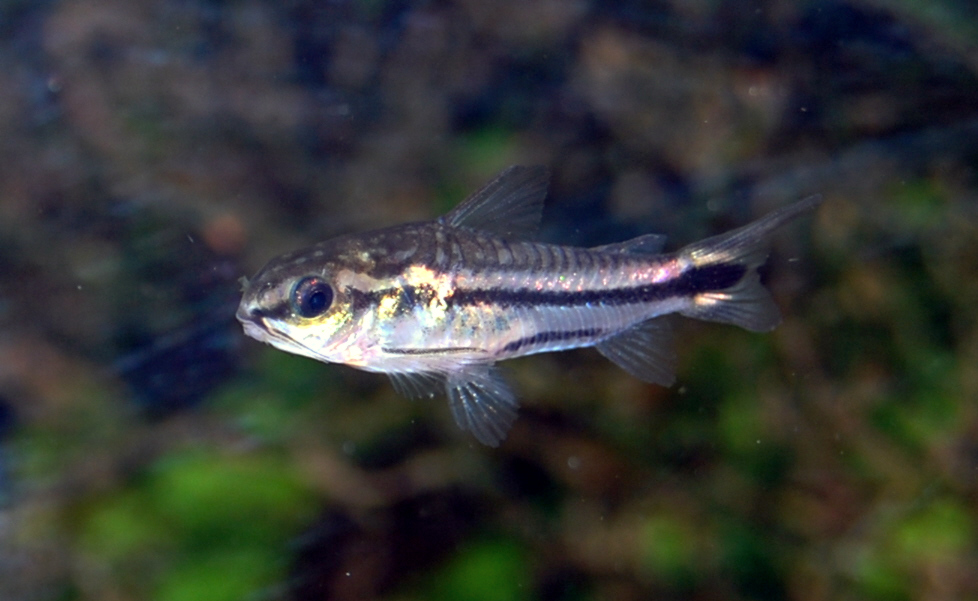 🇧🇷 Brazil and 2 morePygmy corydoras
A tiny armored catfish from South America kept in community aquariums.Catfish · Rivers and lakes · 1966
 🇵🇪 Peru and 1 morePanda corydoras
Small armoured catfish with distinctive black eye patchesCatfish · Rivers and lakes · 1971
 🇧🇷 Brazil and 3 moreBlue leopard corydoras
Small peaceful armoured catfish from South AmericaCatfish · Rivers and lakes