
Broadnose sevengill shark
A large coastal shark with seven gill slits and spotted skin.
The broadnose sevengill shark is a large predator found in temperate waters worldwide. It is the only living member of its genus and is known for its seven gill slits. The species faces pressure from fishing and pollution but adapts well to captivity.
- Has seven gill slits unlike most sharks
- Can grow up to 3 metres long
- Feeds on carrion and marine mammals
- Listed as Vulnerable by IUCN
- Adapts well to aquarium life
What it is
This shark has a thick body, broad head, and blunt snout. It is distinct for having seven gill slits instead of the usual five. The upper jaw holds jagged teeth while the lower jaw has comb-shaped ones. A single dorsal fin sits far back near the tail. The tail upper lobe is longer than the lower one. Its skin is silver-gray or brown on top with small black and white spots. The belly is pale to blend with sunlight from below. Juveniles often show white edges on their fins.
Where it lives
It lives in temperate waters across the Pacific and Atlantic Oceans. Sightings occur off China, Japan, Australia, New Zealand, Canada, the United States, Chile, Argentina, and South Africa. In San Francisco Bay, it is common near the Golden Gate Bridge. Most stay in shallow continental shelves, bays, and estuaries. Older individuals may dive to depths of 570 metres. In South Africa, they prefer sandy floors with some kelp.
How it lives
An opportunistic hunter, it eats sharks, rays, seals, and dead animals. It scavenges carcasses including drowned humans. Research shows mammals make up a large part of its diet. It hunts alone or in packs using stealth. After eating, it digests slowly for days. Orcas and larger sharks like the great white may prey on it. It patrols quietly near the sea floor. Activity levels are similar during day and night. Group formation may help avoid predators in open areas.
Breeding and life cycle
Females give birth to live young after a year-long pregnancy. Litters are large, containing over eighty pups. Birth happens in shallow bays during April and May. Newborns measure about forty centimetres. Males mature faster than females. Females reach reproductive age between twenty and twenty-five years. The species lives for around thirty years. Scientists have studied its hormones and reproduction to aid conservation.
Fish and people
Fisheries target it for liver oil and hide. Sport anglers catch it in tournaments. It is considered potentially dangerous to divers. Bites have been recorded but none were fatal. It adapts well to aquariums and is a keynote species in some facilities. Tourists often see it in temperate tanks. Apps allow divers to track sightings for research. Fishing is restricted in some areas like Washington state.
Status and threats
The IUCN lists it as Vulnerable globally. Threats include bycatch, pollution, and targeted fishing. Local declines occurred in San Francisco Bay due to intense fishing. New Zealand classifies it as Not Threatened but data poor. Conservation areas exist in South Africa and California. Recommendations suggest protecting Bahía Anegada in Argentina. Recreational limits apply in Victoria, Australia.


Questions people ask about Broadnose sevengill shark
Why is it called a sevengill shark?
It has seven gill slits on each side of its head. Most shark species only have five. This trait links it to ancient shark lineages from the Jurassic period.
Is the broadnose sevengill shark dangerous to humans?
It is considered potentially dangerous due to its size and aggression when provoked. There have been recorded bites on divers and surfers, but no fatalities have been reported.
What does the broadnose sevengill shark eat?
It is an opportunistic predator that eats other sharks, rays, fish, and marine mammals. It also scavenges carrion, including dead whales and seabirds, and will consume almost anything that fits in its mouth.
Good reading and sources
- Broadnose sevengill shark on WikipediaEncyclopedia
- More photos on Wikimedia CommonsPhotos
- Wikidata recordOpen data
The facts on this page come from the Wikipedia article "Broadnose sevengill shark", written by its contributors and used under the CC BY-SA 4.0 licence, and from its Wikidata record (CC0). EveryFish rewrote the text in its own words, with AI assistance, and compares every page with the article to make sure no passage is copied. It may be reused under the same CC BY-SA 4.0 licence with a link back.
It may contain mistakes, and figures change over time. Nothing here is investment or buying advice. If something is wrong, tell us. Last refreshed 2026-11-15.
Like Broadnose sevengill shark
All sharks WorldSpinner shark
A fast requiem shark known for spinning leaps out of water.Shark · Coasts and shelves · 1839
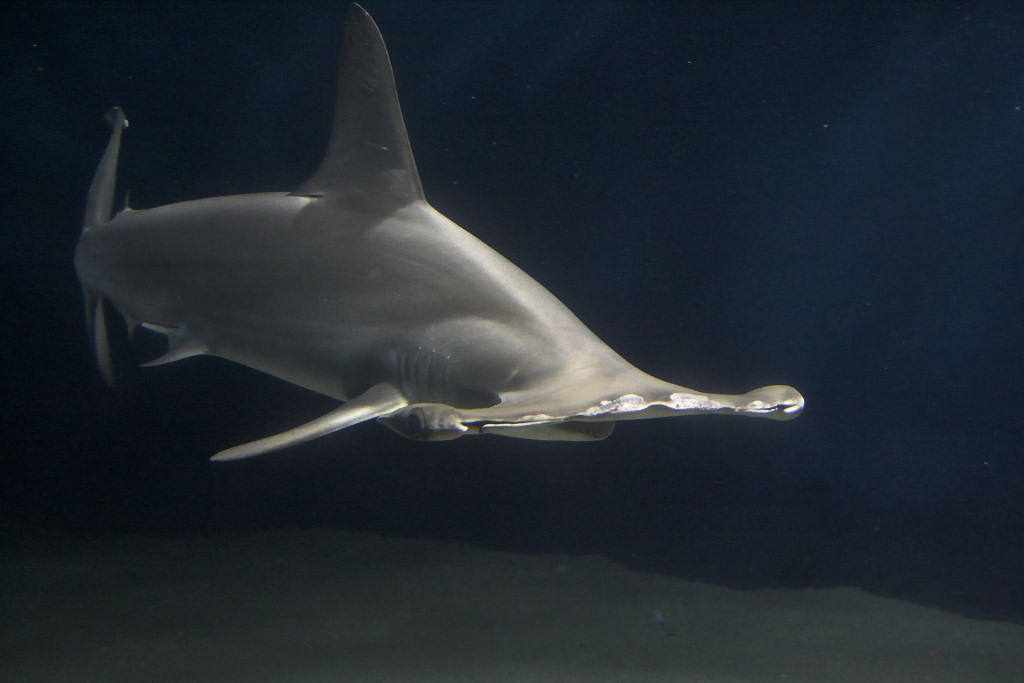 WorldHammerhead shark
Sharks with T-shaped heads for better vision and sensing prey.Shark · Coasts and shelves
 WorldGreat white shark
A large, globally distributed predator known for its size and apex status in marine ecosystems.Shark · Coasts and shelves · 1758
 WorldSpiny dogfish
A temperate shark with dorsal spines and a long lifespan, heavily fished for food.Shark · Coasts and shelves · 1758