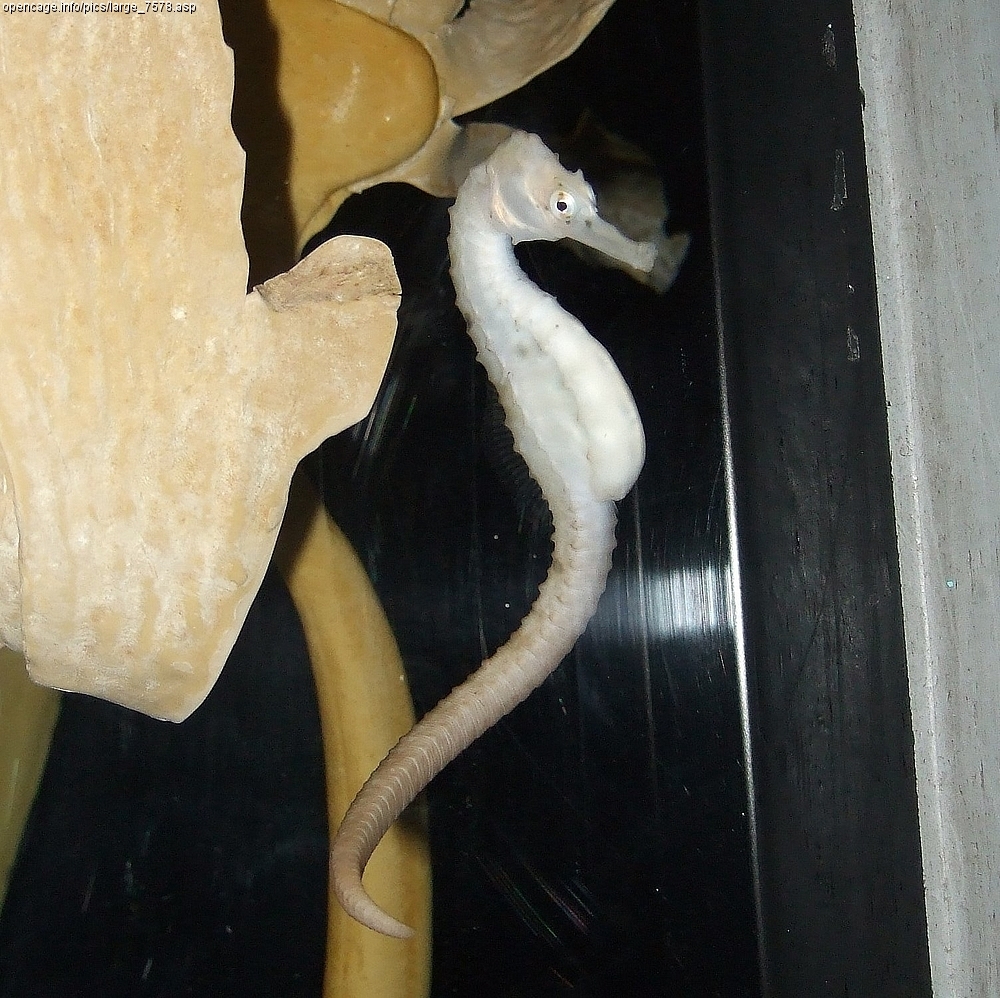
Big-belly seahorse
The largest seahorse species, found in southern Australia and New Zealand.
Hippocampus abdominalis is the biggest member of its genus, reaching thirty-five centimetres. It inhabits coastal waters from New Zealand to southeastern Australia, relying on seaweed for camouflage and hunting small crustaceans.
- Reaches thirty-five centimetres, making it the largest seahorse.
- Male carries eggs in a specialized brood pouch under the tail.
- Found from New Zealand to southeastern Australia.
- Eats thirty to fifty small crustacean meals each day.
- Listed on CITES Appendix II to control international trade.
What it is
This marine fish belongs to the family Syngnathidae, which includes pipefishes and seahorses. It holds the title for the largest species in its genus, with adults growing up to thirty-five centimetres long. The body features a distinct pot-shaped belly, a long snout, and a prehensile tail used to anchor itself to vegetation. Colours vary from yellow to brown or white, allowing it to blend into kelp forests and rock pools. Its eyes move independently, providing a wide field of view while remaining motionless among seaweed.
Where it lives
The species lives along the southern coasts of Australia and throughout New Zealand. Its range extends from the Three Kings Islands in the north to the Snares Islands in the south. They prefer shallow environments like large rock pools at low tide but can dive deeper than fifty metres, with records down to one hundred and four metres. Juveniles often drift with seaweed before settling into vegetated areas. These habitats provide the cover necessary for their ambush hunting style and protection from predators.
How it lives
They are nocturnal hunters that feed constantly due to a lack of stomach storage. Adults consume thirty to fifty small meals daily, sucking in crustaceans like shrimp, copepods, and amphipods through their tubular snouts. They use a pivot-feeding mechanism, flexing their heads to create suction without startling prey. Their bony plates offer defence against larger fish. Males and females show different home range sizes, with females covering more ground. They rely heavily on vegetation density for successful foraging.
Breeding and life cycle
Breeding occurs year-round, peaking in warmer months. Courtship involves complex colour changes and tandem swimming, often described as dancing. The female transfers eggs into the male’s ventral brood pouch. The male then fertilizes and carries the developing embryos until they hatch. This ovoviviparous reproduction means the male provides all parental care during gestation. Young seahorses begin life pelagic or attached to drifting debris before joining adult populations.
Fish and people
While not a primary food source, this species appears in the aquarium trade. Aquaculture studies suggest feeding frozen mysids or brine shrimp supports growth. Conservation efforts include listing under CITES Appendix II to regulate international trade. Research focuses on their stress responses and acclimation needs in captivity. Their unique reproductive biology makes them subjects for scientific study regarding sexual selection and parenting roles in marine animals.
Status and threats
The International Union for Conservation of Nature does not list a specific global status in the provided text, though they are protected under CITES Appendix II. This regulation aims to prevent overexploitation through controlled trade. Habitat loss in coastal zones and pollution pose potential threats to their seaweed-dependent lifestyle. Monitoring population trends remains important for ensuring sustainable management of both wild stocks and captive breeding programmes.


Questions people ask about Big-belly seahorse
How big does a big-belly seahorse get?
Adults grow up to thirty-five centimetres in length. This size makes them the largest known species within the seahorse genus, significantly bigger than most common aquarium varieties.
Where do these seahorses live?
They inhabit coastal waters of southeastern Australia and New Zealand. You can find them in rock pools, kelp forests, and depths up to one hundred and four metres, preferring areas with plenty of vegetation.
What do they eat?
They feed on small crustaceans like copepods, amphipods, and mysid shrimp. They suck prey whole using suction created by flicking their heads, consuming dozens of meals daily due to their fast metabolism.
Do males or females raise the young?
Males carry the offspring. After courtship, the female deposits eggs into the male’s ventral pouch. He fertilizes them and nurtures the embryos until they hatch, a process known as ovoviviparity.
Good reading and sources
- Big-belly seahorse on WikipediaEncyclopedia
- More photos on Wikimedia CommonsPhotos
- Wikidata recordOpen data
The facts on this page come from the Wikipedia article "Big-belly seahorse", written by its contributors and used under the CC BY-SA 4.0 licence, and from its Wikidata record (CC0). EveryFish rewrote the text in its own words, with AI assistance, and compares every page with the article to make sure no passage is copied. It may be reused under the same CC BY-SA 4.0 licence with a link back.
It may contain mistakes, and figures change over time. Nothing here is investment or buying advice. If something is wrong, tell us. Last refreshed 2026-11-15.
Like Big-belly seahorse
All other fish WorldBluehead wrasse
A small Atlantic reef fish known for changing sex and colour.Other · Coral reefs
 WorldBlue-spotted grouper
A widely distributed Indo-Pacific grouper known for its blue spots and invasive impact in Hawaii.Other · Coasts and shelves
 OceaniaPajama Cardinalfish
Small, spotted reef fish known for male mouthbrooding.Other · Coral reefs
 WorldWrasse
A large family of colourful marine fish known for sex change and cleaning symbiosis.Reef fish · Coasts and shelves
More from Syngnathidae
All of them 🇦🇺 Australia and 3 moreSpiny seahorse
A small, thorn-covered marine fish from the Indo-Pacific.Other · Coasts and shelves
 Southeast AsiaPygmy seahorse
Tiny seahorses with unique brooding and camouflage traits found in Southeast Asian reefs.Other · Coasts and shelves
 WorldCommon seahorse
A small, spotted seahorse found in Indo-Pacific coastal waters.Other · Estuaries and mangroves
 🇦🇺 AustraliaCommon seadragon
Camouflaged marine fish with leaf-like appendages found in southern Australia.Other · Coasts and shelves