
Common seahorse
A small, spotted seahorse found in Indo-Pacific coastal waters.
The common seahorse is a small marine fish inhabiting shallow coastal zones from Africa to the Pacific. It faces vulnerability due to trade for traditional medicine and aquarium keeping, alongside habitat loss.
- Males carry up to 1,000 eggs in a brood pouch.
- Used in traditional Chinese medicine for various ailments.
- Classified as vulnerable by the IUCN.
- Found in estuaries and seagrass beds up to 55m deep.
- Monogamous mating system with unique courtship dances.
What it is
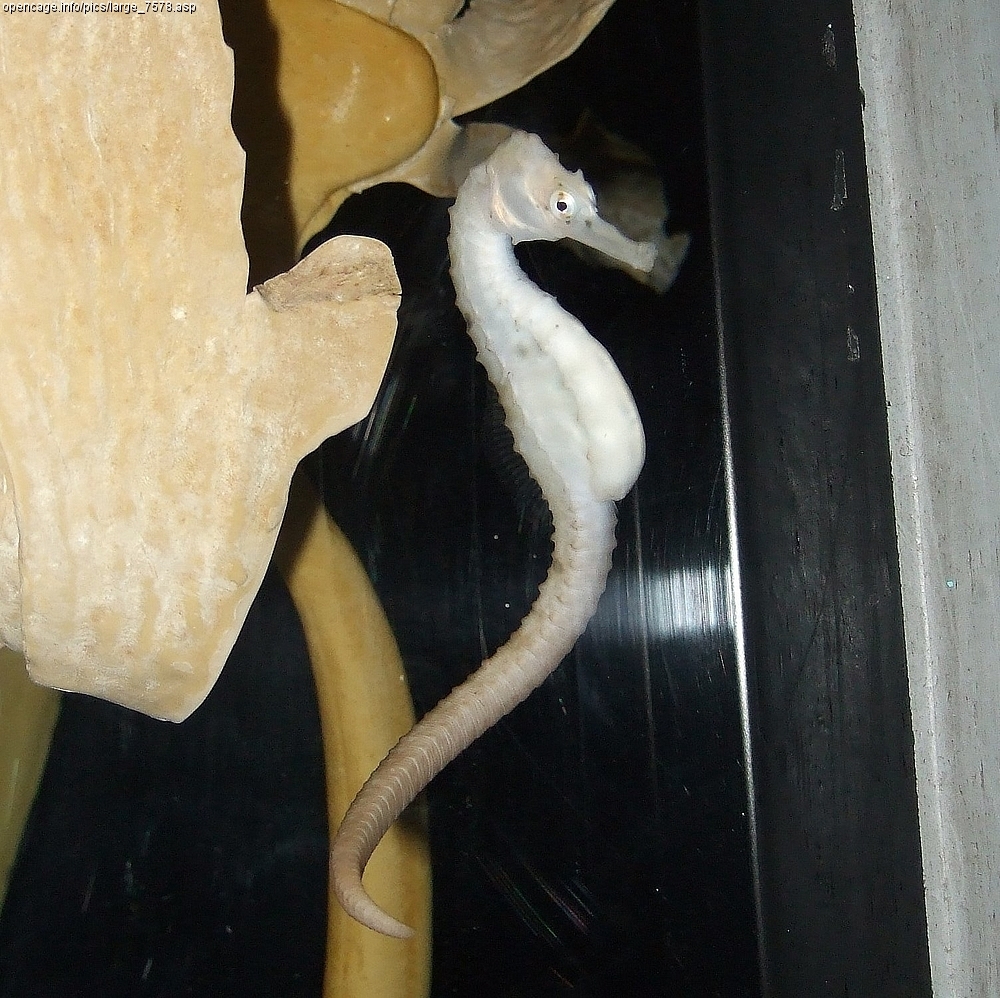
This small fish grows between seventeen and thirty centimetres long. Its body is elongated and lacks sharp spines, featuring rounded bumps instead. The head appears large relative to the torso, with a short, thick snout. A small coronet sits on the head, sometimes bearing filaments. Colouration varies from dark and grainy to yellow or cream with reddish blotches and tiny dark spots. Some individuals display a black line across the dorsal fin. The tail acts as a grasping tool, bending ventrally thanks to specialised body plates and muscles.
Where it lives
Populations stretch from the Persian Gulf across Southeast Asia to Australia and Japan. They also inhabit Pacific islands such as Hawaii and the eastern African coast from Tanzania to South Africa. Most individuals live along the Chinese coast down to Australia. These seahorses prefer shallow waters in estuaries, lagoons, harbours, and coastal seagrass beds. They are found at depths of up to fifty-five metres in tropical and marine environments.
How it lives
These omnivores feed on minute living prey like larval fish and zooplankton using suction. They are weak swimmers and spend much time anchored to reefs or branches with their tails. Predators include crabs, rays, tuna, sea turtles, and humans. In captivity, they require quiet tanks with slow currents and compatible bottom-dwelling tankmates. They eat small foods such as brine shrimp and rotifers multiple times daily.
Breeding and life cycle
The species forms monogamous pairs and performs courtship dances involving colour changes and clicking sounds. The female transfers up to one thousand eggs into the male’s ventral brood pouch. Development lasts twenty to twenty-eight days, influenced by monsoons, lunar cycles, and temperature. Males often give birth during a full moon. Newborns measure about seven millimetres in length.
Fish and people
Traditional Chinese medicine values this seahorse highly, claiming it supports various bodily systems. Approximately twenty-five million are used annually for medicinal purposes, with major exports from Vietnam, India, the Philippines, and Thailand. Aquarium keepers also prize them, though they require specific care including frequent feeding and stable water conditions. They do not tolerate high temperatures or low salinity well.
Status and threats
The International Union for Conservation of Nature classifies the species as vulnerable. Populations have dropped by thirty per cent in recent decades due to pollution, habitat destruction, and illegal trade. Bycatch in shrimp trawling and targeted collection for medicine and aquariums pose significant threats. International trade is regulated under Appendix II of CITES to ensure survival compatibility.


Questions people ask about Common seahorse
What does the common seahorse eat?
It feeds on tiny living prey such as larval fishes and zooplankton. It uses suction to capture food because it is not a strong swimmer. In aquariums, they consume brine shrimp and rotifers.
How do common seahorses reproduce?
They are monogamous. The female places eggs into the male’s brood pouch. The male carries them for twenty to twenty-eight days before giving birth, often during a full moon.
Why is the common seahorse vulnerable?
Populations face threats from bycatch in shrimp fisheries, targeted harvesting for traditional medicine and aquariums, and habitat destruction. Pollution has also contributed to a thirty per cent decline.
Good reading and sources
- Hippocampus kuda on WikipediaEncyclopedia
- More photos on Wikimedia CommonsPhotos
- Wikidata recordOpen data
The facts on this page come from the Wikipedia article "Hippocampus kuda", written by its contributors and used under the CC BY-SA 4.0 licence, and from its Wikidata record (CC0). EveryFish rewrote the text in its own words, with AI assistance, and compares every page with the article to make sure no passage is copied. It may be reused under the same CC BY-SA 4.0 licence with a link back.
It may contain mistakes, and figures change over time. Nothing here is investment or buying advice. If something is wrong, tell us. Last refreshed 2026-11-15.
Like Common seahorse
All other fish WorldSeahorse
Small marine fish with horse-like heads and curled tails in the genus Hippocampus.Other · Coasts and shelves
 🇦🇺 Australia and 3 moreSpiny seahorse
A small, thorn-covered marine fish from the Indo-Pacific.Other · Coasts and shelves
 WorldOrbicular batfish
A round, silvery marine fish native to the Indo-Pacific.Other · Coasts and shelves
 🇺🇸 United States and 3 moreLined seahorse
A western Atlantic seahorse with white neck lines and male pregnancy.Other · Coasts and shelves · 1810
More from Syngnathidae
All of them Southeast AsiaPygmy seahorse
Tiny seahorses with unique brooding and camouflage traits found in Southeast Asian reefs.Other · Coasts and shelves
 🇦🇺 AustraliaCommon seadragon
Camouflaged marine fish with leaf-like appendages found in southern Australia.Other · Coasts and shelves
 🇦🇺 Australia and 1 moreBig-belly seahorse
The largest seahorse species, found in southern Australia and New Zealand.Other · Coasts and shelves
 🇦🇺 AustraliaLeafy seadragon
A marine fish from southern Australia known for its leaf-like skin appendages used for camouflage.Other · Coasts and shelves · 1865