
Arowana
Freshwater bony fish with a toothed bone in the mouth and air-breathing ability.
Arowanas are freshwater fish known for their heavy scales and ability to breathe air. They live in South America, Asia, and Australia, and are popular in aquariums and traditional culture.
- They possess a toothed bone in the mouth called a bony tongue.
- They can breathe air through capillary-lined swim bladders.
- Parents carry eggs in their mouths until hatching occurs.
- They can jump over six feet to catch prey from branches.
- Fossils date back to the Late Cretaceous period.
What it is
These ancient fish possess a unique skeletal structure featuring a bony tongue equipped with teeth that meet against the upper jaw. Their bodies are elongated and covered in large, heavy scales arranged in a mosaic pattern. The fins vary in texture, with soft rays on the dorsal and anal sections and stiffer rays on the pectoral and ventral pairs. Despite being strictly aquatic, they can swallow air to oxygenate their swim bladders, which function similarly to lungs. This adaptation allows them to survive in low-oxygen environments without becoming amphibious.
Where it lives
Members of this group inhabit separate continents across South America, Asia, and Australia. Their distribution suggests an ancient origin linked to the breakup of the supercontinent Gondwana. Fossil evidence indicates these fish existed during the Late Cretaceous and possibly earlier periods. The family Osteoglossidae remains the only exclusively freshwater group found on both sides of the Wallace Line, indicating historical land connections or drift mechanisms carried species like the Asian arowana to new regions millions of years ago.
How it lives
These carnivores often hunt at the water surface, using their powerful jumping ability to catch insects and small birds from overhanging branches. In South American habitats, they have been observed leaping nearly two metres high, earning them the nickname water monkeys. While wild specimens can grow larger, captive individuals typically reach lengths between sixty and ninety centimetres. They exhibit distinct predatory behaviours and rely on their specialized dentition to secure prey above the water line.
Breeding and life cycle
Parents provide extensive care by building nests and guarding offspring after hatching. All species practice mouthbrooding, where adults hold hundreds of eggs inside their mouths until they hatch. Young fish make tentative excursions outside the parent's mouth to explore before leaving permanently. Unlike many fish that mature quickly, arowanas require three to four years to reach sexual maturity, ensuring careful investment in fewer offspring.
Fish and people
The name derives from the Tupí language term arua'ná. These fish are highly valued in the aquarium trade due to their striking appearance and unusual breathing methods. In various cultures, particularly in Southeast Asia, they hold significant symbolic meaning and are associated with legends and prosperity. Their unique biology and aesthetic appeal make them subjects of interest for hobbyists and researchers alike.


Questions people ask about Arowana
How do arowanas breathe?
They are facultative air breathers. They swallow air into their swim bladder, which is lined with capillaries similar to lung tissue, allowing them to extract oxygen directly from the atmosphere when water levels are low.
Why are they called bonytongues?
The name comes from a specific bone on the floor of their mouth equipped with teeth. These teeth bite against corresponding teeth on the roof of the mouth, creating a unique mechanical feeding structure.
What do arowanas eat?
They are carnivorous surface feeders. They often leap out of the water to catch insects and small birds hanging from overhanging branches, demonstrating remarkable agility and hunting precision.
How long do they take to mature?
Unlike most fish that reproduce around six months of age, arowanas require three to four years to reach sexual maturity. This longer development period is associated with their parental care strategies.
Good reading and sources
The facts on this page come from the Wikipedia article "Arowana", written by its contributors and used under the CC BY-SA 4.0 licence, and from its Wikidata record (CC0). EveryFish rewrote the text in its own words, with AI assistance, and compares every page with the article to make sure no passage is copied. It may be reused under the same CC BY-SA 4.0 licence with a link back.
It may contain mistakes, and figures change over time. Nothing here is investment or buying advice. If something is wrong, tell us. Last refreshed 2026-11-15.
Like Arowana
All ancient fish 🇺🇸 United StatesShovelnose sturgeon
Smallest North American freshwater sturgeon, known for its shovel-shaped snout and caviar production.Ancient · Rivers and lakes · 1820
 🇧🇯 Benin and 4 moreSaddled bichir
A large African freshwater fish with primitive lungs and multiple dorsal finlets.Ancient · Rivers and lakes · 1845
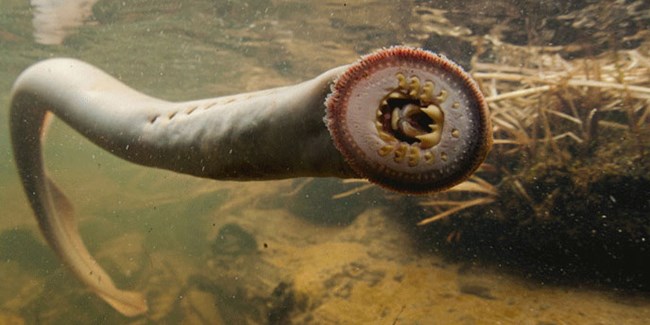 🇺🇸 United States and 1 morePacific lamprey
An anadromous parasitic jawless fish found along the Pacific Rim.Ancient · Rivers and lakes · 1872
 🇺🇸 United States and 1 moreLake sturgeon
A large, long-lived freshwater fish native to North America.Ancient · Rivers and lakes

