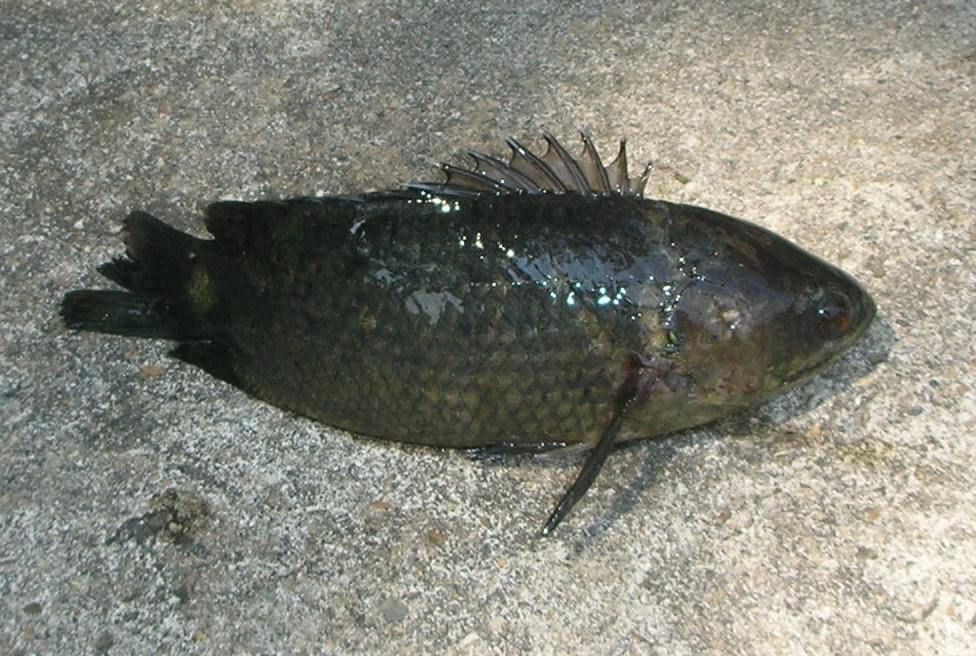
Climbing perch
Amphibious freshwater fish capable of breathing air and moving on land.
The climbing perch is an amphibious fish native to South and Southeast Asia. It breathes atmospheric air using a labyrinth organ and can survive out of water for days if kept moist. This trait makes it a popular food fish in its native range and a problematic invasive species elsewhere.
- Breathes air using a labyrinth organ.
- Survives out of water for weeks if moist.
- Grows up to 25 centimetres long.
- Invasive in parts of Australia and Indonesia.
- Known as physician fish in Thai culture.
What it is
The climbing perch is a freshwater fish belonging to the family Anabantidae. Its body ranges from dark green to pale green, with a darker back and lighter belly. Young fish display vertical stripes, while adults often have a spot behind the gill cover and longitudinal lines on the cheeks. The species grows up to 25 centimetres long. It possesses a specialized labyrinth organ that allows it to breathe atmospheric air directly. This adaptation enables survival in oxygen-poor or stagnant waters where other fish cannot live.
Where it lives
Native populations span India, Bangladesh, Sri Lanka, Nepal, Myanmar, Laos, Thailand, southern China, Cambodia, Indonesia, Malaysia, Singapore, Vietnam, and likely the Philippines. It also occurs in Pakistan, Taiwan, and Timor-Leste. Outside this native zone, it acts as an invasive species. Records show establishment in eastern Indonesia, Papua New Guinea, and parts of northern Australia near the Torres Strait. The fish spreads by crawling over land or hitching rides on fishing boats.
How it lives
This fish is an obligate air-breather, requiring regular access to the surface. It tolerates extreme environmental degradation that would kill competitors. When water dries up, individuals bury themselves in mud to wait for rain. They can remain alive out of water for several days or weeks provided their breathing organs stay wet. Movement on land involves wriggling the body and using pectoral fins to crawl. These capabilities allow them to traverse short distances between isolated water bodies.
Fish and people
In South and Southeast Asia, the climbing perch serves as a significant food source. Its ability to endure transport without water improves its commercial value in local markets. In Thailand, the fish holds cultural significance. The Thai name translates to physician fish. Local beliefs suggest releasing this species helps prevent disease. Despite these traditions, it remains primarily a culinary staple across its native distribution area.
Status and threats
The International Union for Conservation of Nature lists the species as Least Concern. However, introduced populations pose ecological risks in new territories. Their hardiness and mobility facilitate rapid expansion into non-native ecosystems. Management efforts focus on limiting spread in regions like Australia. No specific conservation threats are noted for the native range, though habitat alteration affects local populations.

Questions people ask about Climbing perch
How does the climbing perch breathe?
It uses a specialized labyrinth organ to breathe atmospheric air directly. This allows survival in oxygen-poor water and extended periods out of the water, provided the organ remains moist.
Where is the climbing perch native?
It is native to South and Southeast Asia west of the Wallace Line. This includes India, Bangladesh, Sri Lanka, Thailand, and southern China. It is now invasive in areas like northern Australia.
Why is it called the climbing perch?
The name comes from its ability to survive out of water for days or weeks. It can move on land by wriggling and using its fins, effectively climbing or crawling between water sources.
Good reading and sources
- Anabas testudineus on WikipediaEncyclopedia
- More photos on Wikimedia CommonsPhotos
- Wikidata recordOpen data
The facts on this page come from the Wikipedia article "Anabas testudineus", written by its contributors and used under the CC BY-SA 4.0 licence, and from its Wikidata record (CC0). EveryFish rewrote the text in its own words, with AI assistance, and compares every page with the article to make sure no passage is copied. It may be reused under the same CC BY-SA 4.0 licence with a link back.
It may contain mistakes, and figures change over time. Nothing here is investment or buying advice. If something is wrong, tell us. Last refreshed 2026-11-15.
Like Climbing perch
All other fish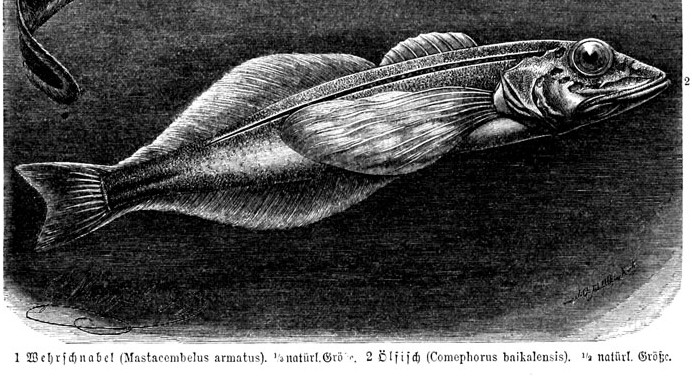 🇷🇺 RussiaComephorus
Two species of pelagic sculpins endemic to Lake Baikal in Russia.Other · Rivers and lakes · 1800
 🇷🇺 Russia and 3 moreBurbot
A coldwater freshwater fish with a chin whisker, native to the Northern Hemisphere.Other · Rivers and lakes · 1758
 WorldBartail flathead
A widespread marine flathead found across the Indo-Pacific.Other · Coasts and shelves · 1758
 🇧🇼 Botswana and 1 moreAfrican tigerfish
Predatory freshwater fish known for sharp teeth and leaping hunting behaviour.Other · Rivers and lakes · 1861

