
Wahoo
Fast tropical game fish with blue bars
The wahoo is a swift scombrid fish found in tropical seas worldwide. It features an iridescent blue back and sharp teeth, making it a prized catch for sport anglers and a valued food fish in many cuisines.
- Reaches lengths up to 2.77 metres
- Diet is 84% native fish
- Known as ono in Hawaii
- Females outnumber males in most areas
- Hosts harmless stomach worm parasite
What it is
This fish has an elongated body with an iridescent blue back and silvery sides marked by irregular vertical blue bars. These colours fade quickly after death. It possesses a large mouth with razor-sharp teeth that appear sharper than those of king or Spanish mackerel. Adults can reach lengths of nearly three metres and weigh over eighty kilograms. The species grows rapidly and is built for speed in open water.
Where it lives
Wahoo inhabit tropical and subtropical waters across the Atlantic, Pacific, and Indian Oceans. Genetic studies suggest two weakly distinct stocks exist in the Atlantic and Indo-Pacific regions, with significant migration and gene flow between them. They are found worldwide in these warm seas, often near deep-water structures or floating objects that attract marine life.
How it lives
Their diet consists mainly of other fish and squid, with small amounts of crustaceans. Stomach analyses in the Pacific show a high proportion of native fish. They usually live alone or in small groups of two or three, though larger schools of over one hundred may form in suitable conditions. Most individuals host a giant stomach worm parasite, which does not seem to harm them.
Breeding and life cycle
The species produces buoyant eggs, and the resulting larvae live in the open ocean. The population gender ratio favours females, a trait common in many pelagic marine species. Ratios vary by location, ranging from nearly equal in Puerto Rico to more than three females per male in North Carolina. Specific spawning seasons are not detailed in the provided text.
Fish and people
Anglers prize wahoo for their speed and fighting ability, often catching them near oil platforms using live bait. The flesh is white or grey, dense, and compared to mackerel in taste. It is a premium food fish in Hawaii, Bermuda, and the Caribbean, where artisanal fishermen target them by trolling. Commercial fisheries also take them as bycatch in tuna and billfish operations.
Status and threats
The species is not considered overfished overall, though local populations may face pressure from heavy fishing. They are less vulnerable to industrial methods than tightly schooling tuna but are regularly caught as bycatch in longline and purse seine fisheries. A management plan for the Atlantic was issued in 2003 to help regulate the fishery.


Questions people ask about Wahoo
What does wahoo taste like?
The flesh is white or grey and ranges from delicate to dense. Many people say the taste is similar to mackerel, making it a highly regarded and premium-priced food fish in various cuisines.
Where is the best place to catch wahoo?
Sport fishermen often find success around deep-water oil and gas platforms in the Gulf of Mexico during winter. They are also targeted by artisanal fishermen in Hawaii, Bermuda, and the Caribbean using trolling methods.
Are wahoo dangerous to humans?
While they have razor-sharp teeth that are sharper than those of mackerel, they are not described as dangerous to humans. They are primarily valued as a game fish for their speed and fighting ability.
Good reading and sources
The facts on this page come from the Wikipedia article "Wahoo", written by its contributors and used under the CC BY-SA 4.0 licence, and from its Wikidata record (CC0). EveryFish rewrote the text in its own words, with AI assistance, and compares every page with the article to make sure no passage is copied. It may be reused under the same CC BY-SA 4.0 licence with a link back.
It may contain mistakes, and figures change over time. Nothing here is investment or buying advice. If something is wrong, tell us. Last refreshed 2026-11-15.
Like Wahoo
All tunas and mackerels 🇲🇻 Maldives and 4 moreSkipjack tuna
A fast-swimming tropical tuna vital to global fisheries.Tuna · Open ocean
 🇺🇸 United States and 3 moreBlackfin tuna
The smallest species of tuna, found in the warm waters of the Atlantic Ocean.Tuna · Coasts and shelves
 WorldMackerel
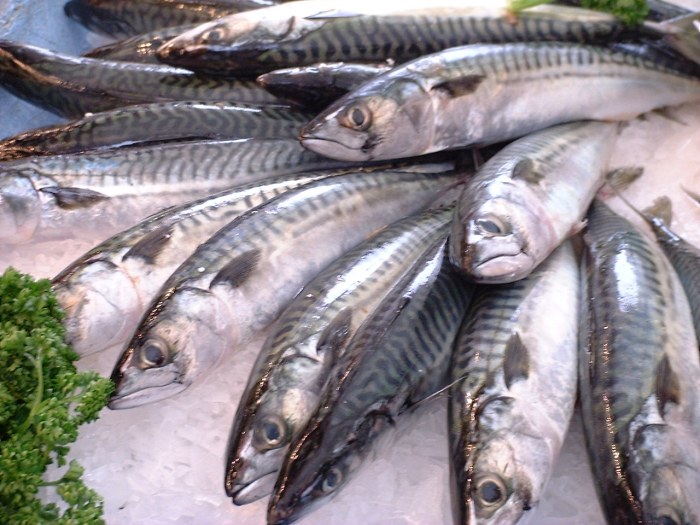
A group of pelagic fish known for their speed, stripes, and role in global fisheries.Tuna · Open ocean
 🇳🇴 Norway and 2 moreAtlantic mackerel
Fast-swimming, oily fish of the North AtlanticTuna · Coasts and shelves · 1758
More from Scombridae
All of them WorldDogtooth tuna
A large Indo-Pacific bonito prized by sport anglers.Tuna · Coasts and shelves
 WorldBullet tuna
Small, slender tuna found in tropical oceans worldwide.Tuna · Open ocean
 WorldBlue mackerel
A small, fast pelagic fish found in tropical Indo-Pacific waters.Tuna · Coasts and shelves
WorldSlender tuna
A southern ocean tuna with oily flesh and a slender build.Tuna · Open ocean