
Blackfin tuna
The smallest species of tuna, found in the warm waters of the Atlantic Ocean.
The blackfin tuna is a tropical fish belonging to the mackerel family. It inhabits the western Atlantic from North America to South America and is valued for sport fishing and food.
- Smallest species in the Thunnus genus.
- Maximum length reaches 100 cm.
- Spawns in the Gulf of Mexico from June to September.
- Rated least concern by IUCN in 2022.
- Distinguished by brown dorsal finlets with white edges.
What it is
The blackfin tuna is the smallest member of its genus. Adults typically reach a maximum length of 100 cm and weigh up to 21 kg. The fish features an oval body with a dark blue to black back and silver sides that shimmer with iridescence. A distinct yellow stripe runs along the flank. Identification relies on small dorsal finlets with brownish colour and white edges, unlike the yellow fins of other tunas. They also possess fewer gill rakers than related species. The scales are durable and compact, surrounding an oblique mouth.
Where it lives
This species lives in the warm waters of the eastern Atlantic coast. Its range extends from Massachusetts down to Rio de Janeiro in Brazil. It also inhabits the Gulf of Mexico and the Caribbean Sea. The fish prefers water temperatures above 20 °C. These tropical conditions support its presence across these regions. The distribution is relatively small compared to other large tuna species.
How it lives
Blackfin tuna hunt both surface and deeper water prey. Their diet includes fish, squid, and crustaceans such as shrimp and crabs. Smaller prey is filtered from the water, while larger targets are chased. They face predation from mahi-mahi, blue marlin, and skipjack tuna. Sea birds also hunt them throughout their life cycle. Cannibalism occurs within the species. Parasites include copepods and cookiecutter sharks.
Breeding and life cycle
Spawning happens when females release eggs into the water column. Fertilization produces pelagic larvae found at various depths. Off Florida, spawning occurs from April to November. In the Gulf of Mexico and near northern Brazil, it takes place from June to September. The Gulf of Mexico serves as a key nursery habitat due to nutrient outflows. Fish reach sexual maturity at two years old, weighing roughly 4 to 6 lbs.
Fish and people
Blackfin tuna holds less commercial value than relatives like yellowfin or bluefin. However, it remains a major target for sport fishing in Florida and the Caribbean. The meat quality is comparable to popular tunas and can be prepared similarly. It is also suitable for sushi. Capture methods include trolling, drift fishing, and pole fishing with live bait or lures. Greenpeace did not list it on its seafood red list in 2010.
Status and threats
The International Union for Conservation of Nature rated the species as least concern in 2022. This status reflects its current population health globally. No specific threats like overfishing or pollution were highlighted as critical in the provided material. The species continues to thrive in its preferred warm water habitats.
Questions people ask about Blackfin tuna
How big does a blackfin tuna get?
Adults generally grow to a maximum length of 100 cm and weigh up to 21 kg. The world record catch weighed 20.6 kg.
Where do blackfin tuna live?
They inhabit the eastern coast of North and South America, ranging from Massachusetts to Brazil. They also live in the Gulf of Mexico and the Caribbean Sea.
Is blackfin tuna good to eat?
Yes, the taste and quality are comparable to popular tuna relatives. It can be prepared in similar ways and is considered sushi grade.
What is the conservation status?
As of 2022, the International Union for Conservation of Nature deemed the species least concern globally.
Good reading and sources
- Blackfin tuna on WikipediaEncyclopedia
- More photos on Wikimedia CommonsPhotos
- Wikidata recordOpen data
The facts on this page come from the Wikipedia article "Blackfin tuna", written by its contributors and used under the CC BY-SA 4.0 licence, and from its Wikidata record (CC0). EveryFish rewrote the text in its own words, with AI assistance, and compares every page with the article to make sure no passage is copied. It may be reused under the same CC BY-SA 4.0 licence with a link back.
It may contain mistakes, and figures change over time. Nothing here is investment or buying advice. If something is wrong, tell us. Last refreshed 2026-11-15.
Like Blackfin tuna
All tunas and mackerels 🇲🇻 Maldives and 4 moreSkipjack tuna
A fast-swimming tropical tuna vital to global fisheries.Tuna · Open ocean
 WorldWahoo
Fast tropical game fish with blue barsTuna · Open ocean
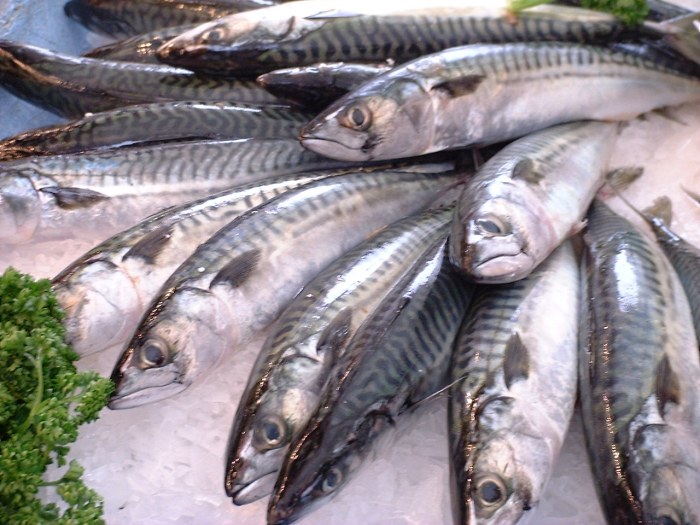 WorldMackerel
A group of pelagic fish known for their speed, stripes, and role in global fisheries.Tuna · Open ocean
 🇳🇴 Norway and 2 moreAtlantic mackerel
Fast-swimming, oily fish of the North AtlanticTuna · Coasts and shelves · 1758
More from Scombridae
All of them WorldDogtooth tuna
A large Indo-Pacific bonito prized by sport anglers.Tuna · Coasts and shelves
 WorldBullet tuna
Small, slender tuna found in tropical oceans worldwide.Tuna · Open ocean
 WorldBlue mackerel
A small, fast pelagic fish found in tropical Indo-Pacific waters.Tuna · Coasts and shelves
WorldSlender tuna
A southern ocean tuna with oily flesh and a slender build.Tuna · Open ocean