
Sole
Flatfish prized in European cuisine, known for its sandal-like shape and delicate flesh.
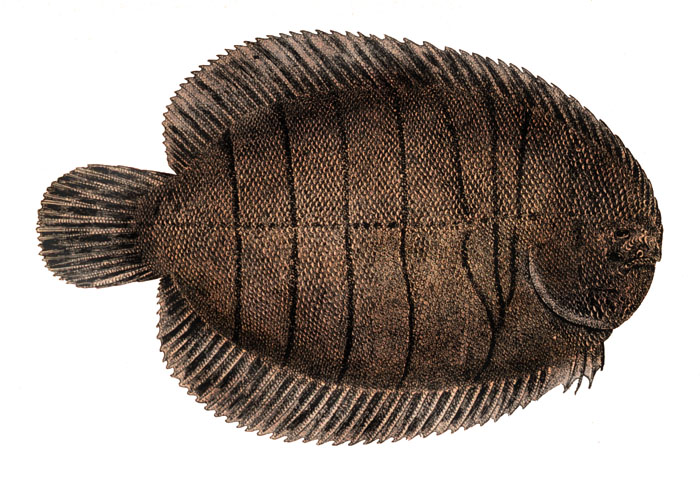
Soles are flatfish belonging to the suborder Pleuronectoidei. The common or Dover sole is the most esteemed species in European cookery, though the name applies to various similar fish globally.
- Name comes from Latin solea, meaning sandal.
- Common sole can live up to forty years.
- Greenpeace listed common sole on seafood red list.
- ICSE states stocks are outside safe biological limits.
- World stocks dropped to ten percent of pre-industrial levels.
What it is
A sole is a type of flatfish found in several families within the suborder Pleuronectoidei. In Europe, true soles belong to the family Soleidae. Outside Europe, the term covers other similar bottom-dwelling fish, including members of the sole suborder Soleoidei and flounder families. The name derives from Latin solea, meaning sandal, due to the fish's shape. Other languages name them for their tongue-like appearance, such as German Seezunge or Spanish lenguado. The common or Dover sole is the most widely available and highly regarded species in European markets.
Where it lives
True soles inhabit European waters, particularly the North Sea, western English Channel, and Irish Sea. Globally, various species referred to as soles live in coastal environments. These fish are bottom-feeders, dwelling on the sea floor. Their range includes areas where they are heavily fished, leading to significant population declines in many regions. Historically, world stocks of large ground fish like sole were much larger, but industrial fishing has reduced these numbers drastically.
How it lives
Soles are bottom-feeding fish that grow slowly. While they can live up to forty years, modern populations rarely exceed six years of age due to fishing pressure. They are part of the broader group of large predatory and ground fish whose stocks have dropped to about ten percent of pre-industrial levels. They face threats from overfishing, with some fisheries facing potential collapse. Their slow growth and late maturity make them vulnerable to depletion when caught in large numbers by trawlers.
Fish and people
In European cookery, soles are highly prized food fish. The common or Dover sole is the most esteemed variety. However, sustainability is a major concern. Greenpeace International added the common sole to its seafood red list in 2010 due to high bycatch rates from beam trawlers. ICES lists sole alongside cod and plaice as being outside safe biological limits. Seven of nine sole stocks were reported as overfished in 2006, highlighting the environmental cost of this culinary tradition.
Status and threats
The common sole faces severe conservation challenges. Overfishing in Europe has led to diminished populations and declining catches. The UK Biodiversity Action Plan notes potential collapse in the western English Channel and Irish Sea fisheries. ICES classifies North Sea sole stocks as outside safe biological limits. A 2006 WWF report indicated that seven out of nine sole stocks were overfished. Greenpeace warns against consumption due to unsustainable beam trawl methods, which cause high bycatch and ecosystem damage.
Questions people ask about Sole
What makes a fish a true sole?
True soles belong specifically to the family Soleidae. In Europe, only these species are called soles. Other flatfish like flounders or tonguefishes are not true soles but share the name due to similar appearance.
Why is the common sole endangered?
Overfishing using beam trawlers has caused severe population declines. Stocks in the North Sea and English Channel are outside safe biological limits. Growth rates have slowed, and few fish survive past six years.
What does the word sole mean?
It derives from the Latin word solea, referring to a sandal. This reflects the fish's flat, oval shape. Some languages use names meaning tongue, describing its form instead.
Are all soles sustainable to eat?
No. Many sole stocks are overfished. Greenpeace advises against eating common sole due to high bycatch from trawling. Consumers should check sustainability guides before purchasing.
Good reading and sources
The facts on this page come from the Wikipedia article "Sole (fish)", written by its contributors and used under the CC BY-SA 4.0 licence, and from its Wikidata record (CC0). EveryFish rewrote the text in its own words, with AI assistance, and compares every page with the article to make sure no passage is copied. It may be reused under the same CC BY-SA 4.0 licence with a link back.
It may contain mistakes, and figures change over time. Nothing here is investment or buying advice. If something is wrong, tell us. Last refreshed 2026-11-15.
Like Sole
All flatfish 🇬🇧 United Kingdom and 2 morePlaice
A group of flatfish species, including the commercially vital European plaice, found in northern seas.Flatfish · Coasts and shelves
 🇨🇦 Canada and 4 moreAtlantic halibut
The world's largest flatfish, found in the North Atlantic.Flatfish · Coasts and shelves
🇨🇦 Canada and 1 moreWinter flounder
Right-eyed flatfish of the western North Atlantic coast.Flatfish · Coasts and shelves
 🇺🇸 United States and 1 moreSummer flounder
A predatory flatfish of the US Atlantic coast.Flatfish · Coasts and shelves
