
Short mackerel
A small silver mackerel vital to Southeast Asian fisheries and cuisine.
The short mackerel is a pelagic fish found in shallow waters across Southeast Asia and Melanesia. It supports major commercial fisheries and holds deep cultural significance in Thailand, where it is known as pla thu.
- Max length 34.5 cm, commonly 20 cm
- Known as pla thu, the fish of the nation in Thailand
- Catch fell from 147,853 tonnes in 2011 to 20,461 in 2018
- Traditionally preserved by bending head and boiling in salt water
- Feeds on zooplankton in warm estuarine and coastal waters
What it is
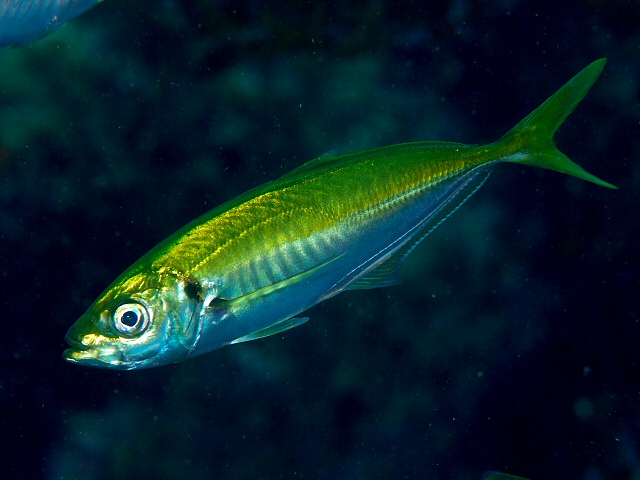
This species belongs to the mackerel family and displays the typical streamlined shape of its kin. It has a silver body and a somewhat pointed snout. Adults usually reach about 20 cm in length, though they can grow up to 34.5 cm. Sexual maturity occurs at approximately 17 cm. The fish is medium-sized and adapted for life in open water near coasts.
Where it lives
Its distribution covers the shallow marine environments of Southeast Asia and Melanesia. While primarily pelagic, it frequently enters estuarine habitats to feed. The species thrives in surface waters with temperatures between 20 and 30 degrees Celsius. This preference for warm, coastal zones makes it accessible to local fisheries throughout the region.
How it lives
The short mackerel feeds mainly on small zooplankton. It is a plankton feeder that operates in the upper water column. Although it lives in open sea areas, it shows a preference for estuarine conditions. The fish migrates within the Gulf of Thailand, moving from southern waters to northern spawning grounds during specific seasons.
Breeding and life cycle
Spawning activity extends from March through September. Populations release eggs in batches rather than all at once. This prolonged season allows for multiple reproductive events. The migration to northern grounds in the Gulf of Thailand is driven by the need to find suitable areas for this batch spawning process.
Fish and people
Known as pla thu in Thailand, it is considered the fish of the nation. Traditional preservation involves bending the head to the belly and boiling it in salted water. This method allowed transport to inland regions before refrigeration. It is central to Thai dishes like kaeng tai pla and tom yam. The catch has declined sharply, leading to imports from Sri Lanka and Indonesia. It is also commercially vital in the Philippines, Malaysia, and Cambodia.
Status and threats
Fisheries authorities have warned of potential extinction in the Gulf of Thailand. Catches dropped from nearly 148,000 tonnes in 2011 to roughly 20,000 tonnes in 2018. An annual fishing ban aims to protect breeding stocks, but illegal catching of adult females persists. This overfishing threatens the sustainability of local populations.


Questions people ask about Short mackerel
What is the maximum size of a short mackerel?
The short mackerel can attain a maximum length of 34.5 cm. However, lengths of around 20 cm are more common in catches. The fish reaches sexual maturity at a length of about 17 cm.
Why is pla thu important in Thai culture?
It is called the fish of the nation due to its ubiquity. Historically, it was food for the poor but gained status when King Rama V enjoyed it. It is essential in many dishes and features in local emblems.
How is traditional pla thu preserved?
The gills are removed and the backbone is broken to bend the head to the belly. Three fish fit into a bamboo basket. They are boiled in salted seawater, which allows long storage without refrigeration.
What is the current status of short mackerel fisheries?
Catches have dropped significantly, raising extinction warnings in the Gulf of Thailand. Despite annual fishing bans during breeding season, illegal fishing of adult females continues to reduce stock numbers.
Good reading and sources
- Short mackerel on WikipediaEncyclopedia
- More photos on Wikimedia CommonsPhotos
- Wikidata recordOpen data
The facts on this page come from the Wikipedia article "Short mackerel", written by its contributors and used under the CC BY-SA 4.0 licence, and from its Wikidata record (CC0). EveryFish rewrote the text in its own words, with AI assistance, and compares every page with the article to make sure no passage is copied. It may be reused under the same CC BY-SA 4.0 licence with a link back.
It may contain mistakes, and figures change over time. Nothing here is investment or buying advice. If something is wrong, tell us. Last refreshed 2026-11-15.
Like Short mackerel
All tunas and mackerels 🇨🇱 Chile and 3 moreChilean jack mackerel
A pelagic fish vital to global fisheries and salmon feed.Tuna · Coasts and shelves · 1920
 🇯🇵 Japan and 1 moreJapanese jack mackerel
A silver coastal fish prized in East Asian cuisine.Tuna · Coasts and shelves
 WorldKawakawa
A small, striped tuna of the Indo-Pacific reefs and coasts.Tuna · Coasts and shelves
 WorldChub mackerel
A widely distributed pelagic fish in the Scombridae family, known for its schooling habits and commercial value.Tuna · Coasts and shelves
More from Scombridae
All of them South AsiaStreaked Spanish mackerel
A striped mackerel of the Indian Ocean coastsTuna · Coasts and shelves · 1829
 WorldLittle tunny
A fast, coastal tuna of the Atlantic and Mediterranean.Tuna · Coasts and shelves · 1810
 🇳🇴 Norway and 2 moreAtlantic mackerel
Fast-swimming, oily fish of the North AtlanticTuna · Coasts and shelves · 1758
 WorldAtlantic bluefin tuna
Large, warm-blooded tuna of the Atlantic and Mediterranean.Tuna · Open ocean · 1758