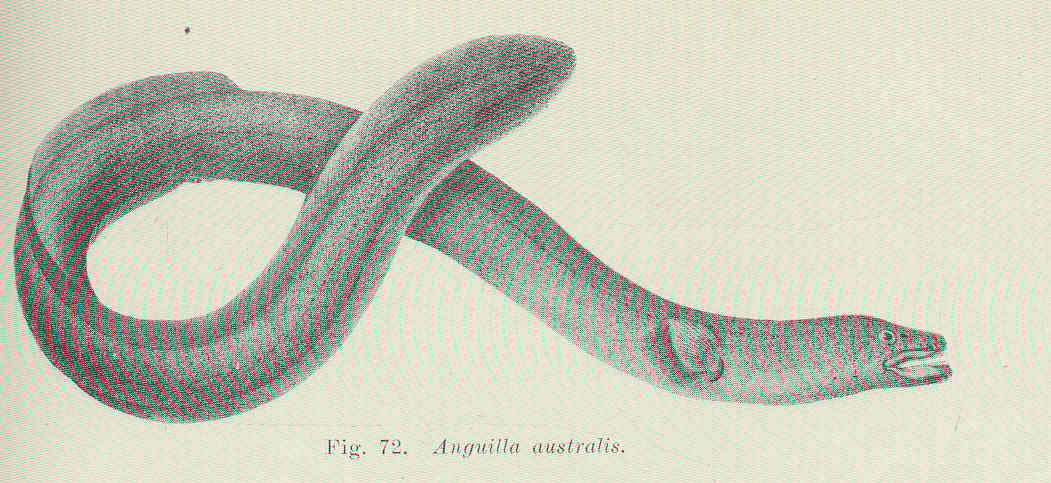
Short-finned eel
A catadromous eel native to Australia and New Zealand.
The short-finned eel is a long-lived freshwater species found in south-eastern Australia, New Zealand, and Pacific islands. It migrates to the sea to spawn and supports significant commercial fisheries and ancient aquaculture traditions.
- Farmed by Aboriginal Australians for 7,000 years
- Migrates up to 4,000 km to spawn in the ocean
- Sex is determined by population density and size
- Can survive out of water by breathing through skin
- Optimal growth temperature is 26.5 °C in captivity
What it is
This eel has a long, tubular body with a small head and jaws that extend below the eye. Its dorsal and anal fins are similar in length. Colour varies from deep olive-green to golden or yellowish, with a pale silvery underside. Adults typically reach 90 cm, though they can grow to 1.1 m and weigh 3 kg. Males are generally smaller and slower growing than females. The sex of the animal is determined by size and population density rather than age.
Where it lives
Native to south-eastern Australia and New Zealand, this species inhabits lakes, dams, and coastal rivers. In Australia, it is found on the seaward side of the Great Dividing Range, from South Australia to northern New South Wales. It does not inhabit inland waterways draining west. In the Pacific, its larvae are distributed from Fiji to north-western Australia. The eels migrate thousands of kilometres to spawn in deep waters near New Caledonia, Vanuatu, and Fiji.
How it lives
These carnivorous ambush predators feed on crustaceans, fish, frogs, snakes, and even waterbirds. They are hardy animals, tolerating low oxygen, high temperatures, and periods without food. When temperatures drop below 10°C, they bury themselves in mud and enter torpor. They can absorb oxygen through their skin, allowing them to travel over moist ground between water bodies. They occupy home ranges of about 400 m in freshwater habitats.
Breeding and life cycle
Short-finned eels are catadromous, meaning they live in fresh water but migrate to the sea to reproduce. Mature eels stop feeding, their digestive systems shrink, and their eyes enlarge before heading to ocean spawning grounds. Larvae drift on currents as transparent glass eels before metamorphosing into darker elvers in estuaries. They migrate upstream, where sex determination occurs based on local population density. Maturity takes 14 years for males and up to 24 years for females.
Fish and people
Indigenous Australians, including the Gunditjmara people, farmed these eels thousands of years ago. Māori in New Zealand also relied on them as a key protein source, calling them tuna. Today, they are valued in commercial fisheries in New Zealand and exported to Japan and Europe. Aquaculture relies on wild-caught glass eels, as artificial breeding remains difficult. Demand for seed stock is high due to declines in other eel species globally.
Status and threats
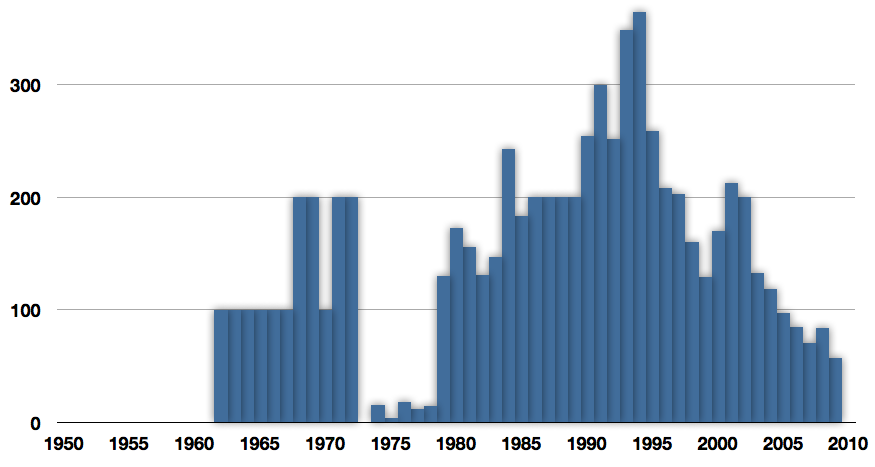
Wild seed supplies are declining, creating pressure on aquaculture industries that depend on catching juvenile glass eels. While New Zealand stocks show little national decline despite heavy exploitation, global demand drives intense fishing pressure. Conservation concerns focus on sustainable harvest levels and the impact of commercial fisheries on traditional indigenous harvesting rights. Research continues into improving captive breeding techniques to reduce reliance on wild stocks.

Questions people ask about Short-finned eel
Where do short-finned eels spawn?
They migrate to deep ocean waters near New Caledonia, Vanuatu, and Fiji to spawn. The exact locations were once thought to be east of Samoa, but recent larval captures suggest areas east and west of Vanuatu.
How do short-finned eels determine their sex?
Sex is not determined by age but by size and population density. In crowded areas, eels tend to become male, while those in less dense upstream areas are more likely to develop as females.
Why is eel aquaculture dependent on wild stocks?
Anguillid eels cannot yet be reared from eggs in captivity effectively. Farms rely on catching wild glass eels from rivers and estuaries, which creates pressure on natural populations as demand grows.
Good reading and sources
- Short-finned eel on WikipediaEncyclopedia
- More photos on Wikimedia CommonsPhotos
- Wikidata recordOpen data
The facts on this page come from the Wikipedia article "Short-finned eel", written by its contributors and used under the CC BY-SA 4.0 licence, and from its Wikidata record (CC0). EveryFish rewrote the text in its own words, with AI assistance, and compares every page with the article to make sure no passage is copied. It may be reused under the same CC BY-SA 4.0 licence with a link back.
It may contain mistakes, and figures change over time. Nothing here is investment or buying advice. If something is wrong, tell us. Last refreshed 2026-11-15.
Like Short-finned eel
All eels 🇳🇿 New ZealandNew Zealand longfin eel
A large, long-lived freshwater eel endemic to New Zealand, known for its extended dorsal fin and endangered status.Eel · Rivers and lakes · 1874
 🇺🇸 United States and 2 moreAmerican eel
A catadromous fish that migrates between North American rivers and the Sargasso Sea to spawn.Eel · Rivers and lakes
 🇨🇳 China and 3 moreAsian swamp eel
A freshwater, air-breathing fish native to Asia and introduced elsewhere.Eel · Rivers and lakes
 🇸🇪 SwedenEuropean eel
A catadromous fish with a mysterious ocean spawning cycle and critically endangered status.Eel · Rivers and lakes