
Harry hotlips
A reef fish with swollen lips and leaf-like juveniles.
The Harry hotlips is a marine ray-finned fish found across the Indo-Pacific. It features distinctive fleshy lips that swell with age and juveniles that mimic fallen leaves. This species serves as a valued food source in local fisheries.
- Adults develop grossly swollen fleshy lips with age.
- Juveniles mimic fallen leaves by drifting on their sides.
- Reaches a maximum total length of 75 cm.
- Found in coastal reefs and estuaries up to 25 m deep.
- Valued food fish caught by handline and spear.
What it is
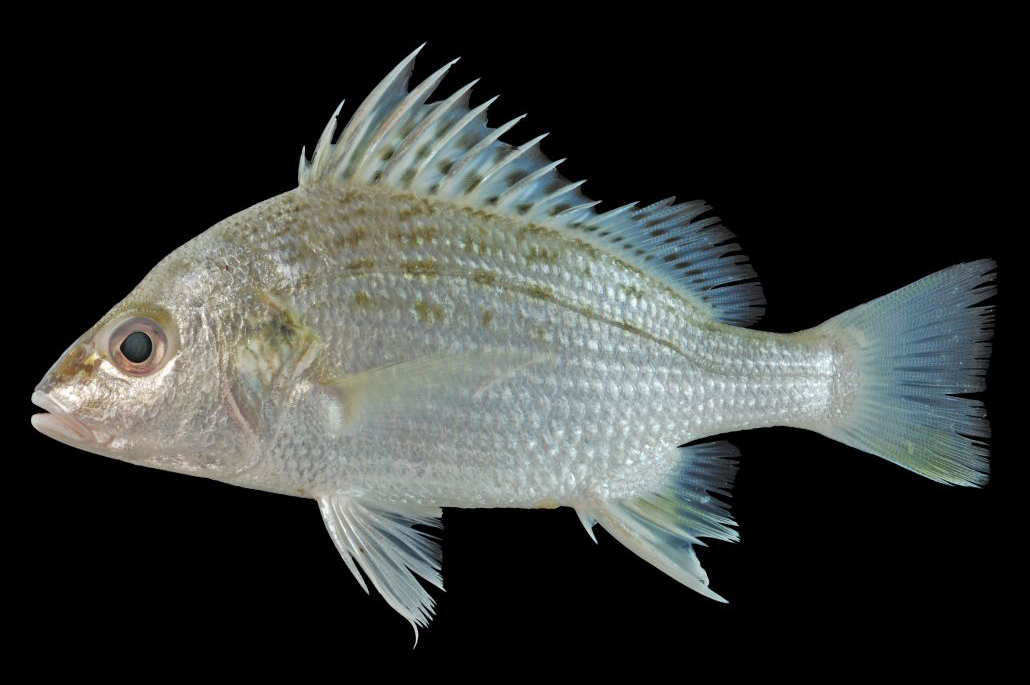
This marine ray-finned fish belongs to the grunt family. Adults display a silvery-grey or brownish body with dark scale edges and a dusky face. The most striking feature is the pair of fleshy lips that become grossly swollen as the fish ages. The dorsal profile is convex, giving the species its humpbacked appearance. Fins are generally dusky, with the soft-rayed sections appearing darker than the rest of the body.
Where it lives
Its distribution spans the Western Pacific and Indian Oceans. Populations exist along the eastern African coast from Kenya to South Africa, including islands like Madagascar and the Seychelles. In Asia, it ranges north to the Ryukyu Islands of Japan and east to Polynesia. Australian waters host the species from Ningaloo Reef in the west, along the northern coasts, and south to Tasmania, Lord Howe Island and Norfolk Island.
How it lives
Adults inhabit coastal reefs, sandbanks and areas near estuaries at depths between 8 and 25 metres. They sometimes enter fresh water and form small aggregations in protected inshore waters or offshore deep zones. Juveniles stay near sheltered sandy shorelines. They drift with their bodies oriented sideways to the surface, mimicking fallen leaves to avoid detection. In captivity, they consume crustaceans, other invertebrates and smaller fish.
Breeding and life cycle
The species reproduces by laying eggs. Spawning events occur between distinct pairs rather than in large groups. This oviparous behaviour ensures the continuation of the population across its wide range. Specific details on egg development or larval stages are not detailed in the available records.
Fish and people
Fishers target this species using handlines and spears. The catch is highly regarded as food and is typically sold fresh in markets. A small portion of the harvest is preserved through salting. Its value as a food fish makes it a notable part of local coastal economies where it is found.

Questions people ask about Harry hotlips
Why do young Harry hotlips swim on their sides?
Juveniles float with their bodies parallel to the surface to mimic fallen leaves. This camouflage helps them hide from predators while they stay near sheltered sandy shorelines.
What does the name gibbosus mean?
The specific name means humpbacked. It refers to the high body shape and convex dorsal profile that characterises this species of sweetlips.
Is the Harry hotlips eaten by people?
Yes, it is a highly regarded food fish. Fishers catch it using handlines and spears, selling most of the catch fresh while preserving a small amount by salting.
Good reading and sources
- Plectorhinchus gibbosus on WikipediaEncyclopedia
- More photos on Wikimedia CommonsPhotos
- Wikidata recordOpen data
The facts on this page come from the Wikipedia article "Plectorhinchus gibbosus", written by its contributors and used under the CC BY-SA 4.0 licence, and from its Wikidata record (CC0). EveryFish rewrote the text in its own words, with AI assistance, and compares every page with the article to make sure no passage is copied. It may be reused under the same CC BY-SA 4.0 licence with a link back.
It may contain mistakes, and figures change over time. Nothing here is investment or buying advice. If something is wrong, tell us. Last refreshed 2026-11-15.
Like Harry hotlips
All other fish WorldOrange-spotted grouper
A large Indo-Pacific marine fish prized for its flesh and known for changing sex.Other · Coasts and shelves · 1822
 WorldShrimp scad
Tropical jack with a yellow tail found on reefs.Other · Coasts and shelves · 1775
 WorldJavelin grunter
A marine grunt found in the Indo-Pacific coastal waters.Other · Coasts and shelves · 1830
 WorldSeahorse
Small marine fish with horse-like heads and curled tails in the genus Hippocampus.Other · Coasts and shelves
