
Peters's elephantnose fish
A West African freshwater fish that navigates using weak electric pulses.
This species inhabits muddy rivers in West and Central Africa. It is famous for its trunk-like snout and ability to generate electric fields for hunting and communication.
- Uses weak electric pulses to navigate and find food.
- Trunk-like snout houses electroreceptors for sensing.
- Native to muddy rivers in West and Central Africa.
- Never successfully bred in captivity; all pets are wild-caught.
- Territorial towards own species; single fish recommended per tank.
What it is
Peters's elephantnose fish belongs to the mormyrid family of African freshwater species. Adults measure roughly twenty-five centimetres and display a dark brown to black hue. Their bodies are flattened from side to side. A distinctive trunk-like extension sits on the head. This structure is actually a sensitive mouth part called the Schnauzenorgan. It contains electroreceptors used for sensing the environment. The fish also possesses a rear dorsal fin and an anal fin of equal length. A forked tail completes its silhouette. Two stripes mark its lower body.
Where it lives
The species lives in West and Central Africa. Specific populations inhabit the Niger River basin, the Ogun River basin, and the upper Chari River. They prefer slow-moving waters with muddy bottoms. Submerged branches provide necessary cover. These habitats allow the fish to hide and hunt effectively. The murky conditions suit their reliance on electric senses rather than sight alone.
How it lives
This fish generates weak electric pulses using specialized cells in its tail. These pulses help it locate prey like worms and insects in the sediment. Electroreceptors across the body detect distortions in the field caused by objects. This method aids navigation in dark or turbid water. The fish uses these signals for self-defense and communication. It has a high brain-to-body oxygen ratio among vertebrates.
Breeding and life cycle
No captive breeding records exist for this species. All aquarium specimens are collected from the wild. Consequently, owners must replicate natural water parameters closely. The fish requires soft, sandy substrate to sift through. Temperatures between twenty-six and twenty-eight degrees Celsius are ideal. pH levels should remain between six point eight and seven point two. Medium hardness water supports their health in captivity.
Fish and people
Aquarium hobbyists keep this fish frequently in the United States. It requires tanks larger than two hundred litres. Heavily planted environments with subdued lighting reduce stress. Owners often add hollow logs or pipes for shelter. The fish feeds on bloodworms, mosquito larvae, and flake food. While generally docile, they become territorial toward their own kind. Keeping more than one individual is discouraged unless the tank exceeds four hundred litres.
Status and threats
The species is classified as least concern. No immediate threats to its survival are noted in the provided text. However, the aquarium trade relies entirely on wild capture. This practice demands careful handling of water quality by keepers. Overcollection could pose risks if not managed sustainably. The fish adapts well to specific captive conditions when parameters are maintained.

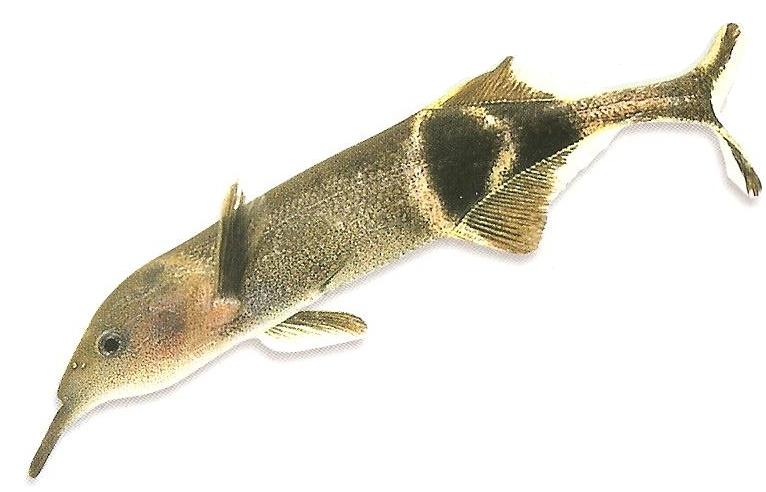

Questions people ask about Peters's elephantnose fish
How does the fish find food in dark water?
It generates weak electric pulses from its tail. Electroreceptors detect distortions in the field caused by prey like worms. This allows navigation and hunting in murky or dark environments where sight fails.
Can I keep multiple Peters's elephantnose fish together?
Generally no. They are aggressively territorial toward their own species. Keep only one fish unless the aquarium exceeds four hundred litres. Larger spaces reduce conflict between individuals.
Where does this fish live in the wild?
It inhabits West and Central Africa. Specific areas include the Niger River basin, Ogun River basin, and upper Chari River. They prefer slow-moving, muddy waters with submerged cover.
What is the best diet for this fish in an aquarium?
They eat small worms, bloodworms, and mosquito larvae. Frozen or flake foods are also accepted. Provide a soft, sandy substrate for sifting. Maintain temperatures between twenty-six and twenty-eight degrees Celsius.
Good reading and sources
- Peters's elephantnose fish on WikipediaEncyclopedia
- More photos on Wikimedia CommonsPhotos
- Wikidata recordOpen data
The facts on this page come from the Wikipedia article "Peters's elephantnose fish", written by its contributors and used under the CC BY-SA 4.0 licence, and from its Wikidata record (CC0). EveryFish rewrote the text in its own words, with AI assistance, and compares every page with the article to make sure no passage is copied. It may be reused under the same CC BY-SA 4.0 licence with a link back.
It may contain mistakes, and figures change over time. Nothing here is investment or buying advice. If something is wrong, tell us. Last refreshed 2026-11-15.
Like Peters's elephantnose fish
All other fish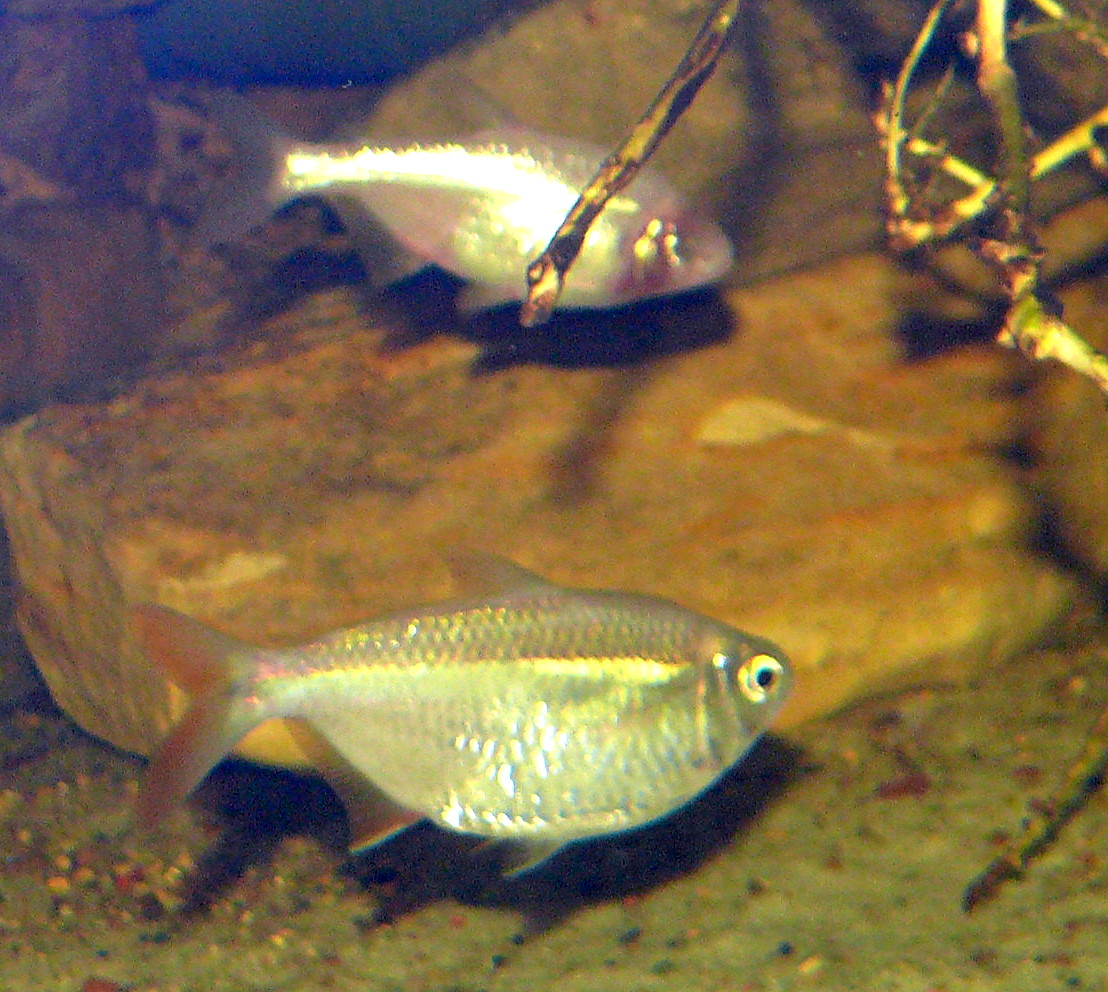 🇺🇸 United States and 1 moreMexican tetra
A freshwater characin with surface and blind cave forms, studied for evolutionary biology.Other · Rivers and lakes
 Southeast AsiaKissing gourami
A Southeast Asian freshwater fish known for its unique mouth-to-mouth sparring behaviour.Other · Rivers and lakes
 🇧🇷 Brazil and 4 moreWolf fish
A predatory freshwater ray-finned fish found across Central and South America.Other · Rivers and lakes
 🇧🇷 BrazilBanded leporinus
A striped freshwater fish from the Amazon kept in home tanks and occasionally caught by anglers.Other · Rivers and lakes
