
Pacific bluefin tuna
Large migratory tuna of the northern Pacific Ocean
The Pacific bluefin tuna is a large, warm-blooded predator found across the northern Pacific. Once severely overfished, strict management measures helped rebuild its stock by 2024. It supports major commercial fisheries and is highly prized in Japanese cuisine.
- Warm-blooded fish that regulate body temperature
- Stock rebuilt from 2% to 23% of historic levels
- Farmed successfully by Kinki University since 2002
- Can reach 3 metres in length and 550 kg
- Prized for toro meat in Japanese sushi markets
What it is
This large predatory fish belongs to the tuna family. It has a streamlined body built for speed and endurance. Adults can reach three metres in length and weigh up to 550 kilograms. Unlike most fish, it is warm-blooded. This allows it to regulate its internal temperature using special blood vessel structures called retia mirabilia. These organs transfer heat from veins to arteries, keeping muscles warmer than the surrounding water. This adaptation gives the tuna extra power and lets it hunt in colder seas without losing speed or range.
Where it lives
The species lives primarily in the temperate waters of the North Pacific. Its range stretches from the coasts of East Asia to the western shores of North America. While it prefers open ocean environments, it also visits tropical and coastal zones. It usually swims near the surface but can dive to depths of 550 metres. Some individuals migrate across the Pacific to the eastern side before returning west to spawn. Rarely, they appear as visitors in the Southern Hemisphere, including waters off Australia and New Zealand.
How it lives
Pacific bluefins are active hunters that feed on small schooling animals. Their diet includes squid, anchovies, sardines, mackerel, and lanternfish. They also eat crustaceans like krill and pelagic red crabs. Young fish grow quickly and join schools for protection and hunting efficiency. As apex predators, they have few natural enemies once they reach adult size. Their ability to maintain high body temperatures allows them to remain active in varied climates. This physiological trait helps them dominate their ecological niche across vast ocean distances.
Breeding and life cycle
Spawning takes place between April and August. The timing varies by location, starting earlier in the southern parts of their breeding range and later in the north. Key spawning grounds include the northwestern Philippine Sea and the Sea of Japan. Large females carry millions of eggs, with counts ranging from five to twenty-five million. Fish reach sexual maturity at around five years of age. At this stage, they measure about 1.5 metres long. The generation length is estimated at seven to nine years.
Fish and people
This tuna is a cornerstone of commercial fisheries and Japanese cuisine. About eighty percent of the global catch is consumed in Japan, where fatty belly meat known as toro is prized for sushi. Record-breaking prices are often paid for the first fish sold at New Year auctions. Aquaculture has advanced significantly, with Kinki University successfully breeding multiple generations of farm-raised Kindai tuna. Sport anglers also target the species, holding records for heavy catches. However, consumers are advised to check mercury levels, which can be high in large specimens.
Status and threats
The population faced severe decline due to decades of overfishing, dropping to two percent of historic levels by 2010. Strict management measures reduced catches, particularly of juveniles. A 2024 assessment confirmed the stock had rebuilt to 23 percent of historic levels and was no longer overfished. The International Union for Conservation of Nature lists it as Near Threatened, though this rating predates the recent recovery. Management remains complex because multiple regional organisations oversee different parts of its migratory route.


Questions people ask about Pacific bluefin tuna
Is Pacific bluefin tuna endangered?
It is currently listed as Near Threatened. However, a 2024 assessment found the population had rebuilt significantly and is no longer considered overfished or subject to overfishing due to stricter management.
What is Kindai tuna?
Kindai tuna is farm-raised Pacific bluefin tuna. Kinki University in Japan developed the method to breed them in captivity, achieving a third generation of farmed fish by 2007.
Why is Pacific bluefin tuna so expensive?
High demand in Japan for sushi and sashimi drives prices up. The fatty belly meat is especially prized. New Year auctions often see record prices for publicity, with single fish selling for millions.
Can Pacific bluefin tuna live in cold water?
Yes. They are warm-blooded and can raise their body temperature up to 20 degrees Celsius above the surrounding water. This allows them to hunt effectively in colder oceans.
Good reading and sources
- Pacific bluefin tuna on WikipediaEncyclopedia
- More photos on Wikimedia CommonsPhotos
- Wikidata recordOpen data
The facts on this page come from the Wikipedia article "Pacific bluefin tuna", written by its contributors and used under the CC BY-SA 4.0 licence, and from its Wikidata record (CC0). EveryFish rewrote the text in its own words, with AI assistance, and compares every page with the article to make sure no passage is copied. It may be reused under the same CC BY-SA 4.0 licence with a link back.
It may contain mistakes, and figures change over time. Nothing here is investment or buying advice. If something is wrong, tell us. Last refreshed 2026-11-15.
Like Pacific bluefin tuna
All tunas and mackerels 🇯🇵 Japan and 1 moreJapanese jack mackerel
A silver coastal fish prized in East Asian cuisine.Tuna · Coasts and shelves
 🇦🇺 Australia and 4 moreNarrow-barred Spanish mackerel
Large Indo-Pacific mackerel with narrow vertical barsTuna · Coasts and shelves
 🇺🇸 United States and 3 morePacific bonito
Striped marine fish of the Pacific coastTuna · Coasts and shelves
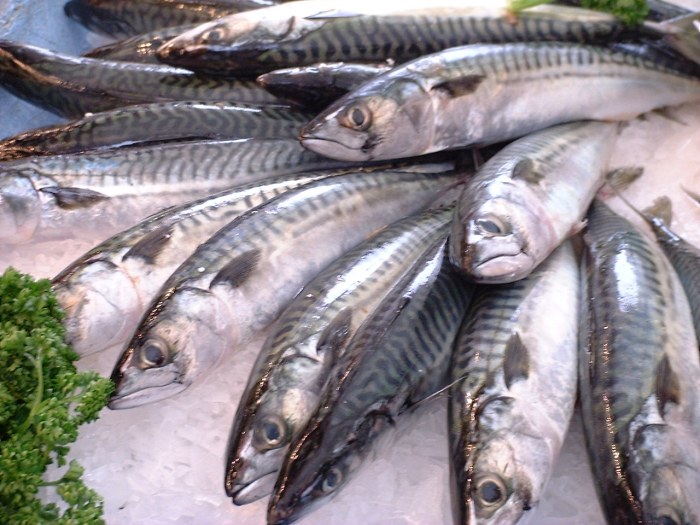 WorldMackerel
A group of pelagic fish known for their speed, stripes, and role in global fisheries.Tuna · Open ocean
More from Scombridae
All of them WorldDogtooth tuna
A large Indo-Pacific bonito prized by sport anglers.Tuna · Coasts and shelves
 WorldBlue mackerel
A small, fast pelagic fish found in tropical Indo-Pacific waters.Tuna · Coasts and shelves
 WorldBullet tuna
Small, slender tuna found in tropical oceans worldwide.Tuna · Open ocean
WorldSlender tuna
A southern ocean tuna with oily flesh and a slender build.Tuna · Open ocean