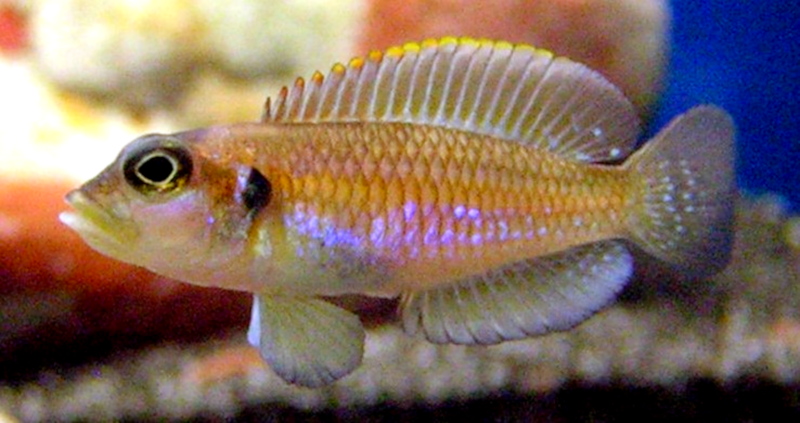
Ocellated shell dweller
Small cichlid from Lake Tanganyika living in snail shells
This small cichlid lives exclusively in Lake Tanganyika and inhabits empty snail shells. It is a popular choice for advanced aquarium keepers due to its intelligence and unique behaviour. The fish grows to under six centimetres and displays gold or brown colours.
- Lives exclusively in empty snail shells
- Grows to a maximum of 5.8 cm
- Requires pH between 8.0 and 8.3
- Males spawn with multiple females
- Uses tail to bury shells in sand
What it is
The ocellated shell dweller is a tiny cichlid native to Lake Tanganyika. Adults reach a maximum length of 5.8 centimetres. Their bodies range in colour from light brown to gold or yellow. Males are larger than females and feature a distinct yellow edge on their dorsal fin. These fish are defined by their habit of living inside empty aquatic snail shells. They use rapid tail movements to bury these shells in the substrate for stability.
Where it lives
This species is endemic to Lake Tanganyika in East Africa. It inhabits areas with sandy bottoms where empty snail shells are available. The fish requires specific water conditions found in its natural habitat. In captivity, the water pH must remain between 8.0 and 8.3. Mineral hardness should be maintained between 12 and 14 kH. Temperatures need to stay within 23 to 27 degrees Celsius. The fish is sensitive to ammonia and nitrite levels.
How it lives
These cichlids live in colonies and are not generally aggressive towards other species. However, they fiercely defend their chosen shells as territory. They may even nip at human hands that approach their homes. They are omnivores and accept various prepared foods. Live brine shrimp or daphnia can tempt reluctant eaters. Diets high in protein or lacking vegetable matter should be avoided. Tubifex worms are dangerous as they can cause fatal bacterial diseases.
Breeding and life cycle
Males mate with multiple females simultaneously. Spawning occurs in or near the shells occupied by the females. The female lays her eggs inside the safety of her shell. These eggs hatch after approximately three days. The young become free-swimming within one week. Keepers can feed the fry using a turkey baster to deliver baby brine shrimp directly.
Fish and people
This fish is popular in the aquarium trade but suits advanced hobbyists. Beginners often struggle with their specific water chemistry needs. Tanks as small as five gallons can house them, though space limits group size. Each fish needs its own empty snail shell. Silica sand is recommended so they can display natural burying behaviours. Heavy gravel prevents this activity. They thrive with tankmates from the same biotope, such as Julidochromis or Cyprichromis.
Questions people ask about Ocellated shell dweller
What size tank do they need?
They can live in tanks as small as five US gallons. However, this limits the number of fish. Each individual requires its own empty snail shell to feel secure and display natural behaviours.
Are they aggressive fish?
They are not generally aggressive towards other species. But they defend their shells fiercely. They may attack hands or other fish that come too close to their chosen territory.
What do they eat in captivity?
They are omnivores and eat flakes, pellets, and frozen foods. Live brine shrimp helps tempt new specimens. Avoid tubifex worms and high-protein diets without vegetable matter to prevent disease.
Good reading and sources
- Neolamprologus ocellatus on WikipediaEncyclopedia
- More photos on Wikimedia CommonsPhotos
- Wikidata recordOpen data
The facts on this page come from the Wikipedia article "Neolamprologus ocellatus", written by its contributors and used under the CC BY-SA 4.0 licence, and from its Wikidata record (CC0). EveryFish rewrote the text in its own words, with AI assistance, and compares every page with the article to make sure no passage is copied. It may be reused under the same CC BY-SA 4.0 licence with a link back.
It may contain mistakes, and figures change over time. Nothing here is investment or buying advice. If something is wrong, tell us. Last refreshed 2026-11-15.
Like Ocellated shell dweller
All cichlids WorldAuratus cichlid
Small, colourful cichlid from Lake MalawiCichlid · Rivers and lakes
 🇭🇳 Honduras and 3 moreJaguar cichlid
Large predatory cichlid from Central American lakesCichlid · Rivers and lakes
 Sub-Saharan AfricaPrincess cichlid
A cooperative schooling cichlid from Lake Tanganyika.Cichlid · Rivers and lakes
More from Cichlidae
All of them 🇹🇿 Tanzania and 2 moreSingida tilapia
A cichlid fish native to the Lake Victoria basin in East Africa.Cichlid · Rivers and lakes
 🇲🇼 Malawi and 2 moreMalawi eyebiter
Predatory cichlid from Lake Malawi known for its narrow body and unique feeding habits.Cichlid · Rivers and lakes
 🇧🇷 Brazil and 2 morePeacock bass
Large predatory cichlids from South American rivers known for sport fishing and invasive impact.Cichlid · Rivers and lakes
 🇵🇪 PeruAgassiz's dwarf cichlid
Small Amazonian cichlid with colourful males.Cichlid · Rivers and lakes