
Muskellunge
Large freshwater predatory fish native to North America and the largest member of the pike family.
The muskellunge is a large freshwater predator native to North America. It belongs to the pike family and is known for its size and distinctive markings.
- Largest member of the pike family, Esoxidae.
- Native to North American freshwater systems.
- Record weight reached 30.5 kg in Wisconsin.
- Hybrids with northern pikes are called tiger muskies.
- Feeding peaks during full and new moon phases.
What it is
The muskellunge is a large freshwater fish belonging to the pike family. It features an elongated body, flat head, and fins positioned toward the rear. Adults typically measure between seventy and one hundred twenty centimetres, though some reach nearly two metres. Their colour ranges from silver to brown or green, marked by dark vertical stripes that may fade into spots. Unlike related species, they possess seven or more sensory pores on each side of their lower jaw. The tail fin lobes come to a sharp point, distinguishing them from other pikes.
Where it lives
This species inhabits clear lakes and large rivers across North America. Its natural range includes the Great Lakes basin, the St Lawrence River drainage, and the upper Mississippi valley. Populations extend north into Canada and south to Tennessee and South Carolina. Introduced groups exist in Maine, Utah, and various reservoirs in Georgia. They prefer structured environments like weed edges and rock outcrops, maintaining distinct shallow and deep home ranges during summer months.
How it lives
Muskellunge act as apex predators, ambushing prey which they swallow head first. Their diet includes various fish, mammals, birds, and insects. They can consume prey up to two-thirds of their own length. Feeding activity often increases during full and new moons due to brighter conditions. Juveniles face threats from larger fish, birds, and cannibalism. Adults are rarely threatened except by humans or large eagles. Their slow growth and low reproduction make them sensitive to overfishing pressures.
Breeding and life cycle
Spawning occurs in mid- to late spring over shallow, vegetated areas with sand or rock bottoms. Males arrive early to claim territory. Eggs are slightly sticky and sink to attach to vegetation or the lake floor. Hatching takes about two weeks if not eaten by other animals. Larvae initially feed on yolk reserves, then switch to zooplankton before hunting small fish. Young fish grow rapidly, reaching thirty centimetres within their first year.
Fish and people
Anglers target this species primarily for sport and trophy fishing. Some regions encourage releasing non-native individuals to protect local trout populations. Artificial propagation programs help sustain angling efforts where habitats are degraded. Hybrids with northern pikes are sometimes stocked for easier catches, though they do not reach maximum sizes. The name derives from indigenous words meaning ugly pike, reflecting historical naming conventions that varied widely before standardization.
Status and threats
Populations remain stable in many areas, but slow growth rates increase vulnerability to overfishing. Habitat destruction and high angling pressure have led to artificial stocking in several jurisdictions. Conservation efforts focus on maintaining sustainable catch levels. While generally least concern, local declines occur where environmental conditions deteriorate or fishing intensity exceeds recovery capacity. Protection measures vary by region depending on population health.


Questions people ask about Muskellunge
How can I tell a muskellunge apart from a northern pike?
Count the sensory pores on the underside of the lower jaw. Muskellunge have seven or more per side, while northern pikes never exceed six. Also, muskies have sharper tail fin lobes and lack scales on the lower half of their gill covers.
What does a muskellunge eat?
They are ambush predators eating fish, insects, frogs, ducks, and small mammals like rats or muskrats. Their large stomachs allow them to swallow prey up to two-thirds their own body length.
Are tiger muskies a natural species?
No, they are sterile hybrids created by crossing a muskellunge with a northern pike. They grow faster than pure muskies but do not reach the same maximum size or lifespan.
Where do muskellunge spawn?
They spawn in mid-to-late spring over shallow, vegetated areas with sand or rock bottoms. This prevents eggs from sinking into mud and suffocating.
Good reading and sources
The facts on this page come from the Wikipedia article "Muskellunge", written by its contributors and used under the CC BY-SA 4.0 licence, and from its Wikidata record (CC0). EveryFish rewrote the text in its own words, with AI assistance, and compares every page with the article to make sure no passage is copied. It may be reused under the same CC BY-SA 4.0 licence with a link back.
It may contain mistakes, and figures change over time. Nothing here is investment or buying advice. If something is wrong, tell us. Last refreshed 2026-11-15.
Like Muskellunge
All other fish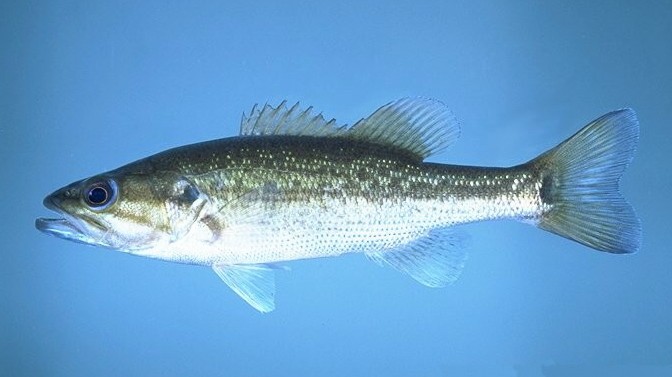 🇺🇸 United StatesSpotted bass
A North American freshwater fish known for dark spots below its lateral line.Other · Rivers and lakes
 🇧🇷 BrazilBanded leporinus
A striped freshwater fish from the Amazon kept in home tanks and occasionally caught by anglers.Other · Rivers and lakes
 WorldNile perch
Large freshwater predator native to Africa, now invasive in many lakes.Other · Rivers and lakes
 🇺🇸 United StatesWhite bass
A silver-striped freshwater fish native to North American rivers and lakes.Other · Rivers and lakes
