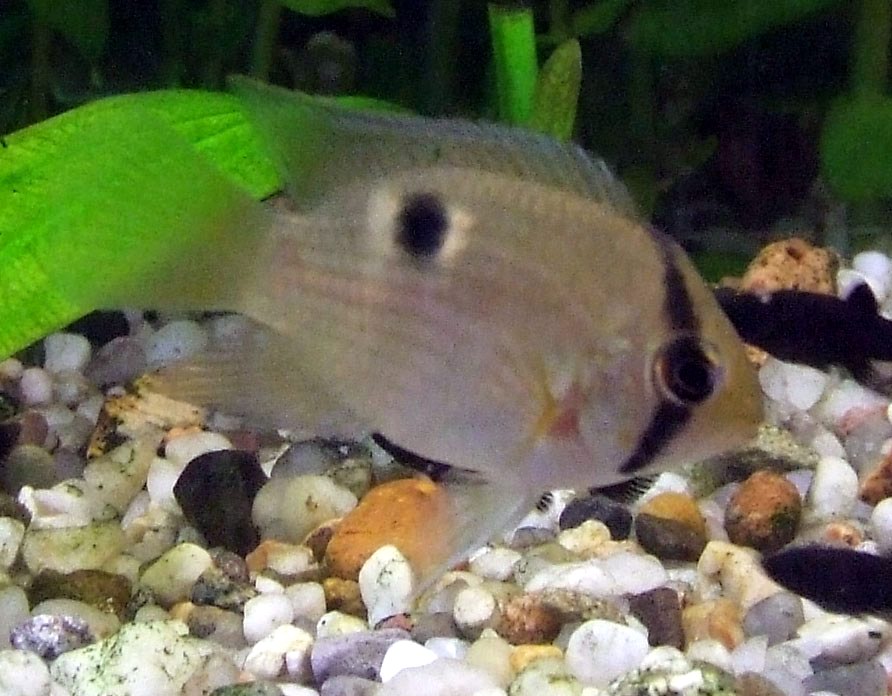
Keyhole cichlid
Small peaceful cichlid from South America
The keyhole cichlid is a small freshwater fish native to northern South America. It is the sole member of its genus and is valued in the aquarium trade for its shy nature and distinctive markings.
- Only species in the genus Cleithracara
- Named for a black keyhole-shaped spot
- Both parents care for the eggs
- Shy and peaceful aquarium fish
What it is
This small fish has an oval body with a tan colour. A distinct black mark sits on its upper side, sometimes stretching into a short line. This feature inspired its common name and the genus title, which translates to lock acara. The animal is generally quiet and avoids conflict. When frightened, it develops patchy colours and hides against surfaces to blend in. It should not share space with aggressive tank mates.
Where it lives
The species lives in tropical fresh waters of northern South America. Its distribution includes the lower Orinoco Basin in Venezuela. It also inhabits various river systems across The Guianas. These regions provide the warm, plant-rich environments the fish prefers. It is endemic to this specific geographic area and does not occur naturally elsewhere.
How it lives
It feeds on small crustaceans, insects and other invertebrates in the wild. In captivity, it accepts prepared foods and may eat beetles dropped into the water. The fish is shy and peaceful by nature. It tends to hide among plants and logs when nervous. This behaviour helps it avoid predators and feel secure in its environment.
Breeding and life cycle
Pairs form monogamous bonds and care for their young together. They lay eggs on flat surfaces such as rocks, logs or broad leaves. A typical clutch contains between 300 and 400 eggs. Both parents tend to the developing brood. Males and females look similar, though males may have a longer, pointed dorsal fin. Rare cases of larger clutches have been observed.
Fish and people
Hobbyists keep this fish in community aquariums due to its gentle temperament. It thrives in tanks that mimic its natural habitat with plenty of hiding spots and vegetation. The species is popular among enthusiasts who appreciate its unique appearance and calm behaviour. It adapts well to captive conditions and accepts varied diets.


Questions people ask about Keyhole cichlid
Is the keyhole cichlid aggressive?
No, it is generally shy and peaceful. It should not be kept with aggressive species as it may become stressed and hide.
What does the keyhole cichlid eat?
In the wild it eats crustaceans and insects. In aquariums it accepts prepared foods and may consume beetles or other invertebrates.
How do keyhole cichlids breed?
They are monogamous and both parents care for the eggs. They spawn on flat surfaces like rocks or leaves, laying hundreds of eggs.
Good reading and sources
- Keyhole cichlid on WikipediaEncyclopedia
- More photos on Wikimedia CommonsPhotos
- Wikidata recordOpen data
The facts on this page come from the Wikipedia article "Keyhole cichlid", written by its contributors and used under the CC BY-SA 4.0 licence, and from its Wikidata record (CC0). EveryFish rewrote the text in its own words, with AI assistance, and compares every page with the article to make sure no passage is copied. It may be reused under the same CC BY-SA 4.0 licence with a link back.
It may contain mistakes, and figures change over time. Nothing here is investment or buying advice. If something is wrong, tell us. Last refreshed 2026-11-15.
Like Keyhole cichlid
All cichlids WorldAuratus cichlid
Small, colourful cichlid from Lake MalawiCichlid · Rivers and lakes
 🇭🇳 Honduras and 3 moreJaguar cichlid
Large predatory cichlid from Central American lakesCichlid · Rivers and lakes
 Sub-Saharan AfricaPrincess cichlid
A cooperative schooling cichlid from Lake Tanganyika.Cichlid · Rivers and lakes
More from Cichlidae
All of them 🇹🇿 Tanzania and 2 moreSingida tilapia
A cichlid fish native to the Lake Victoria basin in East Africa.Cichlid · Rivers and lakes
 🇲🇼 Malawi and 2 moreMalawi eyebiter
Predatory cichlid from Lake Malawi known for its narrow body and unique feeding habits.Cichlid · Rivers and lakes
 🇧🇷 Brazil and 2 morePeacock bass
Large predatory cichlids from South American rivers known for sport fishing and invasive impact.Cichlid · Rivers and lakes
 🇵🇪 PeruAgassiz's dwarf cichlid
Small Amazonian cichlid with colourful males.Cichlid · Rivers and lakes