
Indian sillago
A small coastal whiting found in India and Oman.
The Indian sillago is a marine fish in the smelt-whiting family. Scientists named it in 1985 after distinguishing it from similar species. It lives in shallow coastal waters off India and Oman. Fishermen catch it using nets, though it is rarely identified separately from other whiting.
- Reaches a maximum length of 34 cm.
- Lives in shallow waters up to 30 m deep.
- Named scientifically in 1985 by McKay.
- Found off the coasts of India and Oman.
- Often misidentified as Sillago parvisquamis.
What it is
The Indian sillago is a slender marine fish with an elongated body and a long, pointed snout. Its skin features small rough scales that extend onto the head and cheeks. The first dorsal fin contains eleven spines, while the second has one spine followed by over twenty soft rays. The anal fin mirrors this structure with two spines and many soft rays. Adults reach a maximum length of 34 centimetres. The fish displays a light tan colour with a dark band running along its side. Black spots sprinkle the head, belly, and fins, particularly the tail.
Where it lives
This species inhabits the coastal waters of the Indian subcontinent and the coast of Oman. It lives in shallow inshore areas, ranging from the surface down to depths of thirty metres. The fish is benthic, meaning it stays near the sea floor. Because it was only scientifically named in 1985, its full geographic range may still be under study. It shares these shallow habitats with other members of the smelt-whiting family.
How it lives
Little is known about the specific behaviour or diet of this fish due to identification challenges. It lives on the bottom of shallow coastal zones. Like its relatives, it likely feeds on small organisms found in the sand or mud. The species is often caught alongside other similar whiting, making individual behavioural studies rare. Its camouflage, featuring spots and a lateral band, helps it blend into the sandy seabed environment where it resides.
Breeding and life cycle
Information regarding the spawning habits, egg development, or growth rates of the Indian sillago is not available in current records. The lack of specific biological data stems from the difficulty in distinguishing this species from closely related sillaginids in commercial catches. Without targeted studies, details about its reproductive cycle remain unknown.
Fish and people
Local fisheries catch the Indian sillago using drift nets, shore seines, cast nets, and mini trawlers. It is taken as part of mixed inshore catches. However, fishermen and markets rarely distinguish it from other Sillago species. Consequently, there is no specific data on its individual fishery status or economic value. It serves as a food fish, contributing to local supplies without being marketed under its specific name.
Status and threats
The conservation status of the Indian sillago is not assessed in the provided materials. As a component of mixed coastal fisheries, it faces potential pressure from net fishing. However, no specific threats such as population decline or habitat loss are documented for this particular species. Its wide distribution across the Indian subcontinent and Oman may offer some resilience.
Questions people ask about Indian sillago
Where does the Indian sillago live?
It inhabits inshore coastal waters off the Indian subcontinent and Oman. The fish stays near the sea floor at depths ranging from zero to thirty metres.
How big does the Indian sillago get?
The species has a known maximum total length of 34 centimetres. It has an elongated body with a long conical snout typical of whiting.
Why is it hard to identify this fish?
It looks very similar to other Sillago species. The main differences are internal, such as swim bladder shape, and a faint dark band on its side.
How is the Indian sillago caught?
Fishermen use drift nets, shore seines, cast nets, and mini trawlers. It is usually caught as part of mixed batches with other whiting species.
Good reading and sources
- Indian sillago on WikipediaEncyclopedia
- More photos on Wikimedia CommonsPhotos
- Wikidata recordOpen data
The facts on this page come from the Wikipedia article "Indian sillago", written by its contributors and used under the CC BY-SA 4.0 licence, and from its Wikidata record (CC0). EveryFish rewrote the text in its own words, with AI assistance, and compares every page with the article to make sure no passage is copied. It may be reused under the same CC BY-SA 4.0 licence with a link back.
It may contain mistakes, and figures change over time. Nothing here is investment or buying advice. If something is wrong, tell us. Last refreshed 2026-11-15.
Like Indian sillago
All other fish WorldMackerel icefish
Antarctic fish with mild flesh and black dorsal finsOther · Coasts and shelves · 1905
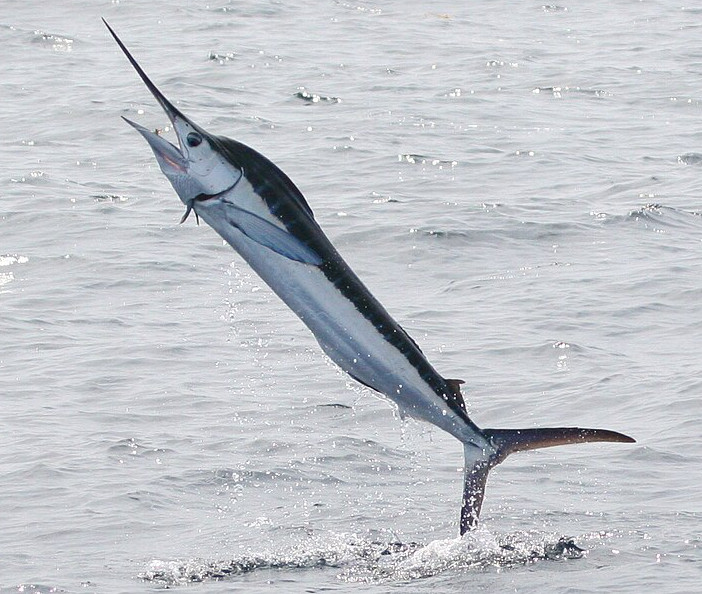 WorldWhite marlin
A fast-swimming billfish of the Atlantic Ocean.Other · Open ocean · 1860
 🇺🇸 United StatesAtlantic tarpon
Large, acrobatic saltwater game fish of the Atlantic.Other · Coasts and shelves · 1847
 🇯🇵 Japan and 2 moreAyu sweetfish
Small amphidromous fish prized for its sweet flesh in East Asia.Other · Rivers and lakes · 1846
More from Sillaginidae
All of them 🇦🇺 AustraliaKing George whiting
A large coastal fish endemic to southern Australia, known for its spotted pattern and commercial value.Other · Coasts and shelves · 1829
 WorldNorthern whiting
A widespread marine fish found in the Indo-Pacific, known for its silvery body and ability to bury itself in sand.Other · Coasts and shelves · 1775