
Bargibant's seahorse
Tiny seahorse camouflaged on sea-fans
Bargibant's seahorse is a minute marine fish that lives exclusively on gorgonian corals in the Indo-Pacific. Its body mimics the coral polyps for protection, making it nearly invisible to observers and researchers alike.
- Measures less than 2 cm in length
- Lives exclusively on gorgonian sea-fans
- Male carries and incubates the eggs
- Discovered in 1969 in New Caledonia
- Listed as Data Deficient by IUCN
What it is
This species is one of the smallest seahorses, typically measuring under two centimetres. It possesses a fleshy body covered in large tubercles that match the polyps of its host coral. The tail is long and prehensile, allowing it to grip the coral stem securely. Two colour forms exist: grey with red bumps and yellow with orange bumps. These features provide exceptional camouflage against predators.
Where it lives
It inhabits coastal reefs and slopes across the central Indo-Pacific. The range extends from southern Japan and Indonesia to northern Australia and New Caledonia. Individuals live at depths between ten and forty metres. They are found exclusively on specific gorgonian sea-fans, which serve as their sole habitat and shelter.
How it lives
These seahorses live in pairs or small clusters on a single coral colony. Up to twenty-eight individuals have been recorded on one fan. Their relationship with the coral is non-parasitic, using it only for cover. The extreme mimicry makes them difficult to spot in the wild. They likely remain stationary to maintain their disguise among the coral branches.
Breeding and life cycle
Breeding occurs throughout the year. Adults may form monogamous pairs. The female deposits eggs into a brood pouch located deep within the male’s trunk. He fertilises and incubates them for about two weeks. A witnessed birth released thirty-four live young. The fry resemble miniature adults and are independent immediately, receiving no further care.
Fish and people
The species was discovered in 1969 by Georges Bargibant in New Caledonia while examining coral samples. It is named in his honour. Due to its attractive appearance, there is concern it may be collected for aquariums, though no trade is officially recorded. Captive keeping has proven fatal, as both the seahorses and their host corals die in captivity.
Status and threats
The International Union for Conservation of Nature lists it as Data Deficient due to limited population data. All seahorses fall under CITES Appendix II, regulating international trade since 2004. Australian populations require export permits under local wildlife laws. More research is needed to assess threats and abundance, but their camouflage makes surveys challenging.


Questions people ask about Bargibant's seahorse
How big does Bargibant's seahorse get?
It is extremely small, usually measuring less than two centimetres in total length. This tiny size helps it hide effectively among the polyps of its host coral.
Can you keep this seahorse in an aquarium?
No successful captive care has been recorded. Both the seahorses and their specific gorgonian coral hosts have died when kept in national aquaria, making private ownership impractical and harmful.
Why is it so hard to find in the wild?
Its body shape and colouration perfectly mimic the gorgonian sea-fan it lives on. Large tubercles match the coral polyps, providing camouflage so effective that scientists missed it for years.
Good reading and sources
- Hippocampus bargibanti on WikipediaEncyclopedia
- More photos on Wikimedia CommonsPhotos
- Wikidata recordOpen data
The facts on this page come from the Wikipedia article "Hippocampus bargibanti", written by its contributors and used under the CC BY-SA 4.0 licence, and from its Wikidata record (CC0). EveryFish rewrote the text in its own words, with AI assistance, and compares every page with the article to make sure no passage is copied. It may be reused under the same CC BY-SA 4.0 licence with a link back.
It may contain mistakes, and figures change over time. Nothing here is investment or buying advice. If something is wrong, tell us. Last refreshed 2026-11-15.
Like Bargibant's seahorse
All other fish WorldSeahorse
Small marine fish with horse-like heads and curled tails in the genus Hippocampus.Other · Coasts and shelves
Southeast AsiaPygmy seahorse
Tiny seahorses with unique brooding and camouflage traits found in Southeast Asian reefs.Other · Coasts and shelves
 WorldMandarinfish
A small, brightly coloured Pacific fish kept in saltwater aquariums.Other · Coasts and shelves · 1927
 WorldOrange-spotted grouper
A large Indo-Pacific marine fish prized for its flesh and known for changing sex.Other · Coasts and shelves · 1822
More from Syngnathidae
All of them 🇦🇺 AustraliaLeafy seadragon
A marine fish from southern Australia known for its leaf-like skin appendages used for camouflage.Other · Coasts and shelves · 1865
 🇺🇸 United States and 3 moreLined seahorse
A western Atlantic seahorse with white neck lines and male pregnancy.Other · Coasts and shelves · 1810
 🇦🇺 AustraliaCommon seadragon
Camouflaged marine fish with leaf-like appendages found in southern Australia.Other · Coasts and shelves
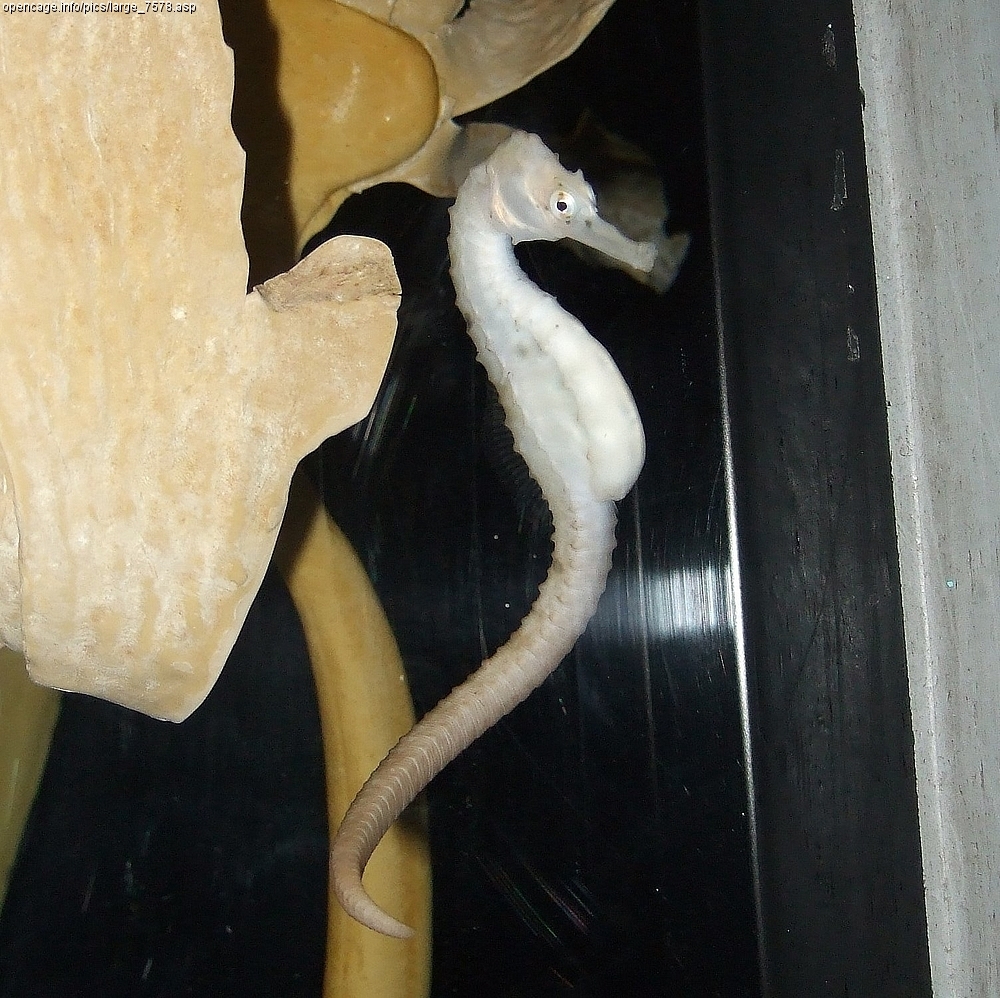 🇦🇺 Australia and 1 moreBig-belly seahorse
The largest seahorse species, found in southern Australia and New Zealand.Other · Coasts and shelves