
Florida gar
A spotted freshwater fish native to the southeastern United States.
The Florida gar is a mid-sized predatory fish found in Georgia and Florida. It inhabits slow-moving waters with vegetation and uses air breathing to survive low oxygen levels. Its toxic eggs and ambush hunting style distinguish it from other local species.
- Reaches lengths over 91 cm and weights up to 4.5 kg.
- Uses an air bladder to breathe in poorly oxygenated water.
- Roe is highly toxic to humans, birds, and other animals.
- Burrows into sediment to aestivate during dry seasons.
What it is
This mid-sized gar features an olive-brown back and a white to yellow belly. Irregular black spots cover its head, body, and anal fin. The snout is short and broad, holding a single row of sharp, irregularly spaced teeth on both jaws. Unlike some relatives, it lacks bony scales on the throat. Adults typically weigh between 1.36 and 4.36 kg, though records reach 4.5 kg. Young fish may display dark stripes along their sides.
Where it lives
Its distribution spans from the Savannah River and Ochlockonee River watersheds in Georgia through peninsular Florida. It prefers medium to large lowland streams, canals, and lakes. These habitats usually have muddy or sandy bottoms near underwater vegetation. The fish occupies medium to shallow waters, often hiding in weed beds just below the surface or resting in marshy shorelines where depth is minimal.
How it lives
Adults act as ambush predators, stalking prey before striking with a rapid lateral lunge. These attacks last only 25 to 40 milliseconds. After capture, they thrash their heads to reposition prey for head-first swallowing. Diet includes fish, shrimp, and crayfish for adults, while juveniles consume zooplankton and insect larvae. During dry seasons, they burrow into marsh sediments and aestivate, lowering their metabolic rate to withstand heat and drought.
Breeding and life cycle
Spawning takes place in late winter and early spring, primarily between February and March. Groups gather in shallow, weedy areas where females release adhesive eggs among aquatic plants. Multiple males often fertilize these eggs. Hatched young possess an adhesive organ on their snouts, allowing them to cling to vegetation until they reach about 2 cm in length. Male reproductive hormones decline throughout the following summer.
Fish and people
Although the flesh is edible, this species is not popular for consumption. The primary concern for humans and other animals is the roe, which is highly toxic. Birds and mammals can suffer severe effects if they ingest the eggs. Consequently, it holds little value in commercial or recreational food fisheries, serving mostly as a subject of ecological interest due to its unique survival adaptations.

Questions people ask about Florida gar
Is the Florida gar dangerous to eat?
The meat is edible but not commonly consumed. However, the roe is highly toxic to many animals, including humans and birds. Ingestion of the eggs can cause severe illness, so caution is required when handling or preparing this fish.
How does the Florida gar survive in dry conditions?
During the dry season, it burrows into marsh sediments and enters a state called aestivation. This process lowers its metabolic rate, similar to hibernation, allowing it to withstand high temperatures and lack of water until conditions improve.
What does the Florida gar eat?
Adults are ambush predators that feed mainly on fish, shrimp, and crayfish. They strike quickly with a lateral lunge. Juveniles have a different diet, consuming zooplankton and insect larvae until they grow large enough to hunt larger prey.
Good reading and sources
The facts on this page come from the Wikipedia article "Florida gar", written by its contributors and used under the CC BY-SA 4.0 licence, and from its Wikidata record (CC0). EveryFish rewrote the text in its own words, with AI assistance, and compares every page with the article to make sure no passage is copied. It may be reused under the same CC BY-SA 4.0 licence with a link back.
It may contain mistakes, and figures change over time. Nothing here is investment or buying advice. If something is wrong, tell us. Last refreshed 2026-11-15.
Like Florida gar
All other fish South AsiaGreen spotted puffer
Small brackish water pufferfish with a tiny genomeOther · Rivers and lakes
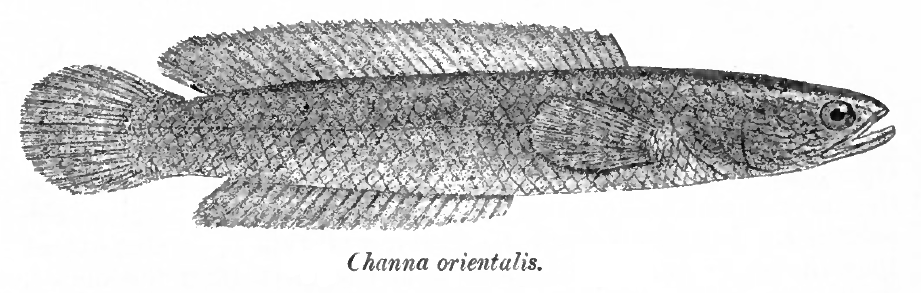 WorldSnakehead
Elongated freshwater predators with air-breathing organs found in Asia and Africa.Other · Rivers and lakes
 🇧🇷 Brazil and 4 moreWolf fish
A predatory freshwater ray-finned fish found across Central and South America.Other · Rivers and lakes
 Sub-Saharan AfricaFahaka pufferfish
Large tropical freshwater puffer from African river basins.Other · Rivers and lakes
More from Lepisosteidae
All of them 🇲🇽 Mexico and 2 moreTropical gar
A small freshwater predator from Central America known for its armored scales and air-breathing ability.Ancient · Rivers and lakes
 🇨🇺 CubaCuban gar
Large tropical freshwater predator native to western Cuba.Other · Rivers and lakes
 🇺🇸 United States and 2 moreLongnose gar
A primitive ray-finned fish with a long snout and armored scales found in North America.Other · Rivers and lakes · 1758
 🇺🇸 United States and 2 moreGar
Ancient armored fish with lung-like swim bladders found in North American waters.Ancient · Rivers and lakes · 1758