
European mudminnow
Small freshwater fish from Central and Eastern Europe
This small cyprinodontiform lives in slow waters across the Danube and Dniester basins. Habitat loss has reduced its numbers, leading to a vulnerable conservation status despite its former abundance in wetlands.
- Grows up to 100 mm in length
- Lives in stagnant freshwater with plants
- Listed as Vulnerable by IUCN
- Found in Danube and Dniester basins
What it is
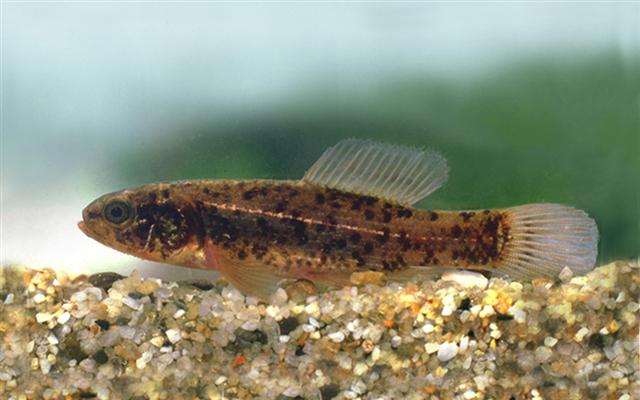
This creature belongs to the Umbridae family and features a long, cylindrical body. Adults typically measure between 65 and 100 millimetres. Their skin displays green or brown tones with darker mottled spots on the sides. A distinct dark stripe runs along the flank, which is particularly clear in young specimens. The head is flat and the mouth is small, adaptations that help it move through thick plant life.
Where it lives
Native populations inhabit the drainage areas of the Danube and Dniester rivers. This distribution covers several nations in Central and Eastern Europe. An established non-native group also lives in northern Germany. The fish prefers still, murky freshwater environments. It is commonly found among both living and dead aquatic plants, which provide cover in these low-flow habitats.
Status and threats
The International Union for Conservation of Nature lists this species as vulnerable. Once common, its numbers have dropped due to widespread wetland destruction. Agricultural activities and river channelization have degraded its home. Climate change and competition from invasive species further threaten its survival within its native range.

Questions people ask about European mudminnow
Where does the European mudminnow live?
It inhabits stagnant freshwater bodies within the Danube and Dniester river basins. It is also found in northern Germany as an introduced population. The fish prefers murky water with dense vegetation.
What does the European mudminnow look like?
It has a long, cylindrical body ranging from 65 to 100 mm. The colour varies from green to brown with dark mottled spots. A dark lateral stripe is visible, especially on juveniles.
Why is the European mudminnow considered vulnerable?
Habitat loss from wetland drainage and agriculture has reduced its numbers. River channelization, climate change, and invasive species also contribute to its decline in the wild.
Good reading and sources
- European mudminnow on WikipediaEncyclopedia
- More photos on Wikimedia CommonsPhotos
- Wikidata recordOpen data
The facts on this page come from the Wikipedia article "European mudminnow", written by its contributors and used under the CC BY-SA 4.0 licence, and from its Wikidata record (CC0). EveryFish rewrote the text in its own words, with AI assistance, and compares every page with the article to make sure no passage is copied. It may be reused under the same CC BY-SA 4.0 licence with a link back.
It may contain mistakes, and figures change over time. Nothing here is investment or buying advice. If something is wrong, tell us. Last refreshed 2026-11-15.
Like European mudminnow
All other fish 🇺🇬 Uganda and 2 moreSilver cyprinid
A small pelagic fish from Lake Victoria that supports regional food security.Other · Rivers and lakes
 WorldLeopard bush fish
A freshwater labyrinth fish from the Congo River basin kept in home aquariums.Other · Rivers and lakes
 WorldNile perch
Large freshwater predator native to Africa, now invasive in many lakes.Other · Rivers and lakes
 🇺🇬 UgandaNangnang fish
A small freshwater fish from the Nile basin, prized as a fried snack in Uganda.Other · Rivers and lakes