
Coastal cutthroat trout
A Pacific trout with red throat marks
The coastal cutthroat trout is a Pacific salmonid native to western North America. It lives in rivers, lakes and near-shore seas from Alaska to California. Named for red slashes on its jaw, it spawns in gravel streams and supports local fishing traditions.
- Named for red slashes under the jaw
- Ranges from Alaska to Northern California
- Spawns in gravel beds from December to June
- Sea-run forms stay near shore
- Hybridises with rainbow trout
What it is
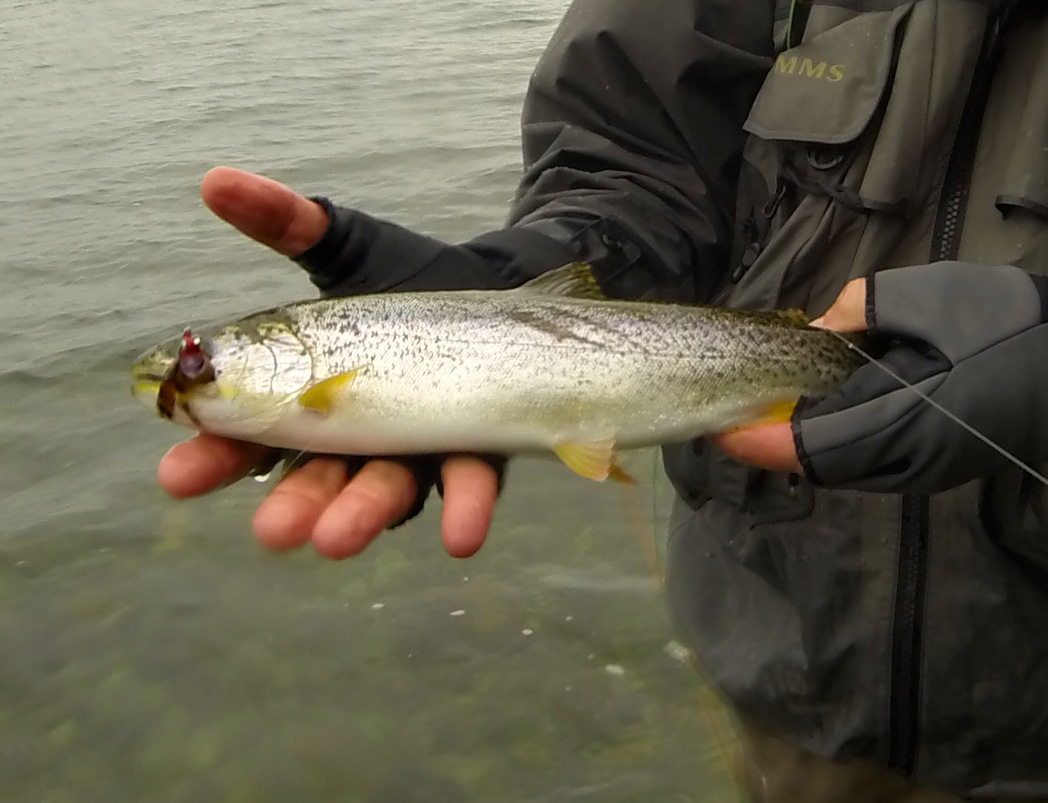
This fish is a member of the salmon family found along the Pacific coast. Freshwater individuals show dark green backs and silvery bellies with many spots below the lateral line. Sea-run forms appear bluish and silver with fewer marks. All types display distinctive red or orange slashes under the lower jaw. These markings give the species its common name. Adults in the ocean weigh up to 2.3 kg, while stream dwellers remain much smaller.
Where it lives
Its territory stretches from the Kenai Peninsula in Alaska down to Northern California. The fish stays within 160 km of the sea, inhabiting tributary streams and rivers. It thrives in the coniferous rainforest belt of the Pacific coast. Habitats include clear gravel streams, urban waterways, estuaries and cool lakes. Semi-anadromous forms migrate briefly into saltwater but rarely travel far offshore.
How it lives
Semi-anadromous trout spend two to five years in fresh water before entering the sea. They feed in estuarine waters close to land during summer months. By autumn or winter, they return to fresh water to overwinter. Lake populations reside in deep, cool waters with vegetation for food. This species spends more time in freshwater environments than other anadromous Pacific salmonids.
Breeding and life cycle
Spawning occurs in shallow, well-oxygenated rivers with gravel beds. The season runs from December to June, peaking in February when water reaches 6 to 8 °C. Eggs hatch after six to seven weeks. Fry emerge between March and June. Lake-dwelling groups often need access to gravel streams to sustain their numbers, though some spawn on shallow lake beds.
Fish and people
Anglers value this trout for sport fishing in western North America. Outdoor writer Charles Hallock coined the name cutthroat in 1884 due to the jaw markings. Hatchery programmes in Washington and Oregon supplement wild stocks. The fish holds cultural significance as a native species of the West. It is also harvested for food by local communities.
Status and threats
Populations are generally secure across their native range. Although sea-run numbers have declined since the 19th century, no groups are listed as endangered. Authorities reviewed ten distinct population segments in 1999. A proposal to list one segment as threatened was withdrawn in 2002 after scientific evaluation. Stream and lake forms remain stable with hatchery support.



Questions people ask about Coastal cutthroat trout
Why is it called cutthroat trout?
The name comes from distinctive red, pink or orange linear marks on the undersides of the lower jaw. Outdoor writer Charles Hallock gave the fish this name in an 1884 article because the markings resemble a cut throat.
Do they live in the ocean?
Semi-anadromous forms migrate to the sea to feed and mature. However, they rarely travel more than 16 km from land and do not overwinter in saltwater. They return to fresh water by fall or winter to spawn.
Are they endangered?
No, the coastal cutthroat trout is considered a secure subspecies. While sea-run populations have declined since the 1800s, no groups in the United States or British Columbia are currently listed as threatened or endangered.
Good reading and sources
- Coastal cutthroat trout on WikipediaEncyclopedia
- More photos on Wikimedia CommonsPhotos
- Wikidata recordOpen data
The facts on this page come from the Wikipedia article "Coastal cutthroat trout", written by its contributors and used under the CC BY-SA 4.0 licence, and from its Wikidata record (CC0). EveryFish rewrote the text in its own words, with AI assistance, and compares every page with the article to make sure no passage is copied. It may be reused under the same CC BY-SA 4.0 licence with a link back.
It may contain mistakes, and figures change over time. Nothing here is investment or buying advice. If something is wrong, tell us. Last refreshed 2026-11-15.
Like Coastal cutthroat trout
All salmon and trout 🇬🇧 United Kingdom and 3 moreSea trout
Anadromous form of brown trout that migrates between sea and rivers.Salmonid · Between sea and river
 🇺🇸 United States and 3 moreChinook salmon
The largest Pacific salmon species, prized for size and food value.Salmonid · Rivers and lakes
 🇺🇸 United States and 3 moreCoho salmon
Anadromous Pacific salmon known for silver ocean phase and red spawning colours.Salmonid · Rivers and lakes
 WorldBrown trout
A widespread salmonid with river, lake and sea forms.Salmonid · Rivers and lakes · 1758
More from Salmonidae
All of them 🇷🇺 Russia and 2 moreMasu salmon
Pacific salmonid native to East Asian coasts and rivers.Salmonid · Rivers and lakes
 🇺🇸 United StatesCisco
Small salmonid fish of northern lakes and seasSalmonid · Rivers and lakes
 🇺🇸 United StatesApache trout
A golden-spotted trout native to Arizona highlands.Salmonid · Rivers and lakes
 WorldTaimen
Large freshwater salmonids native to EurasiaSalmonid · Rivers and lakes