
Cardinal tetra
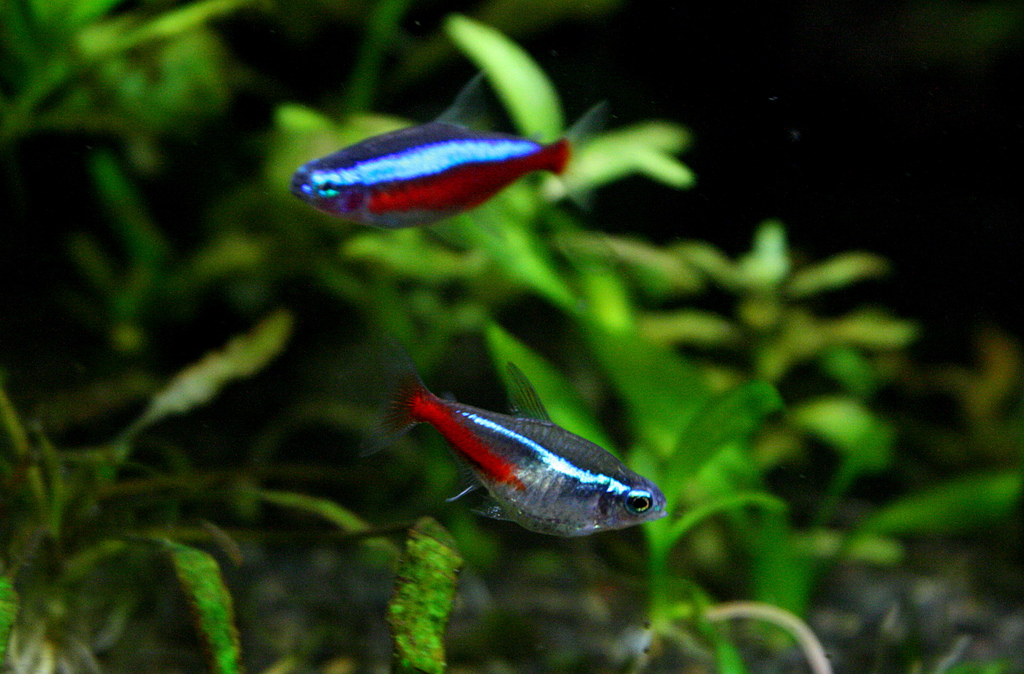
Small freshwater fish with a bright red belly and iridescent blue stripe.
The cardinal tetra is a small South American characin known for its vivid colouring. It serves as a popular aquarium species and supports local economies in the Amazon through sustainable capture fisheries.
- Adults grow to just three centimetres in length.
- Iridescent blue stripe changes colour based on viewing angle.
- Over ninety-two million exported from Brazil between 2006 and 2015.
- Lives one year in the wild but several years in captivity.
- Sustainable fishery prevents deforestation in the Amazon Basin.
What it is
This species belongs to the family Acestrorhamphidae within the order Characiformes. Adults reach approximately three centimetres in length. The body features a striking horizontal band of iridescent blue light that runs from nose to tail. Below this line, the flesh appears vivid red. This colour pattern distinguishes it from the similar neon tetra, whose red section stops halfway along the side. The blue hue shifts depending on the viewing angle, changing from sapphire to greenish tones. Fish often appear larger when kept in home tanks compared to their wild counterparts.
Where it lives
These fish inhabit the upper reaches of the Orinoco and Negro river systems. Their natural range covers parts of Brazil, Colombia, and Venezuela. They prefer slow-moving, shallow waters located beneath dense rainforest canopies. These environments receive very little direct sunlight due to heavy shading from trees above. The fish thrive in these specific conditions found across the Amazon Basin.
How it lives
They feed primarily on tiny aquatic organisms found among underwater plants and leaf litter. Their diet includes chironomid midge larvae, water fleas, copepods, insect eggs, rotifers, and testate amoebae. In the wild, they live for about one year. However, individuals kept in captivity can survive for several years. A study in Manaus showed they cannot survive temperatures below 19.6°C or above 33.7°C, nor pH levels outside the 2.9 to 8.8 range.
Breeding and life cycle
Wild populations swim upstream in large groups to spawn in heavily shaded river sections. Males pursue females into fine-leaved vegetation when the females are ready to release eggs. The pair then releases sperm and eggs together. Captive breeding requires mimicking these natural environmental conditions. Many breeders now produce them successfully, though distinguishing captive-bred fish from wild-caught ones remains possible by observing fin damage.
Fish and people
The species is highly valued in the global aquarium trade. An entire industry exists in Barcelos, Brazil, where locals catch fish for export. Between 2006 and 2015, over ninety-two million specimens were exported from Amazonas state. This fishery provides livelihoods for thousands of people who act as environmental stewards. Sustainable harvesting helps prevent deforestation in the region, as fishermen have an economic incentive to protect the forest.
Status and threats
The International Union for Conservation of Nature lists the species as least concern. Populations remain abundant in the wild. Harvesting levels are considered sustainable, with estimates suggesting millions can be caught annually without harm. Uncaught wild fish often die during dry seasons, balancing population numbers. Conservation efforts focus on maintaining the sustainable fishery model that protects both the species and the local ecosystem.



Questions people ask about Cardinal tetra
How does the cardinal tetra differ from the neon tetra?
The cardinal tetra has a red belly that extends all the way to the nose, whereas the neon tetra's red colour stops halfway along its side. Additionally, the cardinal's blue stripe is more vibrant and extends further back than the neon's less intense blue band.
Where do cardinal tetras live in the wild?
They are native to the upper Orinoco and Negro River basins in South America. Specifically, they inhabit slow-moving, shallow waters under dense rainforest canopies in Brazil, Colombia, and Venezuela.
Why is the cardinal tetra important for conservation?
The commercial fishery provides income for local communities in the Amazon. This economic value encourages residents to protect the forest rather than engage in deforestation, making the fishery a tool for environmental stewardship.
What do cardinal tetras eat?
They are predatory feeders that consume tiny animals from underwater plants and leaf litter. Their diet includes insect larvae, water fleas, copepods, insect eggs, rotifers, and testate amoebae.
Good reading and sources
- Cardinal tetra on WikipediaEncyclopedia
- More photos on Wikimedia CommonsPhotos
- Wikidata recordOpen data
The facts on this page come from the Wikipedia article "Cardinal tetra", written by its contributors and used under the CC BY-SA 4.0 licence, and from its Wikidata record (CC0). EveryFish rewrote the text in its own words, with AI assistance, and compares every page with the article to make sure no passage is copied. It may be reused under the same CC BY-SA 4.0 licence with a link back.
It may contain mistakes, and figures change over time. Nothing here is investment or buying advice. If something is wrong, tell us. Last refreshed 2026-11-15.
Like Cardinal tetra
All other fish Southeast AsiaGiant snakehead
A large freshwater predator from Southeast Asia known for air breathing and invasive potential.Other · Rivers and lakes
 🇧🇷 Brazil and 1 moreRed-bellied Pacu
A large South American freshwater fish related to piranhas, farmed for food and kept in aquariums.Other · Rivers and lakes
 🇨🇩 Democratic Republic of the CongoCongo tetra
A colourful African freshwater fish kept in home aquaria for its bright scales and feathery tail.Other · Rivers and lakes · 1899
 🇧🇷 Brazil and 1 moreX-ray tetra
Small translucent South American freshwater fish popular in home aquariums.Other · Rivers and lakes · 1894
More from Acestrorhamphidae
All of them 🇧🇷 BrazilEmber tetra
Tiny orange freshwater fish from BrazilOther · Rivers and lakes · 1987
 🇧🇷 BrazilRummy-nose tetra
Small Amazonian characin with a red head and striped tail.Other · Rivers and lakes · 1924
 🇻🇪 VenezuelaDiamond tetra
Small Venezuelan freshwater fish with violet finsOther · Rivers and lakes · 1920