
Brosme
A deep-water North Atlantic cod-like fish known for its single dorsal fin and commercial value.
The brosme is a solitary member of the genus Brosme within the ling family. It inhabits the cold, rough bottoms of the North Atlantic and serves as a prized food source despite conservation concerns in Canada.
- Only one dorsal fin distinguishes it from other cod-like fish.
- Maximum recorded length reaches 120 cm and weight 20 kg.
- Mercury levels can exceed food-safety guidelines in wild populations.
- Canadian authorities list the species as endangered due to stock decline.
- Females produce over two million buoyant eggs during spring spawning.
What it is
The brosme belongs to the ling family and stands alone in its genus. It resembles other cod-like fish but has only one dorsal fin. The fins are continuous at the base yet separated by deep notches. The tail is evenly rounded. Colors range from slate to reddish brown above, fading to gray below. Young fish often show yellow bands. Adults reach about 120 cm and weigh up to 20 kg.
Where it lives
This species lives across the North Atlantic. It ranges from Cape Cod to Iceland and along the Norwegian coast. It also appears on the Mid-Atlantic Ridge. Populations show little genetic difference over large distances. Deep-water areas like the Rockall Bank act as barriers to movement. They rarely enter harbors and prefer offshore waters.
How it lives
Cusk dwell on the bottom and swim sluggishly. They eat crustaceans, mollusks, and soft invertebrates. Mercury levels rise in their bodies through biomagnification. This toxin affects predators that eat them, including humans. Concentrations are higher in fjords and wild marine fish compared to farmed ones.
Breeding and life cycle
Spawning occurs from April to early July. Females release over two million buoyant eggs. Larvae live near the surface initially. They grow to about 5 cm before moving to deep rocky floors. Dispersal during early life stages is limited over long distances.
Fish and people
Fishers catch brosme using hook and line or trawls. Catches peak in winter and spring off New England. Fish average 2 kg and are sold fresh, frozen, or smoked. It is an excellent food fish. However, mercury content sometimes exceeds safety guidelines. Conservation groups monitor stocks due to declining numbers in Canada.
Status and threats
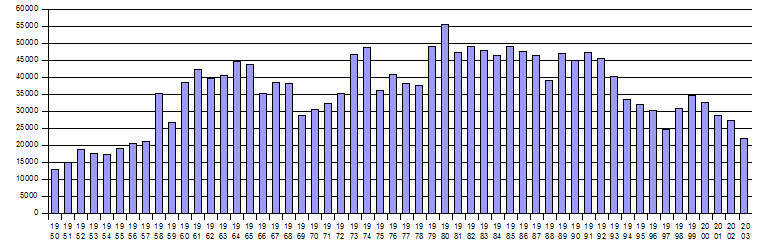
The IUCN lists the species as least concern. Fisheries and Oceans Canada considers it endangered. Catches dropped by 90% between 1970 and the late 1990s. Limits were set in 1999 and tightened in 2003. Bycatch in lobster fisheries remains common. Climate change may reduce habitat by 80% this century.


Questions people ask about Brosme
What makes the brosme look different from other cod?
It has only one dorsal fin. Other cod-like fish usually have two. Its fins are connected at the base but split by deep notches. The tail is evenly rounded. Young fish may have yellow bands on their sides.
Is the brosme safe to eat regarding pollution?
Wild marine cusk can contain high mercury levels. Studies show concentrations sometimes exceed safety limits. Fjord-dwelling fish often have more toxins than coastal ones. Farmed or freshwater fish generally have lower levels.
Where does the brosme live in the ocean?
It inhabits deep waters over 180 meters. It prefers rough bottoms with rocks or gravel. You find it from Cape Cod to Iceland and Norway. It rarely enters harbors and stays in offshore areas.
Good reading and sources
The facts on this page come from the Wikipedia article "Brosme", written by its contributors and used under the CC BY-SA 4.0 licence, and from its Wikidata record (CC0). EveryFish rewrote the text in its own words, with AI assistance, and compares every page with the article to make sure no passage is copied. It may be reused under the same CC BY-SA 4.0 licence with a link back.
It may contain mistakes, and figures change over time. Nothing here is investment or buying advice. If something is wrong, tell us. Last refreshed 2026-11-15.
Like Brosme
All cods and hakes EuropeCommon ling
Large cod-like fish of the North AtlanticCod · Coasts and shelves
 🇳🇴 Norway and 3 moreSaithe
A silver and green Atlantic fish known as coalfish or saithe.Cod · Coasts and shelves
 EuropePollack
A marine fish found in the north-east Atlantic.Cod · Coasts and shelves
 🇬🇧 United Kingdom and 4 moreHaddock
A North Atlantic cod family fish known for its black shoulder blotch and smoked preparations.Cod · Coasts and shelves · 1758
